Nikhil Prasad Fact checked by:Thailand Medical News Team Jul 14, 2026 1 month, 2 weeks, 5 days, 8 hours, 19 minutes ago
Medical News: A major new review has revealed that a single brain protein may play two very different roles—helping the brain heal after injury while also driving the progression of devastating neurological diseases when its activity becomes prolonged or uncontrolled. Researchers say understanding this protein, called osteopontin (OPN), could eventually improve diagnosis and lead to more targeted treatments for conditions ranging from Alzheimer's disease and multiple sclerosis to stroke and brain cancer.
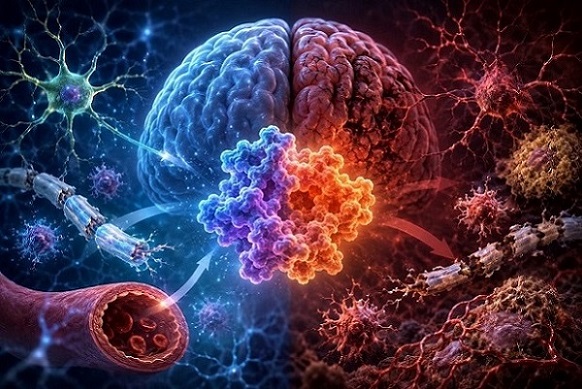 Scientists discover that osteopontin can both protect and harm the brain, offering promising new targets for
future neurological treatments.
Researchers Highlight a Complex Brain Molecule
The review was conducted by scientists from the School of Exercise and Health and the College of Athletic Performance at Shanghai University of Sport, Shanghai, China. Instead of describing OPN as either beneficial or harmful, the team concluded that its effects depend on where it is produced, which cells release it, the stage of disease, and how long it remains active in the brain.
OPN is produced from the SPP1 gene and acts as a signaling protein that helps cells communicate during inflammation, tissue repair, and immune responses. While it was originally discovered in bone, growing evidence shows it has a crucial role inside the central nervous system.
A Delicate Balance Between Healing and Harm
The review found that OPN becomes highly active after brain injuries such as stroke, traumatic brain injury, spinal cord injury, and hemorrhage. During the early stages, it helps remove damaged cells, supports blood vessel repair, strengthens the blood-brain barrier, encourages myelin repair, and promotes tissue recovery.
However, when OPN remains elevated for prolonged periods, its role changes dramatically. Persistent activity can fuel chronic inflammation, damage connections between nerve cells, interfere with myelin repair, and create conditions that allow neurological diseases to worsen.
Links to Major Brain Disorders
The researchers summarized evidence showing elevated OPN in numerous neurological disorders. In multiple sclerosis, high OPN levels are linked with inflammation, disease progression, and reduced myelin repair. In Alzheimer's disease, OPN appears around amyloid plaques and may influence immune cells involved in clearing harmful proteins, although prolonged activation may also contribute to synaptic loss and cognitive decline.
The review also described increased OPN activity in amyotrophic lateral sclerosis (ALS), temporal lobe epilepsy, autoimmune brain disorders, several infectious diseases affecting the brain, and vascular conditions involving damaged blood vessels.
This
Medical News report also highlights that OPN cannot simply be labeled as "good" or "bad." Its effects change according to the disease, the location within the brain, and even the specific molecu
lar form of the protein.
New Insights into Brain Cancer
One of the strongest findings involves glioblastoma, the most aggressive form of brain cancer. The review explains that OPN helps tumors recruit immune cells that are reprogrammed to support cancer growth instead of attacking it. OPN also promotes blood vessel formation, strengthens cancer stem-cell behavior, and contributes to resistance against immunotherapy, including anti-PD-1 treatments.
Researchers believe future therapies may work better by blocking specific OPN signaling pathways instead of eliminating the protein entirely, since it also performs essential repair functions in healthy tissue.
Promise as a Biomarker
The scientists also examined whether OPN could serve as a biomarker. Increased levels have been detected in brain tissue, cerebrospinal fluid, blood, and other body fluids across multiple neurological diseases. However, because OPN is produced by many organs outside the brain, the researchers caution that it should be used alongside other biomarkers rather than as a standalone diagnostic test.
Conclusion
The review demonstrates that osteopontin is one of the brain's most versatile signaling proteins, capable of promoting recovery after injury while also accelerating chronic neurological disease when its activity becomes excessive or prolonged. Understanding precisely when and how OPN switches between these opposing roles could open the door to more accurate diagnostics and safer, highly targeted therapies for numerous brain disorders.
The study findings were published in the peer reviewed journal: Biomolecules.
https://www.mdpi.com/2218-273X/16/7/996
For the latest on brain health issues, keep on logging to Thailand
Medical News.
Read Also:
https://www.thailandmedical.news/articles/alzheimer,-dementia-




 Share
Share
 Tweet
Tweet
 Share
Share

































