Is it Really Cyclosporiasis or a New COVID-19 Virus Strain with Enhanced Gastro-Tropism Spreading Across America?
Nikhil Prasad Fact checked by:Thailand Medical News Team Jul 10, 2026 1 month, 3 weeks, 2 days, 17 hours, 48 minutes ago
Thailand Medical News Editorial:
Rising Reports Raise New Questions
Reports of suspected cyclosporiasis cases are emerging across parts of the United States, attracting growing media attention. However, only a small number of these cases have reportedly been confirmed through laboratory testing as infections caused by the parasite Cyclospora cayetanensis. Many others appear to have been diagnosed primarily on the basis of symptoms i.e diarrrhea, prompting questions about whether every case count truly represents cyclosporiasis.
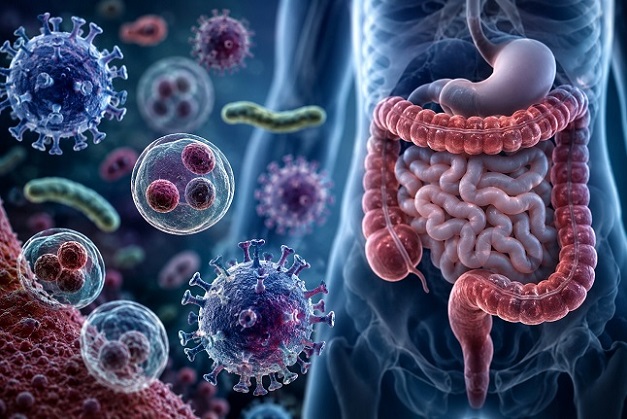 Rising gastrointestinal illness reports in the United States are fueling debate over whether all suspected cases are
truly cyclosporiasis or if another infectious agent is contributing
Cyclosporiasis is an intestinal illness caused by the microscopic parasite Cyclospora cayetanensis. It is usually transmitted through contaminated fresh produce or water. The hallmark symptom is sudden, frequent, and sometimes explosive watery diarrhea, with symptoms typically developing about one week after exposure, although onset can range from two days to two weeks.
Symptoms Extend Beyond Typical Diarrhea
Interestingly, many individuals reporting these illnesses are also describing fever, profound fatigue, abdominal pain, nausea, and in some instances even breathlessness. While some of these symptoms can occur with cyclosporiasis, they also overlap with those seen in viral infections, including COVID-19, making symptom-based diagnosis alone potentially unreliable.
This
Thailand Medical News report highlights the importance of confirming suspected infections with appropriate laboratory testing rather than relying solely on clinical presentation.
COVID-19 Activity Continues Elsewhere
At the same time, countries that continue conducting regular SARS-CoV-2 surveillance, including Brazil, Thailand, Japan,Taiwan, the Philippines, and Australia's New South Wales, have reported increases in COVID-19 activity. Many infected individuals in these regions have also described gastrointestinal symptoms such as diarrhea, abdominal discomfort, fever, and fatigue alongside milder or absent respiratory complaints.
https://www.thailandmedical.news/news/taiwanese-health-officials-warn-of-possible-summer-covid-19-surge-as-cases-starts-rising
https://www.thailandmedical.news/news/quezon-city-in-philippines-records-sharp-265-percent-surge-in-covid-19-cases-as-health-officials-intensify-surveillance
g-june-14">https://www.thailandmedical.news/news/who-warns-of-rising-covid-19-infections-with-7000-new-cases-in-brazil-and-3600-in-thailand-over-28-days-ending-june-14
https://www.thailandmedical.news/news/australia-reports-rise-in-covid-19-infections-in-new-south-wales-with-1098-new-cases-and-a-positivity-rate-of-3-3-percent
https://www.thailandmedical.news/news/covid-19-cases-increasing-gradually-in-japan-once-again
Over the last several years, numerous studies have demonstrated that newer SARS-CoV-2 variants can infect tissues beyond the respiratory tract. Researchers have shown that the virus can persist within the gastrointestinal tract, where it may replicate and contribute to prolonged digestive symptoms. Investigations have also found viral RNA in stool samples for extended periods after respiratory symptoms resolve, supporting evidence of gastrointestinal involvement.
Studies are also showing that the newer SARS-CoV-2 variants are evolving with enhanced tropism towards the gastrointestinal tract and the central nervous system.
Could Cases Be Misclassified?
There is currently no scientific evidence demonstrating that the reported U.S. illnesses are being caused by a newly emerging SARS-CoV-2 strain instead of Cyclospora cayetanensis. Nevertheless, limited COVID-19 testing combined with symptom-based diagnoses makes laboratory confirmation especially important before attributing outbreaks to a single cause.
Past studies have also reported that stool samples from COVID-19 patients may contain a variety of microorganisms, including opportunistic pathogens such as Cyclospora cayetanensis and disease-causing bacteria. Their detection does not necessarily establish them as the primary cause of illness, but it illustrates the complexity of interpreting gastrointestinal infections.
Greater molecular testing, parasite-specific diagnostics, and genomic surveillance will ultimately determine whether these reported illnesses represent isolated cyclosporiasis cases, mixed infections, or unrelated viral outbreaks. Until comprehensive laboratory investigations are completed, caution should be exercised before drawing definitive conclusions, while remaining equally cautious about dismissing alternative possibilities without sufficient evidence. Continued surveillance, transparent reporting, and expanded diagnostic testing remain essential to accurately identify the true cause of these gastrointestinal illnesses and to guide appropriate public health responses.
For the latest on COVID-19 and cyclosporiasis, keep on logging to
Thailand Medical News.
Read Also:
https://www.thailandmedical.news/news/study-finds-that-sars-cov-2-ba-2-86-and-jn-1-variants-exhibit-enhanced-tropism-for-the-intestines-and-also-intestinal-adaptation
https://www.thailandmedical.news/news/covid-19-spike-persistence-linked-to-localized-gut-immune-dysregulation




 Share
Share
 Tweet
Tweet
 Share
Share

































