BREAKING! Scientists Discover SAM-m6A Axis as Key Factor in Many Diseases and Phytochemicals Can be Used to Target it
Nikhil Prasad Fact checked by:Thailand Medical News Team Jan 31, 2026 8 months, 4 days, 5 hours, 57 minutes ago
Medical News: Scientists are increasingly uncovering hidden molecular systems that explain why diseases develop and how lifestyle and diet may influence health. A newly published scientific review has identified the SAM-m6A axis as a central biological mechanism involved in a wide range of diseases, while also highlighting that plant derived phytochemicals may be able to regulate this pathway in beneficial ways.
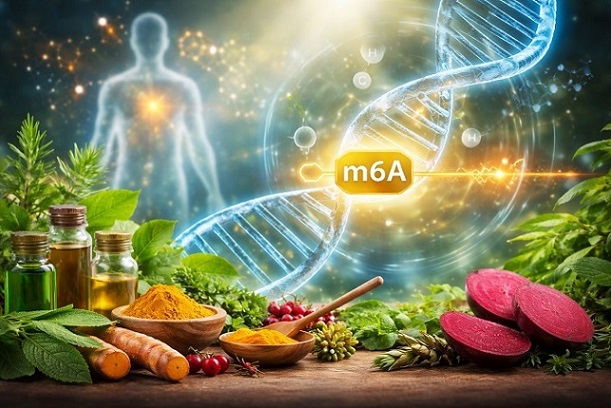 A new study reveals how a central RNA regulatory pathway links disease development with plant based therapeutic potential
Researchers And Institutions Behind the Study
A new study reveals how a central RNA regulatory pathway links disease development with plant based therapeutic potential
Researchers And Institutions Behind the Study
The research was conducted by scientists from the University of Vigo and the Instituto de Agroecoloxía e Alimentación in Ourense Spain, Northwest University in Xi’an China, and the Universidad Europea del Atlántico in Santander Spain. Their work brings together expertise in nutrition science, molecular biology, and metabolic disease research.
What Is The SAM-m6A Axis
SAM which stands for S-adenosylmethionine, is a natural molecule produced in the body from nutrients such as methionine and B vitamins. It acts as a key supplier of chemical groups used to modify DNA, RNA proteins and lipids. One important RNA modification controlled by SAM is known as m6A. This small chemical tag determines how RNA messages are processed, how long they last, and how much protein they produce. Together SAM levels and m6A activity form what scientists call the SAM-m6A axis.
Why This Axis Matters in Disease
The review explains that disruptions in the SAM-m6A axis can lead to widespread problems in how cells function. Reduced SAM levels or an imbalance between SAM and its byproduct SAH can lower m6A activity and disturb gene messaging. This has been linked to cancer, metabolic disorders, liver disease, neurodegenerative conditions, inflammation, cardiovascular disease and immune dysfunction. Excessive activity of this axis can also fuel harmful processes such as tumor growth, chronic inflammation and metabolic overload.
Role Of Plant Derived Phytochemicals
A key finding of the review is that many plant-based compounds influence this disease-related axis. Substances found in green tea, turmeric, sugar beets, olives and medicinal herbs do not usually act like strong drugs that block a single enzyme. Instead, they reshape metabolism upstream by improving SAM availability, reducing harmful byproducts and adjusting proteins that add remove or read m6A tags. This
Medical News report highlights that compounds such as EGCG, curcumin, betaine, tanshinone and artemisitene act more gently but across multiple levels of the pathway.
Why This Matters for Treatment Approaches
The researchers emphasize that this systems level regulation is different from synthetic pharmaceutical inhibitors which tend to target one molecular switch. Phytochemicals may be more suitable for long-term disease prevention and chronic condit
ions where restoring balance is more important than aggressive suppression. This could help explain why diets rich in plant compounds are consistently linked to better metabolic and inflammatory health.
Conclusions
The study concludes that the SAM-m6A axis represents a unifying biological framework connecting nutrition, metabolism, RNA regulation and disease development. By demonstrating how phytochemicals can influence this axis, the findings support the growing view that diet-based strategies may complement future medical therapies. However, the researchers stress that more human studies are needed to define effective doses tissue specificity and long-term safety before clinical recommendations can be finalized.
The study findings were published in the peer reviewed journal: Pharmacological Research.
https://www.sciencedirect.com/science/article/pii/S1043661826000290
For the latest on Herbs and Phytochemicals, keep on logging to Thailand
Medical News.
Read Also:
https://www.thailandmedical.news/articles/herbs-and-phytochemicals




 Share
Share
 Tweet
Tweet
 Share
Share

































