Nikhil Prasad Fact checked by:Thailand Medical News Team Mar 08, 2026 6 months, 3 weeks, 5 days, 21 hours, 37 minutes ago
Medical News: Heart failure with preserved ejection fraction (HFpEF) is one of the fastest-growing cardiovascular problems worldwide, and scientists are now exploring whether natural compounds found in everyday foods could help slow its progression. Researchers from the Graduate Program in Health and Development in the Central-West Region of Brazil at the Medical School of the Federal University of Mato Grosso do Sul and the Pharmaceutical Science, Food and Nutrition Faculty at the Federal University of Mato Grosso do Sul have reviewed emerging evidence suggesting that plant-based compounds known as polyphenols could play an important supportive role in managing this difficult condition.
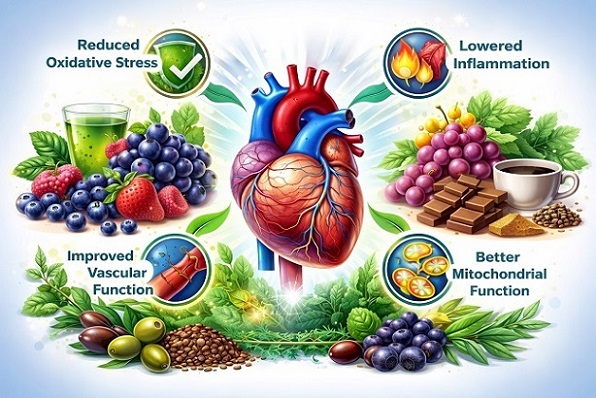 Natural plant polyphenols may help protect the heart from inflammation, oxidative stress, and stiffness linked to HFpEF
Understanding a Complex Form of Heart Failure
Natural plant polyphenols may help protect the heart from inflammation, oxidative stress, and stiffness linked to HFpEF
Understanding a Complex Form of Heart Failure
HFpEF is a type of heart failure in which the heart still pumps a normal percentage of blood but becomes stiff and cannot relax properly between beats. This stiffness makes it harder for the heart to fill with blood, leading to symptoms such as shortness of breath, fatigue, and swelling.
Unlike traditional heart failure caused by weakened heart muscles, HFpEF is driven by a combination of chronic inflammation, oxidative stress, metabolic problems, and damage to the inner lining of blood vessels. These changes gradually lead to fibrosis, or scarring, in heart tissue.
The condition is particularly common among older adults and people with obesity, hypertension, diabetes, and kidney disease. In fact, HFpEF now accounts for about half of all heart failure cases worldwide and continues to rise as populations age and metabolic diseases become more common.
How Natural Polyphenols May Protect the Heart
Polyphenols are bioactive molecules found in fruits, vegetables, tea, cocoa, coffee, and whole grains. Examples include flavonoids, phenolic acids, anthocyanins, and lignans.
According to the review covered in this
Medical News report, these compounds influence several biological pathways involved in heart disease. They help activate the body’s natural antioxidant defense systems while suppressing inflammatory signals that damage blood vessels and heart cells.
One key pathway influenced by polyphenols is the Keap1/Nrf2 system, which triggers the production of antioxidant enzymes that neutralize harmful reactive oxygen species. At the same time, polyphenols can inhibit NF-κB, a molecular pathway known to drive chronic inflammation.
Together, these actions may reduce oxidative damage, protect mitochondria—the cell’s energy factories—and improve the ability of heart muscle to relax properly.
Multiple Polyphenol Types Show Distinct Benefits
Different polyphenol families may support heart health in slightly different ways. Phenolic acids such as gallic acid, ferulic acid, and chlorogenic acid help reduce oxidative stress and improve blood vessel f
unction. Flavonoids like quercetin and catechins can improve energy metabolism in heart cells and reduce fibrotic remodeling.
Anthocyanins, which give berries and grapes their deep colors, appear to enhance nitric oxide signaling, helping blood vessels relax and improving circulation. Meanwhile lignans, commonly found in flaxseeds and whole grains, may activate metabolic pathways linked to better mitochondrial performance and reduced inflammation.
Researchers also note that polyphenols may positively influence gut microbiota, producing beneficial metabolites that further support cardiovascular health.
Evidence in Humans Still Emerging
Although laboratory and animal studies strongly support these mechanisms, clinical trials in patients with HFpEF remain limited. Some human studies involving polyphenols such as curcumin, resveratrol, quercetin, and grape extracts have shown improvements in blood pressure, inflammation, and heart-related biomarkers.
However, translating these results into routine treatment remains challenging because many polyphenols are poorly absorbed by the body. Scientists are exploring new delivery methods, including nanoparticle formulations, to improve bioavailability and therapeutic impact.
Conclusion
Overall, the evidence suggests that polyphenols could become an important supportive strategy in managing HFpEF by targeting inflammation, oxidative stress, endothelial dysfunction, and metabolic disturbances that drive disease progression. While existing treatments mainly address symptoms and associated conditions, these natural compounds may help address deeper biological mechanisms behind the disorder.
Nevertheless, more large-scale clinical trials are needed to confirm their effectiveness, determine optimal doses, and evaluate long-term safety. If future studies confirm the benefits suggested by current research, polyphenol-rich diets or targeted supplements could eventually become an integral part of personalized nutritional strategies aimed at reducing complications and improving quality of life for patients living with HFpEF.
The study findings were published in the peer reviewed journal: Antioxidants.
https://www.mdpi.com/2076-3921/15/3/322
For the latest news, keep on logging to Thailand
Medical News.
Read Also:
https://www.thailandmedical.news/articles/cardiology
https://www.thailandmedical.news/articles/herbs-and-phytochemicals




 Share
Share
 Tweet
Tweet
 Share
Share

































