Nikhil Prasad Fact checked by:Thailand Medical News Team Jul 02, 2026 1 month, 2 weeks, 3 days, 14 hours, 12 minutes ago
Medical News: Inflammation During COVID-19 May Leave Lasting Brain Changes in Female Survivors
A growing body of evidence suggests that long COVID affects women differently from men, and a new study has uncovered a possible biological reason why. Researchers have found that inflammation during the acute phase of COVID-19 may leave persistent damage to the brain's white matter in women, increasing the likelihood of slower thinking and coordination months after recovery. The findings add to mounting concerns that the long-term neurological effects of COVID-19 may not be the same for everyone and could require sex-specific monitoring and treatment strategies.
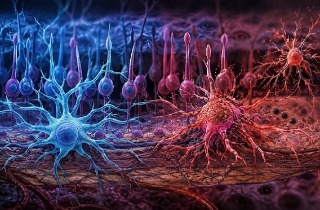
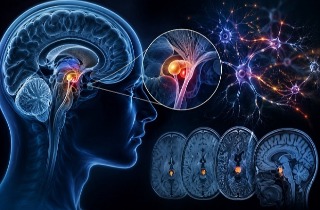
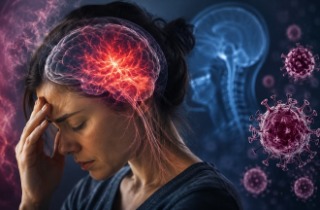
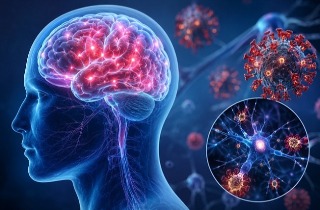
 New research suggests inflammation during COVID-19 may leave lasting white matter damage in women, increasing
the risk of persistent cognitive problems
The research was conducted by scientists from the Psychiatry and Clinical Psychobiology Unit, Division of Neuroscience at IRCCS San Raffaele Hospital, Milan, Italy, together with Vita-Salute San Raffaele University, Milan, Italy.
Researchers Investigated Brain Health After Recovery
To better understand why many people continue to experience "brain fog," poor concentration, memory problems, and fatigue after COVID-19, the research team studied 60 adults who had been hospitalized with the infection.
During hospitalization, blood samples were collected to calculate the Systemic Immune-Inflammation Index (SII), a marker reflecting the intensity of the body's inflammatory response.
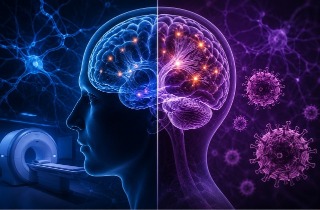
Approximately three months after recovery, participants underwent advanced magnetic resonance imaging (MRI) using diffusion tensor imaging, a highly sensitive technique capable of detecting subtle damage to the brain's white matter. They also completed a comprehensive series of cognitive tests evaluating memory, attention, information processing, executive function, verbal skills, working memory, and psychomotor coordination.
Women Showed Widespread White Matter Damage
The study revealed a striking sex difference. Women who experienced higher levels of inflammation during their COVID-19 illness developed widespread abnormalities throughout the brain's white matter. These abnormalities were found in several major communication pathways, including the corpus callosum, corona radiata, internal capsule, thalamic radiation, fornix, and superior longitudinal fasciculus.
These structures serve as the brain's communication highways, allowing different regions to exchange information rapidly and efficiently. Damage to these networks can slow the transmission of signals between brain regions and interfere with normal thinking, attention, movement, and coordination.
Surprisingly, researchers found no comparable relationship between inflammation and white matter injury in male participants, even though men experienced similar levels of systemic inflammation during their acute illness.
Brain Changes Directly Affected Cognitive Performance
The white matter abnormalities were not merely laboratory findings. Women with greater whit
e matter damage consistently performed worse on psychomotor coordination tests. These tests measure how quickly the brain can process information and translate it into physical movement, abilities required for everyday tasks such as driving, typing, using tools, maintaining balance, or reacting quickly to changing situations.
The researchers also found increases in several MRI markers—including mean diffusivity, axial diffusivity, and radial diffusivity—alongside reductions in fractional anisotropy, all of which indicate disruption of healthy white matter structure.
Even more importantly, statistical analysis showed that white matter damage completely explained the connection between severe inflammation during COVID-19 and poorer psychomotor performance in women. This means inflammation appears to trigger structural brain injury, which subsequently leads to measurable cognitive slowing.
Why Female Brains May Be More Vulnerable
Scientists believe several biological mechanisms may explain the findings. Women generally produce stronger immune responses than men, allowing them to eliminate viruses more efficiently. However, this heightened immune activity may also produce prolonged inflammation that affects brain tissue. Hormones such as estrogen, genetic differences involving the X chromosome, and stronger immune activation may together increase the brain's susceptibility to inflammatory injury.
Previous research has also shown that women are more likely to develop long COVID symptoms despite men generally experiencing more severe acute COVID-19 disease. The current findings offer one possible explanation for this long-observed pattern.
This
Medical News report highlights that the study also supports earlier evidence linking inflammation with changes in brain structure and cognition, suggesting that the neurological consequences of COVID-19 may be driven by persistent immune-related injury rather than the virus itself remaining in the brain.
The Findings Could Influence Future Long COVID Care
The researchers believe their work highlights the importance of considering biological sex when evaluating long COVID patients. Women recovering from COVID-19 who experienced high levels of inflammation during their illness may benefit from closer neurological monitoring, cognitive assessment, and future treatments aimed at reducing inflammation-driven brain injury.
Conclusion
The study provides compelling evidence that the body's inflammatory response during acute COVID-19 can leave lasting changes in the brain's white matter, particularly in women. These structural changes appear to directly contribute to slower psychomotor function and may help explain why female survivors experience persistent cognitive symptoms more frequently than men. The findings strengthen the case for sex-specific approaches to long COVID research, early identification of high-risk patients, and the development of therapies that protect the brain from inflammation-related damage.
The study findings were published in the peer reviewed journal: Biology.
https://www.mdpi.com/2079-7737/15/13/1054
For the latest on Long COVID, keep on logging to Thailand
Medical News.
Read Also:
https://www.thailandmedical.news/articles/long-covid




 Share
Share
 Tweet
Tweet
 Share
Share