Nikhil Prasad Fact checked by:Thailand Medical News Team Dec 18, 2025 7 months, 4 days, 9 hours, 28 minutes ago
Medical News: A new clue behind lingering COVID-19 symptoms
Scientists are increasingly uncovering why many people continue to feel unwell long after recovering from COVID-19. A new scientific review reveals that the virus interferes with a vital cellular cleaning and recycling system, helping explain ongoing inflammation and symptoms seen in Long COVID. This
Medical News report highlights how SARS-CoV-2 disrupts normal immune balance at a deep cellular level.
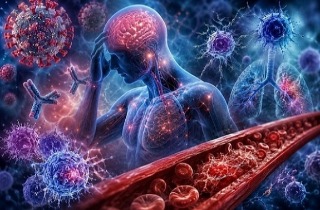
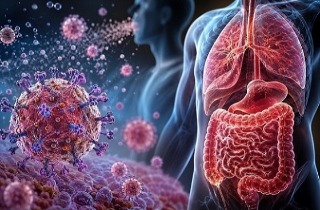
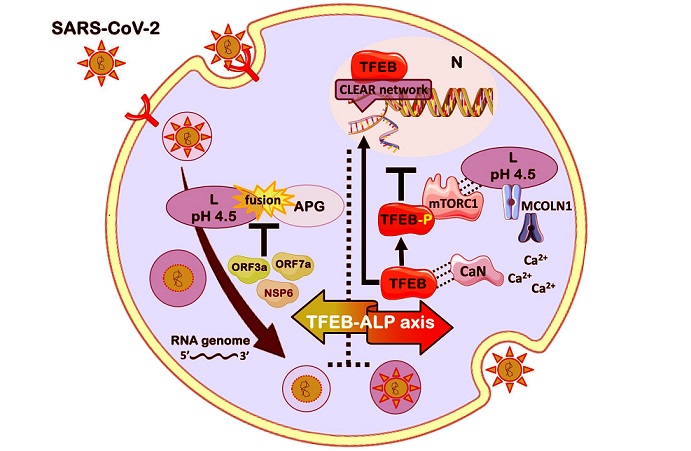 Scientists uncover how COVID-19 disrupts a vital cellular cleaning system, offering new insight into lingering Long COVID symptoms.
How cells normally clean and protect themselves
Scientists uncover how COVID-19 disrupts a vital cellular cleaning system, offering new insight into lingering Long COVID symptoms.
How cells normally clean and protect themselves
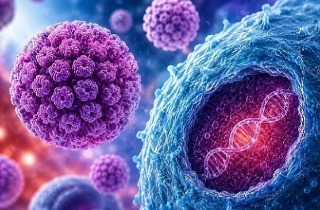
Every cell in the human body relies on a built-in waste disposal and recycling process called the autophagy lysosome pathway. This system breaks down damaged cell parts, clears invading viruses, and helps control inflammation. A key controller of this process is a protein known as transcription factor EB, or TFEB, which switches on genes needed for proper cellular cleanup and immune regulation.
How SARS-CoV-2 hijacks the cleanup system
According to the researchers, SARS-CoV-2 uses several of its own proteins to sabotage this pathway. Viral proteins such as ORF3a, ORF7a, and NSP6 block the final step where waste-filled compartments fuse with lysosomes for destruction. This results in what scientists call incomplete autophagy, where harmful materials and viral remnants accumulate instead of being cleared.
This disruption allows viral components to linger inside cells and triggers excessive immune reactions. Over time, this contributes to ongoing inflammation, tissue damage, and immune imbalance, even after the initial infection appears to be over.
TFEB disruption fuels inflammation and Long COVID
TFEB normally acts as a master switch that restores balance during stress or infection. However, SARS-CoV-2 alters TFEB signaling, preventing it from fully activating the cleanup system. As a result, immune cells may remain stuck in an activated state, continuously releasing inflammatory molecules such as interleukin 6 and tumor necrosis factor.
The review explains that this persistent immune activation closely matches symptoms reported by Long COVID patients, including fatigue, brain fog, shortness of breath, and multi organ involvement. Evidence also links this dysfunction to ongoing complement activation and mitochondrial damage, which further drains cellular energy and worsens long term symptoms.
Why this matters for future treatments
Understanding the TFEB autophagy lysosome pathway opens new possibilities for treatment. Instead of only targeting the virus itself, future therapies could focus on restoring normal cellular cleanup and immune balance. Boosting TFEB activity in a controlled way may help reduce lingering inflammation, clear viral debris, and support recovery in Long COVID patients.
Institutions involved in the research
The researc
h was conducted by scientists from the Department of Medical Biology and Genetics, Faculty of Biology, University of Gdańsk, Gdańsk, Poland.
Conclusion
This study provides strong evidence that COVID-19 is not only an acute viral illness but also a disease that can damage essential cellular maintenance systems. By disrupting TFEB controlled autophagy, SARS-CoV-2 creates conditions for chronic inflammation and immune dysfunction. Restoring this pathway may be critical for reducing Long COVID symptoms, preventing long term tissue damage, and improving recovery outcomes for millions affected worldwide.
The study findings were published in the peer reviewed journal: Frontiers in Immunology
https://www.frontiersin.org/journals/immunology/articles/10.3389/fimmu.2025.1708364/full
For the latest on Long COVID, keep on logging to Thailand
Medical News.
Read Also:
https://www.thailandmedical.news/articles/long-covid




 Share
Share
 Tweet
Tweet
 Share
Share