Nikhil Prasad Fact checked by:Thailand Medical News Team Jul 22, 2026 2 months, 1 week, 5 days, 23 hours, 36 minutes ago
Medical News: A growing body of research is raising concerns about a surprising link between commonly used antibiotics and a serious digestive condition known as inflammatory bowel disease (IBD). Scientists are now warning that certain antibiotics may not just treat infections—but could also disrupt the gut in ways that increase long-term disease risk.
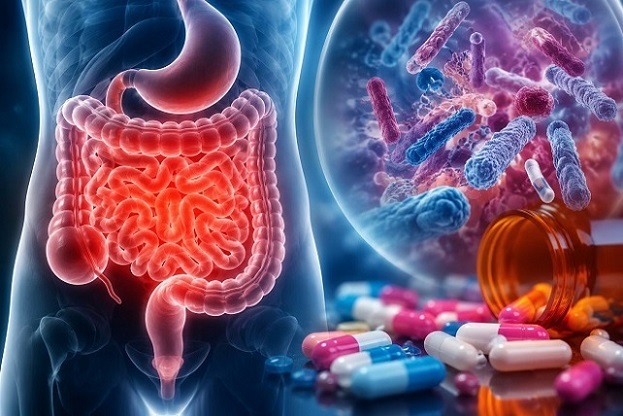 New research reveals how common antibiotics may increase long-term risk of inflammatory bowel disease by
disrupting gut bacteria
What Is Inflammatory Bowel Disease?
Inflammatory bowel disease, or IBD, refers to chronic conditions that cause ongoing inflammation in the digestive tract. The two main types are Crohn’s disease and ulcerative colitis. These illnesses can lead to symptoms such as persistent diarrhea, stomach pain, weight loss, and even internal bleeding.
Researchers from the School of Biotechnology, Amrita Vishwa Vidyapeetham, Kollam, Kerala, India have conducted an in-depth review examining how antibiotics influence the development and progression of IBD.
Antibiotics: Helpful but Potentially Harmful
Antibiotics are essential medicines used to fight bacterial infections. However, they also affect the “good bacteria” living in our gut. These beneficial microbes help maintain digestion, protect against harmful pathogens, and regulate the immune system.
The study highlights a critical issue: while antibiotics can treat infections and even help manage some IBD complications, their repeated or improper use may disrupt the delicate balance of gut bacteria. This disruption is known as “dysbiosis.”
Not All Antibiotics Are Equal
One of the most important findings is that the risk varies depending on the type of antibiotic used.
Broad-spectrum antibiotics—those that kill a wide range of bacteria—appear to carry the highest risk. Drugs like fluoroquinolones and metronidazole were found to significantly alter gut bacteria and were strongly linked to increased IBD risk. In contrast, narrow-spectrum antibiotics and drugs like nitrofurantoin showed little or no association with the disease.
Researchers also found that the more frequently antibiotics are used, the greater the risk. People who had multiple courses of antibiotics were much more likely to develop IBD compared to those with little or no exposure.
Why the Gut Microbiome Matters
This
Medical News report highlights how antibiotics can dramatically change the gut microbiome—the community of microorganisms living in the intestines.
Healthy gut bacteria produce important substances that protect the intestinal lining and reduce inflammation. When antibiotics wipe out these beneficial microbes, harmful bacteria can take over. This can weaken the gut barrier, trigger immune reactions, and lead to chronic inflammation.
In some cases, even a short course of antibiotics can reduce microbial diversity. Repeated exposure can cause long-term changes, making the gut less resilient and more prone to disease.
Early-Life Exposure Raises Red Flags
The study also emphasizes that timing matters. Children exposed to antibiotics early in life may face a higher risk of developing IBD later on.
During infancy and childhood, the immune system and gut microbiome are still developing. Disruptions during this critical period can have lasting effects. Some studies show that early antibiotic use can nearly double the risk of IBD in children.
A Delicate Balance Between Treatment and Risk
Interestingly, antibiotics are still sometimes used to treat certain IBD complications, such as infections or abscesses. This creates a complex situation where the same drugs can both help and harm patients, depending on how they are used.
Experts stress the importance of “antibiotic stewardship,” meaning antibiotics should only be used when truly necessary and in the right way.
Conclusion
The findings make it clear that antibiotics, while lifesaving, are not without long-term consequences. Their impact on the gut microbiome can increase the risk of inflammatory bowel disease, especially with repeated or early-life use. The research underscores the need for careful prescribing practices, greater awareness among patients, and new strategies to protect and restore gut health after antibiotic treatment. Balancing the benefits of antibiotics with their potential risks will be crucial in preventing avoidable chronic diseases in the future.
The study findings were published in the peer reviewed: International Journal of Molecular Sciences.
https://www.mdpi.com/1422-0067/27/14/6502
For the latest on antibiotics and gut diseases, keep on logging to Thailand
Medical News.
Read Also:
https://www.thailandmedical.news/articles/gastroenterology




 Share
Share
 Tweet
Tweet
 Share
Share

































