Argentina Officially Withdraws from the World Health Organization. More Countries Expected to Follow Including Israel
Nikhil Prasad Fact checked by:Thailand Medical News Team Mar 18, 2026 4 months, 3 weeks, 5 hours, 33 minutes ago
Medical News: Argentina has formally completed its withdrawal from the World Health Organization (WHO), marking a historic shift in global public health alignment and signaling potential fractures in long-standing international health cooperation frameworks. The withdrawal officially took effect on March 17, 2026, exactly one year after the Argentine government submitted its formal notification under the leadership of President Javier Milei.
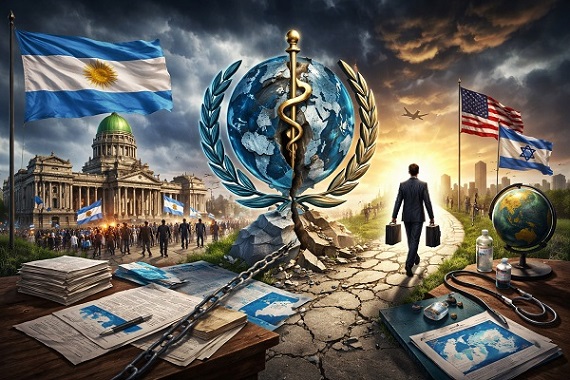 Argentina exits WHO in a controversial move signaling shifting global health alliances
A Politically Charged Exit Rooted in Pandemic Discontent
Argentina exits WHO in a controversial move signaling shifting global health alliances
A Politically Charged Exit Rooted in Pandemic Discontent
The Milei administration has consistently criticized the WHO’s handling of the COVID-19 pandemic, describing its global guidance as flawed, economically damaging, and politically influenced. Officials argued that lockdown policies and other containment strategies endorsed by the WHO resulted in long-term economic disruption without delivering proportional public health benefits.
President Milei had previously characterized these policies as excessive interventions that undermined civil liberties and national autonomy.
Foreign Minister Pablo Quirno emphasized that Argentina’s withdrawal was not merely symbolic but part of a broader effort to reclaim sovereign control over national health decision-making. He stated that future policies would be guided by domestic priorities and independent scientific evaluation rather than multilateral directives perceived as externally imposed.
Maintaining Regional Ties While Rejecting Global Oversight
Despite exiting the WHO, Argentina has indicated that it will remain an active participant in the Pan American Health Organization (PAHO), a semi-autonomous regional body affiliated with the WHO. This approach suggests a strategic pivot rather than a complete disengagement from international health collaboration. Argentine officials have also confirmed plans to pursue bilateral agreements and regional partnerships to ensure continued cooperation in disease monitoring and response.
Importantly, the government has stated that it will still comply with key international health regulations, including reporting outbreaks and sharing epidemiological data, thereby maintaining a degree of global accountability despite its departure from the central WHO framework.
Global Repercussions and Growing Political Momentum
Argentina’s exit closely follows a similar withdrawal by the United States finalized earlier in January 2026, creating a notable alignment between the two nations. While Argentina’s financial contribution to the WHO was relatively modest, estimated at around $8 million for the 2024–2025 cycle, the geopolitical implications are significant. Public health experts warn that coordinated exits by influential countries could weaken global disease surveillance systems, reduce funding pools, and fragment international response mechanisms during future pandemics.
At the same time, political discourse in other countries is beginning to mirror these developments. Israel, in particular, is experienci
ng growing internal pressure and public debate over its continued membership in the WHO. Critics within Israel have raised concerns about perceived politicization within the organization, echoing arguments made by Argentine officials.
This
Medical News report highlights a broader shift in how nations are reassessing their participation in global governance structures, especially those that gained prominence during the pandemic era.
Implications for Future Health Governance
The unfolding situation suggests a potential reconfiguration of global health alliances, where countries may increasingly favor decentralized and regionally focused models over centralized international institutions. While this could allow for more tailored responses to local needs, it also raises concerns about reduced coordination during cross-border health emergencies and diminished capacity for unified action against emerging threats.
The evolving landscape indicates that global health governance is entering a period of uncertainty, where ideological divides and national interests may redefine long-established systems of cooperation, potentially reshaping how the world prepares for and responds to future pandemics.
References:
https://buenosairesherald.com/politics/argentina-formalizes-withdrawal-from-world-health-organization
https://healthpolicy-watch.news/argentina-says-its-not-withdrawing-from-pan-american-health-organization-despite-leaving-who/
For the latest on the WHO, keep on logging to Thailand
Medical News.
Read Also:
https://www.thailandmedical.news/articles/health-news




 Share
Share
 Tweet
Tweet
 Share
Share