Nikhil Prasad Fact checked by:Thailand Medical News Team Mar 29, 2026 4 months, 3 weeks, 21 hours, 17 minutes ago
Medical News: Even Mild COVID-19 May Trigger Lasting Vascular Damage and Delayed NAION Risk
A growing body of medical evidence is raising concern over a little-known but potentially serious eye condition that may develop after COVID-19 infection. Known as non-arteritic anterior ischemic optic neuropathy (NAION), this condition occurs when blood flow to the optic nerve is reduced, leading to sudden vision problems. A new case analysis and literature review is shedding light on how COVID-19 may quietly trigger this condition—even weeks after recovery.
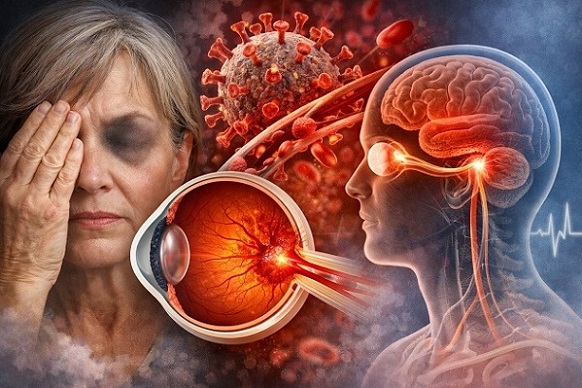 COVID-19 may silently damage the optic nerve, causing lasting vision loss weeks after recovery
What Is NAION and Why It Matters
COVID-19 may silently damage the optic nerve, causing lasting vision loss weeks after recovery
What Is NAION and Why It Matters
NAION is one of the most common causes of sudden vision loss in older adults. It happens when the optic nerve, which carries visual signals from the eye to the brain, does not receive enough blood. This lack of blood flow can damage nerve fibers, often resulting in permanent blind spots or reduced vision.
Traditionally, risk factors include conditions like high blood pressure, diabetes, high cholesterol, and smoking. However, researchers are now warning that COVID-19 infection itself may act as a trigger—even in people without these classic risks.
A Real Case Highlights the Risk
In the reported case, a 66-year-old woman developed vision problems about one month after recovering from COVID-19. She noticed a shadow in her visual field, and medical tests confirmed swelling of the optic nerve and reduced blood flow. Despite treatment and some improvement in visual clarity, her visual field loss remained largely unchanged over time.
Imaging scans showed no signs of inflammation typically seen in other eye conditions, reinforcing the diagnosis of NAION. Interestingly, her only notable risk factor was mild hypertension, suggesting that COVID-19 may have played a significant role.
How COVID-19 May Damage the Eye
Scientists believe several mechanisms could explain this connection. One major factor is inflammation. COVID-19 can trigger widespread inflammation in the body, including blood vessels. This can lead to clot formation and reduced blood supply to sensitive areas like the optic nerve.
Another key factor is damage to the inner lining of blood vessels, known as the endothelium. The virus can directly infect these cells through a receptor called ACE2, which is also found in eye tissues. When these cells are damaged, it can lead to abnormal clotting and impaired circulation.
This
Medical News report highlights that even mild COVID-19 infections may leave behind lingering vascular damage, increasing the risk of delayed complications like NAION.
Timing and Patterns of Vision Loss
One striking finding from the study is the timing. On average, NAION symptoms appeared about one month after COVID-19 infection, although cases ranged from immediate onset to sever
al months later. This delay suggests that the virus may cause long-term changes in blood vessels rather than immediate damage.
In some cases, patients developed NAION in both eyes, either simultaneously or weeks apart. This raises concerns about ongoing vascular instability even after the initial infection has resolved.
Treatment Challenges and Uncertainty
Currently, there is no proven treatment that can fully reverse NAION. Some therapies, such as aspirin or steroids, have been used, but studies show they offer limited benefit. In fact, steroids may even increase risks in some patients due to their effects on blood clotting.
In the reported case, doctors used vitamin B12 and medications to improve blood circulation. While the patient’s vision sharpness improved slightly, the damaged visual field did not recover, highlighting the long-term impact of the condition.
What This Means Going Forward
The findings suggest that COVID-19 should now be considered a potential risk factor for optic nerve damage. Even individuals with mild infections or minimal symptoms may be at risk of delayed complications affecting vision.
Doctors are being urged to monitor patients more closely after COVID-19 recovery, especially those with underlying vascular conditions. Early detection of visual symptoms could help manage the condition before further damage occurs.
Conclusion
The link between COVID-19 and NAION underscores how the virus continues to reveal hidden and long-term effects beyond the lungs. The evidence suggests that COVID-19 can silently damage blood vessels, including those supplying the optic nerve, leading to lasting vision problems. While the exact mechanisms are still being studied, the role of inflammation, endothelial injury, and abnormal clotting appears significant. Greater awareness among both doctors and the public is essential, as early recognition of symptoms like sudden vision loss or blind spots may help prevent further deterioration. As research continues, understanding these delayed complications will be crucial in managing the broader health impact of COVID-19.
The study findings were published in the peer reviewed International Journal of Molecular Sciences.
https://www.mdpi.com/1422-0067/27/6/2644
For the latest COVID-19 news, keep on logging to Thailand
Medical News.
Read Also:
https://www.thailandmedical.news/articles/coronavirus
https://www.thailandmedical.news/articles/long-covid
https://www.thailandmedical.news/articles/ophthalmology-(eye-diseases)




 Share
Share
 Tweet
Tweet
 Share
Share