Scientists Discover Powerful Alzheimer’s Clues in Discarded Spinal Fluid Sediments
Nikhil Prasad Fact checked by:Thailand Medical News Team Apr 22, 2026 3 months, 1 day, 6 minutes ago
Medical News: Researchers have uncovered a surprising new source of potential early warning signs for devastating brain diseases - found in a part of spinal fluid that doctors routinely throw away. The discovery could reshape how conditions like Alzheimer’s are detected and monitored in the future.
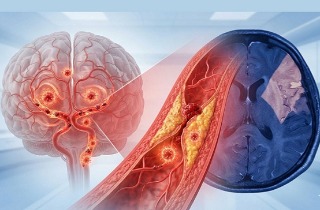
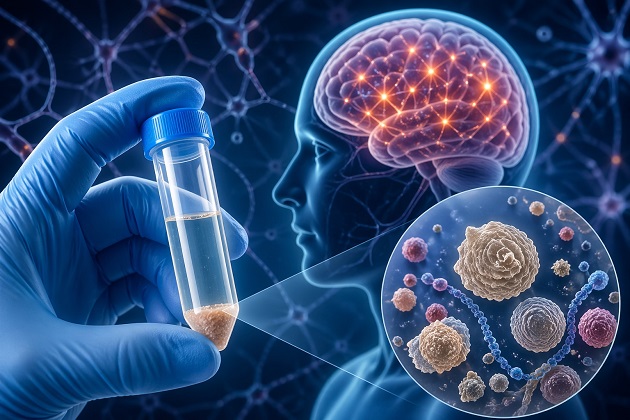 Discarded spinal fluid sediments may hold key biomarkers for early detection of neurodegenerative diseases
An Overlooked Treasure in Medical Testing
For years, scientists have relied on cerebrospinal fluid (CSF) - the clear liquid surrounding the brain and spinal cord - to study neurodegenerative diseases. However, during routine testing, CSF samples are spun in machines, and the leftover solid material, known as sediment or “pellet,” is usually discarded as waste.
Now, a new study suggests that this so-called waste may actually contain valuable biological clues. Researchers from the Universitat de Barcelona, Institut de Neurociències (UBNeuro), CIBERNED (Spain), Hospital Clínic de Barcelona, Centres Científics i Tecnològics UB (CCiTUB), and the Biobank-Hospital Clínic-IDIBAPS have demonstrated that these sediments hold brain-derived components and disease-related proteins.
What Scientists Actually Found
The research team analyzed post-mortem CSF samples from patients diagnosed with Alzheimer’s disease and progressive supranuclear palsy. Using advanced imaging techniques like electron microscopy and chemical analysis, they made several striking discoveries.
First, they identified structures called “wasteosomes,” which are tiny waste containers formed in the brain. These structures help collect and remove unwanted materials. They were found both in brain tissue and within the CSF sediment, confirming that the sediment contains material directly originating from the brain.
Even more surprising was the presence of “psammoma bodies,” mineralized structures that had never before been reported in CSF sediments. These were confirmed through imaging and chemical analysis showing high levels of calcium and phosphorus.
Key Disease Proteins Detected
Perhaps the most important finding was the detection of hallmark disease proteins within the discarded sediment. In Alzheimer’s samples, researchers found both amyloid-beta (Aβ42) and tau proteins - two key substances known to accumulate in the brains of affected patients. In contrast, samples from the other disorder contained tau protein but not amyloid-beta.
This
Medical News report highlights that these protein patterns closely mirror what is seen in the brain itself, suggesting that CSF sediment could serve as a powerful diagnostic tool.
Why This Changes Everything
Traditionally, doctors measure these proteins in the liquid portion of CSF. However, levels o
f some proteins - especially amyloid-beta - are often lower in patients because they clump together and become trapped in brain tissue.
The new findings suggest another explanation: some of these proteins may also be getting trapped in the sediment that is routinely discarded. This means current tests might be missing a significant portion of disease-related material.
Additionally, the study showed that these sediments contain a wide range of other biological debris, including vesicles, fibrillar structures, and membrane fragments, all of which may carry important diagnostic information.
Implications for Future Diagnosis
If further studies confirm these results, analyzing CSF sediments could open up an entirely new way to detect neurodegenerative diseases earlier and more accurately. It may also help differentiate between different types of brain disorders based on their unique protein signatures.
Importantly, the researchers note that future work must focus on samples from living patients, as this study relied on post-mortem material. Still, early evidence suggests similar components may also be present in samples collected through standard spinal taps.
Conclusion
This discovery challenges long-standing medical practices and highlights how critical information can be overlooked in routine processes. By re-examining discarded material, scientists may have uncovered a new frontier in diagnosing and understanding brain diseases. The findings deepen our understanding of how these conditions develop and offer hope for earlier detection, improved accuracy, and more targeted treatment strategies in the future. Continued research will be essential to validate these findings in living patients and determine how best to integrate sediment analysis into clinical practice.
The study findings were published in the peer reviewed International Journal of Molecular Sciences.
https://www.mdpi.com/1422-0067/27/8/3692
For the latest research on Alzheimer’s Disease, keep on logging to Thailand
Medical News.
Read Also:
https://www.thailandmedical.news/articles/alzheimer,-dementia-




 Share
Share
 Tweet
Tweet
 Share
Share