Nikhil Prasad Fact checked by:Thailand Medical News Team May 13, 2026 4 months, 3 weeks, 2 days, 11 hours, 12 minutes ago
Medical News: A major controversy has emerged around a widely discussed COVID-19 autopsy study from Brazil after editors at the journal PLOS One issued an official Expression of Concern over missing treatment details that may have influenced the findings.
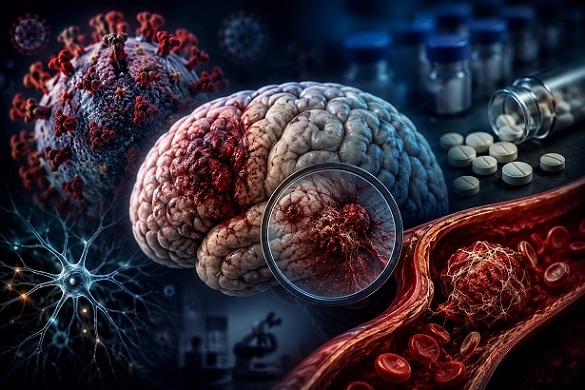 Journal editors question whether hidden chloroquine treatment details may have affected shocking COVID-19
brain autopsy findings in Brazil
The original study, published in 2021, examined severe bleeding and blood clotting inside the brains of COVID-19 victims in the Brazilian Amazon.
https://journals.plos.org/plosone/article?id=10.1371/journal.pone.0255950
Researchers had described extensive damage to the central nervous system, including hemorrhages and thrombosis, based on complete autopsies of patients who died from the virus. The findings were considered important because they appeared to show how COVID-19 could directly damage the brain.
However, in April 2026, editors from PLOS One revealed that crucial information had not been fully disclosed in the study. The patients whose brains were examined had actually been participants in the controversial Clorocovid-19 clinical trial, where hospitalized COVID-19 patients received either high or low doses of chloroquine diphosphate, a drug heavily promoted during the early pandemic years.
The researchers involved in the study were from several Brazilian institutions including the Fundação de Medicina Tropical Dr. Heitor Vieira Dourado in Manaus, Universidade do Estado do Amazonas, Instituto Leônidas & Maria Deane-Fiocruz Amazônia, and other collaborating medical and research centers in Brazil.
Questions Raised Over Missing Information
According to the journal editors, the original autopsy paper discussed links between brain damage and treatments such as corticosteroids, anticoagulants, and antibiotics. But it failed to mention that all patients had also participated in a chloroquine treatment trial.
That omission has now become the center of concern. PLOS editors said expert reviewers advised that chloroquine exposure should have been clearly reported and analyzed because the drug itself could potentially affect blood vessels, clotting, inflammation, or neurological conditions. Without discussing this factor, readers may not have received a complete picture of the possible causes behind the severe brain abnormalities observed during autopsies.
The journal also noted that additional statistical analyses examining whether chloroquine treatment influenced the findings were not carried out in the published paper.
Researchers Defend Their Decision
The study’s corresponding author argued that the team did not believe chloroquine treatment would have changed the brain lesions observed during autopsies. The researchers stated that earlier reports involving high-dose chloroquine poisoning did not commonly describe similar neurological damage.
They also explained that expos
ure to the drug was inconsistent among patients and that the sample size was too small to properly compare outcomes between treatment groups.
In response to the concerns, the authors later submitted updated supplementary data showing which patients received high-dose or low-dose chloroquine. They stated that four individuals had been assigned to the high-dose arm, although none completed the full treatment regimen. According to the researchers, those four cases did not show unique pathological findings compared to the others.
Still, journal editors emphasized that the missing disclosure remains serious because it prevents scientists from fully determining whether the reported brain injuries were influenced solely by COVID-19, by drug treatment, or by a combination of factors.
Why This Matters
During the pandemic, chloroquine and hydroxychloroquine became some of the most politically and scientifically divisive drugs in the world. While some early reports suggested possible benefits, later clinical trials raised concerns about effectiveness and safety, especially at higher doses.
This
Medical News report highlights how transparency in medical research remains essential, particularly in studies involving experimental treatments during public health emergencies.
Brain damage linked to COVID-19 remains an area of intense scientific interest. Studies worldwide have reported inflammation, tiny blood clots, strokes, and bleeding in some severely ill patients. However, when important treatment details are missing, it becomes much harder for scientists to separate the effects of the virus itself from the effects of medications or other hospital interventions.
Conclusions
The new Expression of Concern does not claim that the original study was fraudulent or entirely incorrect. However, it raises substantial doubts about whether all relevant clinical information was properly disclosed to readers and reviewers. The controversy also serves as another reminder of the confusion surrounding chloroquine use during the COVID-19 crisis. Moving forward, experts say that complete transparency in clinical and autopsy studies is critical to maintaining scientific trust and ensuring that future treatment decisions are based on fully accurate data.
The concerns were published in the peer reviewed journal: PLOS One.
https://journals.plos.org/plosone/article?id=10.1371/journal.pone.0348044
For the latest on COVID-19 research, keep on logging to Thailand
Medical News.
Read Also:
https://www.thailandmedical.news/articles/coronavirus




 Share
Share
 Tweet
Tweet
 Share
Share