Nikhil Prasad Fact checked by:Thailand Medical News Team Jun 25, 2026 3 months, 1 week, 2 days, 4 hours, 20 minutes ago
Medical News: France has confirmed its first imported case of Ebola after a doctor returned from a humanitarian mission in the Democratic Republic of Congo (DRC), raising fresh concerns about the rapid expansion of one of the most alarming Ebola outbreaks in recent years. Although French health authorities have emphasized that the risk to the public remains extremely low, the case highlights the growing international implications of the worsening epidemic in Central Africa.
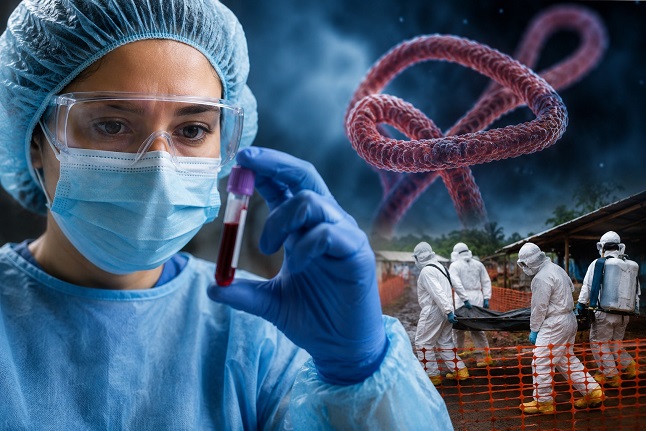 France confirms its first Ebola case as health officials race to contain risks linked to the rapidly expanding outbreak in the
Democratic Republic of Congo
The French health ministry announced that the physician was immediately transferred under secure conditions to a specialized infectious disease facility upon arrival in France. The patient remains in stable condition and has been placed in strict isolation while authorities conduct extensive contact tracing. Individuals identified as close contacts will undergo home isolation and health monitoring for 21 days, the maximum incubation period of the virus. This
Medical News report highlights the importance of rapid detection, isolation, and surveillance measures in preventing international spread.
Outbreak In Congo Continues to Accelerate
The outbreak, officially declared by the World Health Organization (WHO) on May 15, has already resulted in 1,118 confirmed infections and 291 confirmed deaths as of June 24th in DRC. However, health experts believe these figures significantly underestimate the true scale of transmission, with thousands of suspected cases still awaiting laboratory confirmation. Researchers also believe the virus had likely been circulating undetected in affected communities for several weeks before the outbreak was officially recognized.
The epidemic is concentrated primarily in Ituri province, which accounts for more than 90 percent of confirmed infections. Additional cases have been reported in North Kivu and South Kivu, regions severely affected by ongoing armed conflict that has complicated public health operations and delayed patient access to treatment.
Healthcare Workers Face Exceptional Risks
Healthcare professionals remain among the most vulnerable groups during the outbreak. WHO recently reported that 17 of the 75 infected healthcare workers have died after contracting the virus while caring for patients. Humanitarian agencies continue to face enormous operational challenges due to insecurity, damaged healthcare infrastructure, and previous attacks on hospitals and Ebola treatment centers.
Despite these obstacles, WHO officials report that community cooperation has improved significantly over recent weeks, with more residents seeking medical assistance early and participating in public health interventions aimed at limiting further transmission.
Rare Ebola Strain Presents Additional Challenges
Unlike previous major Ebola outbreaks, the current epidemic is caused by the rare Bundibugyo species of Ebola virus
. No licensed vaccine or approved antiviral treatment currently exists specifically for this strain, making containment efforts heavily dependent on early diagnosis, patient isolation, supportive medical care, and rigorous contact tracing.
Scientists believe Ebola initially spreads from infected African fruit bats to humans before transmitting through direct contact with the blood or bodily fluids of infected individuals or deceased victims. Symptoms typically begin with fever, fatigue, muscle pain, headache, and sore throat before progressing to vomiting, diarrhea, abdominal pain, skin rash, and potentially life-threatening organ failure.
International Vigilance Intensifies
France has introduced a dedicated monitoring system for humanitarian workers returning from affected areas, while neighboring Uganda has already confirmed 20 Ebola infections and two deaths linked to the regional outbreak. Earlier this month, an American healthcare worker infected in the DRC successfully recovered after receiving treatment in Germany.
Health authorities, Africa CDC, and the US Centers for Disease Control and Prevention warn that the current outbreak has the potential to become one of the largest Ebola epidemics ever recorded if transmission is not rapidly interrupted. Although international experts continue to stress that the global risk remains low, the combination of conflict, delayed detection, healthcare disruptions, and the absence of an effective vaccine against the Bundibugyo strain creates an exceptionally difficult public health emergency. Sustained international cooperation, rapid surveillance, adequate humanitarian funding, and strengthened healthcare systems will be essential to prevent the outbreak from escalating into an even more devastating global health crisis.
Reference:
https://sante.gouv.fr/actualites-presse/presse/communiques-de-presse/article/ebola-identification-d-un-1er-cas-chez-un-medecin-humanitaire-de-retour-de
For the latest Ebola news, keep on logging to Thailand
Medical News.
Read Also:
https://www.thailandmedical.news/articles/ebola




 Share
Share
 Tweet
Tweet
 Share
Share

































