Nikhil Prasad Fact checked by:Thailand Medical News Team Apr 03, 2026 4 months, 4 weeks, 1 day, 11 hours, 48 minutes ago
Medical News: A Natural Compound Sparks New Hope
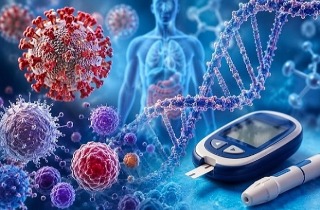
A remarkable new scientific breakthrough is shedding light on how a natural compound found in honey and plants could transform the way diabetic wounds are treated. Researchers have discovered that chrysin, a plant-based flavonoid, can significantly enhance the healing power of stem cell therapies, offering new hope for individuals suffering from chronic wounds that refuse to heal.
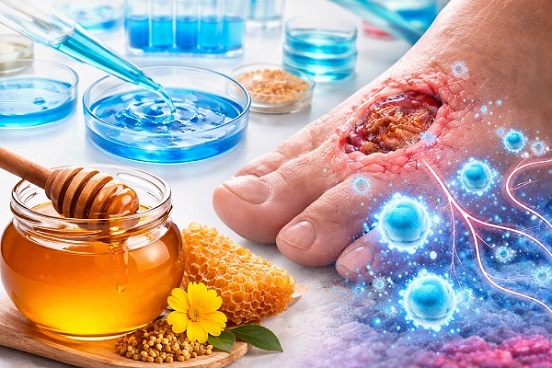 Chrysin-enhanced stem cell therapy dramatically accelerates diabetic wound healing.
Diabetic wounds, particularly foot ulcers, are among the most serious complications of diabetes. They often develop into long-term, non-healing injuries due to poor blood circulation, persistent inflammation, and damage caused by high blood sugar levels. These wounds not only reduce quality of life but are also a leading cause of lower limb amputations worldwide, making effective treatment strategies urgently needed.
Inside the Study and Who Conducted It
The study was conducted by researchers from the Department of Plastic Surgery, Renmin Hospital of Wuhan University, Wuhan, China. Their work focused on improving the performance of bone marrow mesenchymal stem cells, also known as BMSCs, which are widely recognized for their ability to repair damaged tissues and promote healing.
Instead of directly transplanting stem cells, the researchers used a safer and more advanced approach known as cell-free therapy. They collected the beneficial substances secreted by stem cells, called conditioned medium, and enhanced its healing properties by pre-treating the cells with chrysin.
What Exactly Is Chrysin and Why It Matters
Chrysin is a naturally occurring flavonoid found in honey, propolis, and passion flowers, and it has attracted growing scientific interest due to its strong biological activity and low toxicity. It belongs to a class of compounds known as dihydroxyflavones, which are especially effective at neutralizing harmful free radicals and reducing oxidative stress within cells. Beyond its antioxidant role, chrysin also acts as a powerful anti-inflammatory agent, helping to suppress pathways that trigger chronic inflammation. Importantly, it influences critical cellular signaling systems such as the PI3K/AKT and Nrf2 pathways, which are involved in cell survival, repair, and regeneration. These combined effects allow chrysin to protect cells from damage, improve their function under stress conditions like high glucose environments, and enhance their ability to support tissue healing, making it particularly valuable in diabetic wound treatment.
Stronger Stem Cells Lead to Better Healing
Laboratory experiments showed that chrysin significantly boosted the activity of stem cells. The treated BMSCs grew faster, moved more efficiently, and progressed through their life cycle more effectively. This resulted in a more potent conditioned medium rich in healing signals.
The enhanced solution was able to protect critical cells such as endothelial cells and skin fibroblasts from damage caused by high glucose levels. These cells are essential for forming blood vessels and rebuilding skin, yet they are usually impaired in diabetic
conditions. With chrysin treatment, their function improved dramatically, restoring their ability to multiply, migrate, and repair damaged tissue.
Powerful Results in Diabetic Wound Models
To confirm these findings, the researchers tested the treatment on diabetic mice with skin wounds. The results were striking. Wounds treated with chrysin-enhanced conditioned medium healed significantly faster than those treated with standard methods.
By day 14, the treated wounds showed faster closure, better skin regeneration, and more organized tissue structure. There was also a significant increase in collagen production, which strengthens the skin, and enhanced formation of new blood vessels, ensuring better oxygen and nutrient supply to the healing area.
Microscopic analysis further confirmed that the treated wounds had higher levels of cell proliferation and improved structural rebuilding, indicating true tissue regeneration rather than superficial healing.
How the Treatment Works at the Molecular Level
This
Medical News report highlights that the therapy works by targeting the root causes of delayed healing in diabetes. Advanced genetic analysis revealed that the treatment reduced harmful inflammation by suppressing key pathways such as NF-kB and IL-17 signaling.
At the same time, it reduced the infiltration of inflammatory immune cells that typically worsen chronic wounds. Meanwhile, genes associated with tissue repair, cell movement, and regeneration were activated, creating an environment that supports faster and more effective healing.
The treatment also reduced oxidative stress markers and improved collagen synthesis, both of which are critical for restoring damaged tissue.
A Safer Future for Regenerative Medicine
One of the most important advantages of this approach is its safety. Traditional stem cell therapies can carry risks such as immune rejection, tumor formation, or unpredictable behavior of transplanted cells.
By using only the beneficial substances released by stem cells, this method avoids those risks while still delivering powerful therapeutic effects. It also simplifies production and storage, making it more practical for future clinical use.
Conclusion
The findings from this study represent a significant leap forward in the treatment of diabetic wounds. By enhancing stem cells with a natural compound like chrysin, researchers have unlocked a powerful method to accelerate healing while addressing the underlying causes of chronic wounds such as inflammation, oxidative stress, and impaired blood vessel formation. This dual-action approach not only improves healing speed but also enhances the quality of tissue repair, making it more durable and functional. While additional human studies are still required, the current results strongly suggest that this innovative therapy could become a safer, more effective, and widely accessible treatment option, offering renewed hope to millions of patients suffering from difficult-to-heal diabetic wounds.
The study findings were published in the peer reviewed journal: Biomedicines.
https://www.mdpi.com/2227-9059/14/4/781
For the latest on Chrysin and its therapeutic properties, keep on logging to Thailand
Medical News.
Read Also:
https://www.thailandmedical.news/articles/diabetes
https://www.thailandmedical.news/articles/herbs-and-phytochemicals




 Share
Share
 Tweet
Tweet
 Share
Share