Nikhil Prasad Fact checked by:Thailand Medical News Team Sep 10, 2026 19 minutes ago
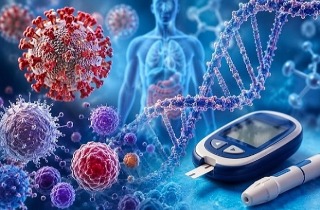
Researchers have uncovered evidence that SARS-CoV-2 depends heavily on disabling stress granules, a cellular defense system that can halt protein production and interfere with viral replication. Disrupting two viral mechanisms that suppress these granules weakened the virus while still producing protection against later infection.
 Blocking two SARS-CoV-2 stress-granule defenses reduced replication and disease while preserving
protective immunity in hamsters
Image Credit: Thailand Medical News
A Two-Pronged Viral Defense
The researchers are from the University of Texas Medical Branch in Galveston, including its Departments of Microbiology & Immunology and Pathology, Human Pathophysiology and Translational Medicine, Institute for Translational Sciences, World Reference Center of Emerging Viruses and Arboviruses, Center for Biodefense & Emerging Infectious Diseases, and Institute for Human Infection and Immunity; and Emory University in Atlanta, through the Department of Pediatrics at Emory University School of Medicine and the Emory Vaccine Center.
Stress granules are temporary clusters of RNA and proteins formed when cells encounter stress. SARS-CoV-2 counters them using nonstructural protein 3 (NSP3) early in infection and nucleocapsid protein (N) later. The team engineered a WA-1 SARS-CoV-2 mutant, YF/F17A, carrying changes in both proteins that disrupt their interactions with stress-granule components.
Viral Replication Falls Sharply
In human Calu3 bronchial cells, mutant virus was undetectable at 24 hours while wild-type virus reached about 10,000 focus-forming units per milliliter. By 48 hours, the mutant remained approximately 1,000-fold lower. Reduced replication was also seen in Vero E6 and A549-ACE2 cells.
Crucially, this
Thailand Medical News report notes that attenuation did not appear to result primarily from stronger type I interferon activity. Instead, the mutant triggered substantially more stress-granule formation. At 24 hours, more than one-quarter of mutant-infected cells showed stress granules, compared with under 3% of wild-type-infected cells.
Less Disease in Hamsters
In Syrian golden hamsters, wild-type infection caused weight loss peaking near 15% by day six. Animals infected with YF/F17A largely maintained their starting weight and showed no signs of disease. Lung viral titers were about 10-fold lower on day two and 100-fold lower on day four, although nasal-wash titers initially remained similar.
The mutant also caused less late-stage lung inflammation. Gene-expression analysis identified 3,721 differentially expressed genes at day four, with reduced activation of pathways involving innate immunity, inflammation, cytokines, and chemokines.
Protection Despite Muted Inflammation
Twenty-one days after primary exposure, hamsters were rechallenged with wild-type SARS-CoV-2. Animals previously given YF/F17A had no weight loss, and no infectious virus was detected in their lungs on days two or four. Neutralizing antibody respo
nses resembled those generated by wild-type exposure, including against BA.5.
Conclusions
The findings indicate that SARS-CoV-2’s suppression of stress granules is a major contributor to replication and disease. Targeting this pathway could support new antiviral strategies or live-attenuated vaccine designs, although the authors caution that stress-granule attenuation alone may be insufficient and hamster studies cannot fully characterize B- and T-cell responses.
The study findings were published in the peer reviewed Journal of Virology.
https://journals.asm.org/doi/10.1128/jvi.00992-26
Read Also:
https://www.thailandmedical.news/articles/coronavirus
https://www.thailandmedical.news/articles/long-covid




 Share
Share
 Tweet
Tweet
 Share
Share