Long COVID Linked to Elevated Anti-Nucleocapsid IgA and Complement Component 3 Loss
Nikhil Prasad Fact checked by:Thailand Medical News Team May 20, 2026 3 months, 1 week, 6 days, 14 hours, 22 minutes ago
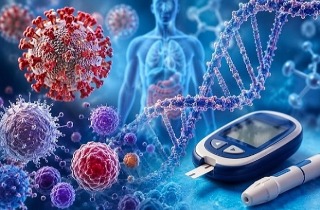
Medical News: A new Spanish study has uncovered alarming evidence that Long COVID patients may be suffering from persistent immune dysfunction long after recovering from their initial coronavirus infection. Researchers found that people with post-COVID syndrome showed elevated levels of anti-nucleocapsid secretory IgA antibodies together with significant depletion of complement component 3 or C3, a key immune protein involved in inflammation control and pathogen defense. The findings provide fresh insight into why many Long COVID sufferers continue to experience fatigue, brain fog, muscle pain, breathing issues and chronic inflammation months or even years after infection.
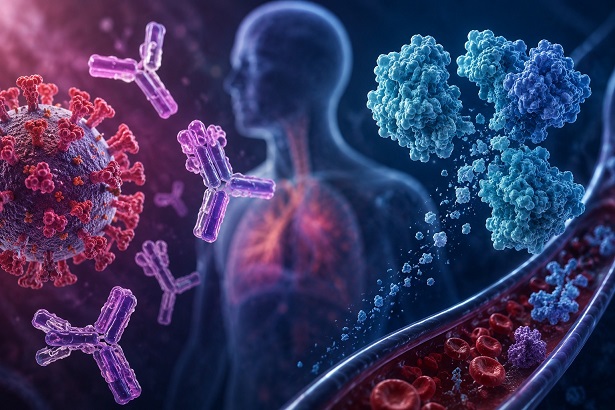 Scientists discover persistent immune abnormalities and dangerous C3 depletion in Long COVID patients
The study was conducted by scientists from the Complutense University School of Medicine, Research Institute Hospital 12 de Octubre (imas12), Universidad Rey Juan Carlos, and the Complement Genetics and Molecular Analysis Laboratory at the CIB-CSIC center in Madrid, Spain.
Researchers Investigated Saliva and Blood Immune Responses
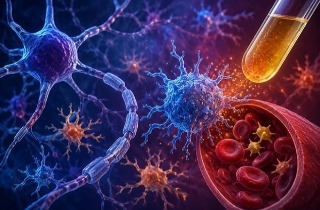
The investigators analyzed saliva and blood samples from 104 patients suffering from post-COVID syndrome and compared them with 34 individuals who had fully recovered from COVID-19 without lingering symptoms. Their goal was to better understand how the immune system behaves in Long COVID patients.
One of the key areas examined was secretory IgA antibodies in saliva. IgA antibodies are part of the body’s first-line defense at mucosal surfaces such as the mouth, nose and respiratory tract. The researchers specifically looked at antibodies targeting the SARS-CoV-2 nucleocapsid protein, a viral component associated with natural infection rather than vaccination.
The Long COVID patients showed significantly higher levels of anti-nucleocapsid secretory IgA in their saliva compared to recovered individuals. Scientists believe this may indicate persistent immune stimulation possibly caused by lingering viral proteins or hidden viral reservoirs remaining in the body.
Dangerous Drop in Complement C3 Levels Detected
The most concerning discovery involved complement component 3 or C3. This protein is a central part of the complement system, a powerful immune defense network that helps clear infections and damaged cells.
Researchers found that Long COVID patients had substantially lower C3 levels than recovered individuals. About 17 percent of Long COVID patients had C3 levels below the normal laboratory range while none of the recovered controls showed such depletion.
According to the scientists, this reduction likely reflects ongoing complement activation and immune consumption, meaning the immune system may remain trapped in a chronic inflammatory state even long after the acute infection has ended.
Interestingly, other complement markers such as factor B, factor H and CH50 activity did not show major differences between the groups, suggesting that C3 depletion may be a particularly sensitive marker of Long COVID-related immune dysfunction.
<
;strong>Reinfections May Worsen Immune Damage
The study also explored how vaccination and reinfection influenced immune abnormalities. Researchers noticed that recently reinfected Long COVID patients showed stronger signs of complement activation and worsening immune imbalance.
Patients with higher levels of anti-nucleocapsid IgG antibodies after reinfection also showed reductions in complement-related activity. This suggests that repeated encounters with the virus may continue triggering abnormal immune responses in vulnerable individuals.
Scientists suspect that the SARS-CoV-2 nucleocapsid protein may interfere with factor H, an important protein that normally prevents excessive complement activation. When this protective mechanism fails, chronic inflammation and tissue damage may continue unchecked.
Potential New Biomarkers for Long COVID
The researchers performed advanced statistical analysis and found that reduced C3 levels alone were able to distinguish Long COVID patients from healthy recovered individuals with fairly high accuracy.
However, combining C3 depletion together with elevated salivary anti-nucleocapsid IgA produced even stronger predictive power. This suggests the two markers together may potentially serve as future biomarkers for diagnosing and monitoring post-COVID syndrome.
This
Medical News report highlights the growing evidence that Long COVID is not simply a psychological or stress-related condition but may involve measurable and persistent biological immune abnormalities.
Findings Strengthen Evidence of Persistent Inflammation
The researchers concluded that their findings support the theory that Long COVID involves ongoing immune activation driven by persistent viral remnants and abnormal antibody responses. Chronic complement activation may contribute to blood vessel damage, inflammation, clotting abnormalities and tissue injury seen in many patients.
They also emphasized that studying both mucosal immunity through saliva testing and systemic immunity through blood analysis could become important for understanding and treating post-COVID syndrome. While additional large-scale studies are still needed, the findings suggest that therapies aimed at calming complement overactivation and restoring immune balance may eventually help Long COVID sufferers.
The study findings were published in the peer reviewed journal: Frontiers in Immunology.
https://www.frontiersin.org/journals/immunology/articles/10.3389/fimmu.2026.1822171/full
For the latest on Long COVID, keep on logging to Thailand
Medical News.
Read Also:
https://www.thailandmedical.news/articles/long-covid




 Share
Share
 Tweet
Tweet
 Share
Share