Nikhil Prasad Fact checked by:Thailand Medical News Team Jan 19, 2026 8 months, 2 weeks, 2 days, 10 minutes ago
Medical News: A new study is shedding light on a surprising connection between latent tuberculosis and milder COVID infections, offering fresh clues into why some populations experienced lower death rates during the early stages of the pandemic. Researchers found that people carrying latent tuberculosis, without any active symptoms, showed unique immune responses that may help protect them from severe COVID-19.
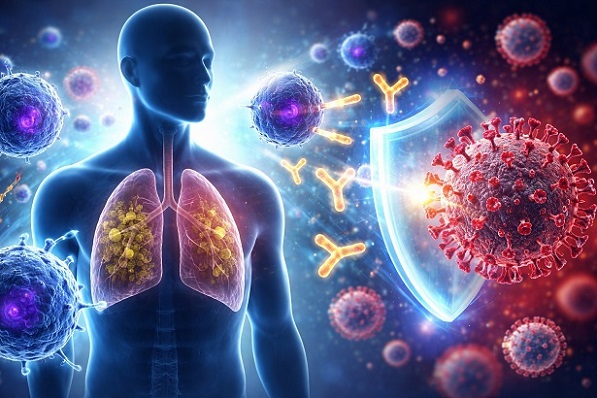 Latent TB infection may prime the immune system to reduce COVID severity through stronger antibodies
and calmer inflammation
A Curious Global Pattern Sparks Scientific Interest
During the first waves of COVID-19, doctors noticed that some countries with high tuberculosis rates appeared to have fewer deaths from the virus. This unexpected trend raised questions about whether past exposure to tuberculosis could influence how the body reacts to SARS-CoV-2. This
Medical News report explores a study that investigated that very possibility by examining immune activity at the genetic level.
Who Conducted the Study and Where
The research was carried out by scientists from the Aga Khan University in Pakistan. The research team included Fizza Fatima, Javaria Ashraf, Kiran Masood, Maliha Yameen, Rabia Hussain, and Zahra Hasan, all affiliated with the university’s medical and research departments.
How the Study Was Done
The researchers focused on adults who tested positive for COVID-19 but showed either no symptoms or only very mild ones. Importantly, all participants were unvaccinated, as the study was conducted between March and October 2020, before vaccines became available. Blood samples were taken shortly after diagnosis, and advanced genetic testing was used to examine how thousands of immune-related genes were behaving.
Participants were divided into two groups. One group had asymptomatic COVID-19 only, while the second group had both asymptomatic COVID-19 and latent tuberculosis. Latent tuberculosis means the bacteria remain in the body without causing illness.
Key Findings Explained Simply
The results revealed clear differences in how the immune systems of the two groups responded. In those with latent tuberculosis, 58 immune-related genes behaved differently compared to those without TB exposure. Most of these genes were more active, particularly ones linked to B cells, which are responsible for producing antibodies.
Genes such as IL-7 and FCRL3 were especially active, suggesting stronger antibody responses. This could mean the body is better prepared to recognize and neutralize the virus quickly. At the same time, other genes involved in excessive inflammation were less active. This is important because severe COVID-19 is often driven by runaway inflammation rather than the virus itself.
Another notable finding was the increased activity of genes that help calm the immune system once a threat is detected. This balance between strong defense and controlled inflammation may ex
plain why these individuals avoided severe illness.
Why This Matters
The study supports the idea that past exposure to tuberculosis, or even widespread BCG vaccination used in many TB-endemic countries, may “train” the immune system. This training could help the body respond more efficiently to new infections like SARS-CoV-2 without overreacting.
Conclusions
Overall, the findings suggest that latent tuberculosis may quietly prime the immune system to fight COVID-19 more effectively. By boosting antibody-producing B cells while also limiting harmful inflammation, latent TB appears to create a balanced immune response that reduces the risk of severe disease. Although the study was small, it provides valuable insight into how past infections can shape future immunity and highlights the need for larger studies to confirm these protective effects.
The study findings were published on a preprint server and is currently being peer reviewed.
https://www.researchsquare.com/article/rs-8500902/v1
For the latest COVID-19 News, keep on logging to Thailand
Medical News.
Read Also:
https://www.thailandmedical.news/articles/coronavirus
https://www.thailandmedical.news/articles/tuberculosis-tb-news




 Share
Share
 Tweet
Tweet
 Share
Share

































