Nikhil Prasad Fact checked by:Thailand Medical News Team Feb 13, 2026 6 months, 2 weeks, 3 days, 4 hours, 57 minutes ago
Medical News: Jilin University Scientists Reveal How Viral Protein Tweaks Help COVID-19 Evade Immunity
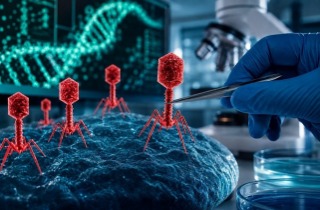
In a sweeping new scientific review, researchers from the Department of Cadre Ward, The First Hospital of Jilin University, Changchun, China, and the General Department, The First Hospital of Jilin University (The Eastern Division), Changchun, China, have uncovered how SARS-CoV-2 skillfully rewrites human cell behavior using microscopic chemical changes known as post-translational modifications. Their work shows that the virus does far more than simply inject genetic material into cells. Instead, it reprograms human proteins after they are made, flipping molecular “switches” that control immunity, inflammation, and viral replication.
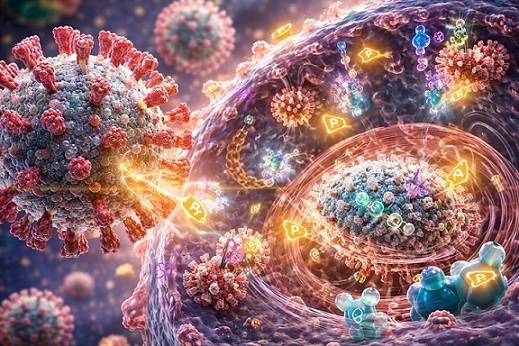 Tiny chemical tweaks allow the COVID-19 virus to reprogram human cells and dodge immune defenses
Understanding the Virus Beyond Its Genes
Tiny chemical tweaks allow the COVID-19 virus to reprogram human cells and dodge immune defenses
Understanding the Virus Beyond Its Genes
Most people think of viruses as relying purely on their genes to cause infection. However, this
Medical News report highlights how SARS-CoV-2 depends heavily on post-translational modifications, or PTMs. These are tiny chemical tags added to proteins after they are produced. While small, they can completely change how a protein behaves.
The researchers describe several major PTMs, including phosphorylation, ubiquitination, SUMOylation, and glycosylation. Each one acts like a fine-tuning dial. By manipulating these processes, the virus alters protein stability, movement inside cells, immune signaling, and even how efficiently new viral particles are assembled.
Phosphorylation Controls Viral Switching
One of the most striking findings involves phosphorylation of the virus’s nucleocapsid, or N protein. The team explains that adding phosphate groups to specific spots on this protein determines whether it tightly binds viral RNA for packaging or loosens its grip to assist in viral replication.
When heavily phosphorylated, the N protein becomes more flexible and supports viral RNA production. When dephosphorylated, it shifts toward compact genome packaging. This reversible switch allows SARS-CoV-2 to carefully time its replication cycle. Researchers also note that certain host enzymes such as SRPK1 and GSK3 are hijacked to carry out these modifications, making them possible drug targets.
Ubiquitination Shapes Immune Battles
Another major battlefield lies in ubiquitination, a process that normally marks proteins for recycling or regulates immune signals. The review details how viral proteins like ORF6 and ORF10 interfere with host ubiquitin pathways to suppress interferon responses, which are essential for antiviral defense.
In some cases, host enzymes fight back by tagging viral proteins for destruction. For example, specific E3 ligases can target viral enzymes and limit replication. However, the virus often counteracts this by degrading or bypassing those same ligases. This tug-of-war demonstrates that ubiquitination is not merely a housekeeping system but a central arena o
f conflict.
SUMOylation and Viral Persistence
The scientists also highlight SUMOylation, another protein-tagging process that affects nuclear signaling and immune responses. They describe how SUMO modification of the viral N protein enhances its ability to cluster and suppress immune detection. Conversely, certain host enzymes can SUMOylate viral proteins in ways that reduce replication accuracy.
Interestingly, abnormal SUMO-related immune reactions may contribute to long COVID. Evidence suggests that some patients develop antibodies targeting SUMO-modified proteins, hinting that virus-triggered PTMs could spark longer-term immune imbalance.
Glycosylation Creates a Protective Shield
Finally, glycosylation of the spike protein forms a sugary shield that helps SARS-CoV-2 hide from antibodies while still binding efficiently to the ACE2 receptor. Specific glycan sites regulate how tightly the virus attaches to cells and how strongly it may trigger inflammatory molecules such as interleukin-6.
Conclusion
Together, these findings reveal that SARS-CoV-2 is not merely a genetic invader but a master manipulator of human protein chemistry. By orchestrating multiple post-translational modifications simultaneously, the virus fine-tunes replication, evades immunity, and shapes inflammation with remarkable precision. Targeting these host–virus modification pathways may offer broader antiviral strategies that remain effective even as viral variants continue to emerge. Understanding these molecular switches opens new possibilities for therapies aimed not just at the virus itself, but at the cellular systems it exploits.
The study findings were published in the peer reviewed journal: Frontiers in Microbiology.
https://www.frontiersin.org/journals/microbiology/articles/10.3389/fmicb.2026.1748470/full
For the latest on COVID-19, keep on logging to Thailand
Medical News.
Read Also:
https://www.thailandmedical.news/articles/coronavirus
https://www.thailandmedical.news/articles/long-covid




 Share
Share
 Tweet
Tweet
 Share
Share