Nikhil Prasad Fact checked by:Thailand Medical News Team Jun 02, 2026 4 months, 2 days, 1 hour, 41 minutes ago
Medical News: Phytochemicals from a Tropical Fruit Tree Show Strong Activity Against Mpox Virus
Scientists have identified three naturally occurring plant compounds that demonstrated remarkable antiviral activity against the Mpox (Monkeypox) virus in laboratory studies, raising hopes that future treatments could emerge from nature-derived molecules or phytochemicals. The research focused on biflavonoids extracted from Garcinia madruno, a tropical tree native to Latin America that has long been used in traditional medicine.
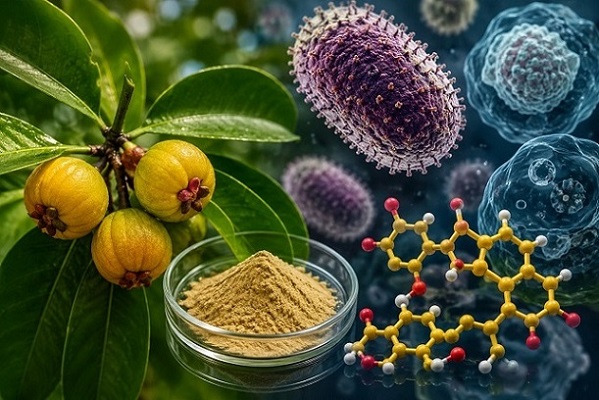 Natural biflavonoids extracted from the tropical tree Garcinia madruno dramatically reduced Mpox virus infection
in laboratory studies
The study was conducted by researchers from the Grupo Inmunovirología, Faculty of Medicine, Universidad de Antioquia, Grupo Infettare, Faculty of Medicine, Universidad Cooperativa de Colombia, and the Grupo de Investigación en Sustancias Bioactivas, Faculty of Pharmaceutical and Food Sciences, Universidad de Antioquia, all based in Medellín, Colombia.
Search for New Mpox Treatments Continues
Although the global Mpox outbreak that began in 2022 has subsided significantly, the virus continues to circulate in various regions of the world. According to the researchers, more than 181,000 confirmed cases and nearly 500 deaths had been reported globally by early 2026. While most infections are mild, people with weakened immune systems remain at risk of severe disease.
Current treatment options are limited. Drugs such as tecovirimat and brincidofovir have shown benefits in certain situations, but concerns remain regarding availability, resistance, and side effects. This has prompted scientists to investigate alternative antiviral agents, including natural compounds derived from plants.
Three Plant Compounds Deliver Impressive Results
The research team isolated and studied three biflavonoids from Garcinia madruno: morelloflavone, volkensiflavone, and fukugiside.
Before testing antiviral activity, the scientists first examined whether these phytochemical compounds were toxic to healthy cells. Encouragingly, none of the compounds caused detectable cell damage even at concentrations as high as 100 micromolar, suggesting a favorable safety profile in laboratory conditions.
When tested against a Mpox virus strain isolated in Medellín during the 2022 outbreak, all three compounds produced substantial antiviral effects.
Under treatment conditions where the compounds were present before, during, and after infection, viral infection levels were reduced by more than 70 percent in every experiment. Volkensiflavone produced some of the strongest effects, reducing viral infection by as much as 93.7 percent. Morelloflavone reduced infection by up to 85.2 percent, while fukugiside consistently achieved reductions above 81 percent. Remarkably, these results were comparable to or better than those obtained with rifampicin, a drug used as a positive antiviral control in the study.
How the Phytochemical Compounds Stop the Virus
One of the most interesting findings was that the compounds appeared to
attack the virus in different ways.
The researchers found that all three biflavonoids interfered with the virus's ability to attach to host cells, one of the earliest and most crucial steps in infection. Volkensiflavone reduced viral attachment by 79.3 percent, while fukugiside reduced attachment by 77.8 percent. Morelloflavone also showed a significant effect, reducing attachment by nearly 60 percent.
Further experiments revealed that volkensiflavone and fukugiside may directly damage or neutralize viral particles before they infect cells. These compounds reduced infection by more than 93 percent when mixed directly with the virus before exposure to cells.
Meanwhile, morelloflavone and fukugiside remained effective even after the virus had already entered cells. This suggests they may interfere with viral replication, assembly, or the production of new infectious virus particles.
Computer Modeling Reveals Potential Viral Targets
To better understand the mechanisms involved, the scientists conducted advanced molecular docking studies using computer simulations.
The analysis showed that all three biflavonoids bound strongly to several critical Mpox viral proteins, particularly Methyltransferase and Poxin, which are essential for viral survival and immune evasion.
Morelloflavone exhibited the strongest overall binding strength, reaching binding energies as low as -8.4 kcal/mol. Fukugiside displayed especially complex interactions, forming up to 12 hydrogen bonds with key regions of the viral methyltransferase enzyme. Such strong interactions suggest that these compounds could potentially disable viral machinery required for successful replication.
The phytochemical compounds also showed favorable interactions with the viral Helicase-Primase D5 protein, another enzyme essential for viral DNA replication.
Why These Findings Matter
This
Medical News report highlights an increasingly important trend in antiviral research: the exploration of natural products especially phytochemicals as sources of future medicines. The findings suggest that biflavonoids from Garcinia madruno possess multiple mechanisms of action against Mpox virus, including blocking viral attachment, directly impairing viral particles, and interfering with intracellular replication processes.
Conclusion
The study provides compelling early evidence that naturally occurring biflavonoids from Garcinia madruno may represent promising candidates for future Mpox therapies. What makes these findings particularly noteworthy is that the compounds showed strong antiviral activity while displaying no detectable toxicity in laboratory cell cultures. The ability of the molecules to attack the virus at multiple stages of its life cycle could potentially reduce the likelihood of resistance development. However, these results were obtained in laboratory and computer-based experiments only. Extensive additional research, including animal studies and eventually human clinical trials, will be required before any therapeutic application becomes possible. Nevertheless, the discovery offers an exciting new direction in the search for safer and more effective antiviral treatments against Mpox and related viral diseases.
The study findings were published in the peer reviewed journal: Natural Product Communications.
https://journals.sagepub.com/doi/full/10.1177/1934578X261452842
For the latest on Mpox, keep on logging to Thailand
Medical News.
Read Also:
https://www.thailandmedical.news/articles/monkeypox
https://www.thailandmedical.news/articles/herbs-and-phytochemicals




 Share
Share
 Tweet
Tweet
 Share
Share

































