Nikhil Prasad Fact checked by:Thailand Medical News Team Jan 17, 2026 8 months, 2 weeks, 4 days, 3 hours, 10 minutes ago
Medical News: COVID-19 is still rewriting medical textbooks and a new analysis from Ilam University of Medical Sciences in Iran reveals a worrying development affecting elderly patients. Doctors following seniors hospitalized between 2019 and 2024 discovered that the virus can trigger sudden and silent cardiac damage even in those with no known cardiac history. These findings warn that the risk of complications may be far higher than recorded because heart involvement is frequently missed in routine care.
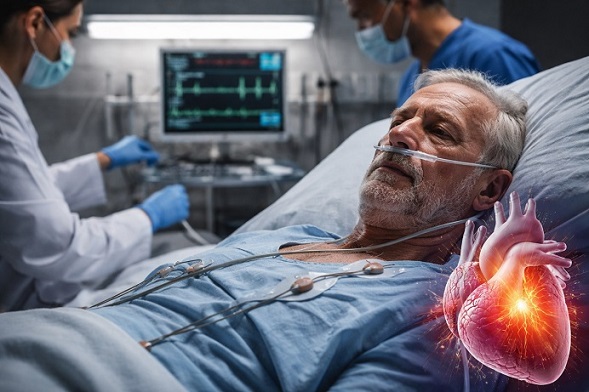 Silent heart damage worsens outcomes in elderly COVID-19 patients
Why Ordinary Symptoms Can Hide a Heart Crisis
Silent heart damage worsens outcomes in elderly COVID-19 patients
Why Ordinary Symptoms Can Hide a Heart Crisis
Older adults with COVID-19 often arrive reporting cough, shortness of breath, weariness or chest tightness. What many families do not realize is that the virus can provoke dangerous stress responses throughout the cardiovascular system. Rapid heartbeat, low oxygen and shifting blood pressure force the heart to work harder at the very moment the lungs deliver less oxygen. For seniors with high blood pressure, diabetes or quietly developing heart disease, this strain can push already vulnerable tissue toward failure. The researchers note that symptoms of cardiac distress often appear identical to COVID-19 breathing issues making them easy to underestimate.
Alarming Rates of Heart Dysfunction Found
The team reviewed electrocardiograms and echocardiography scans taken from elderly COVID-19 patients and found a striking pattern. Only a minority retained normal heart pumping ability. A significant share showed mild to moderate weakening while more than one third experienced severe reduction in heart function. Once the heart cannot push sufficient blood forward cells throughout the body begin to starve of oxygen which worsens fatigue breathlessness and mental confusion. In addition, valve leakage was common mainly affecting the mitral and tricuspid valves in the heart. Most leakage was mild but even minor inefficiencies force the heart to beat faster for the same workload. Some patients also presented with elevated pressure in arteries supplying the lungs showing that COVID-19 frequently disrupts both cardiac function and circulation.
Men Faced Higher Danger
Although both men and women displayed cardiac abnormalities older men were disproportionately affected. They experienced more severe pumping weakness and more clinically significant valve problems. The same pattern was reflected in outcomes with most deaths occurring among male patients. The researchers state that the reason may include biological differences preexisting heart strain or higher levels of undiagnosed heart disease in men.
Heart Findings Linked to Poorer Outcomes
Among the 48 elderly patients with abnormal readings, recovery was still possible and 87.5 percent survived. However, their hospital stay was harder, with greater need for oxygen support and medical monitoring. Mortality reached 12.5 percent substantially higher than seniors who showed no cardiac involvement. The investigators stress that this
Medical News report highlights the danger of ignorin
g heart assessment and believe abnormal heart findings are likely more common than recorded as many cases never reached hospital evaluation.
Why Early Heart Testing Saves Lives
The research team strongly recommends electrocardiograms and echocardiography in elderly COVID-19 cases even without obvious cardiac symptoms. These cheap noninvasive tools expose weakening heart muscle before collapse and allow doctors to adjust treatment increase observation or transfer patients to intensive care sooner. The authors caution that some findings might reflect preexisting disease rather than COVID-19 directly and larger follow up studies are needed. Still early screening may prevent fatal downturns and shorten illness for thousands of older patients.
Conclusion
The study concludes that heart involvement plays a major hidden role in the severity and mortality of COVID-19 among seniors. Reduced pumping ability, valve leakage and circulation changes were all common and placed patients at much higher risk of deterioration and death. Recognizing these issues early offers a meaningful opportunity to intervene provide proper care and avoid needless loss of life. Protecting elderly patients therefore requires prompt cardiac screening, ongoing monitoring and awareness that COVID-19 is not just a lung disease but one that can silently threaten the heart.
The study findings were published in the peer reviewed journal: Virus Research.
https://www.sciencedirect.com/science/article/pii/S0168170226000079
For the latest COVID-19 news, keep on logging to Thailand
Medical News.
Read Also:
https://www.thailandmedical.news/articles/coronavirus
https://www.thailandmedical.news/articles/long-covid




 Share
Share
 Tweet
Tweet
 Share
Share

































