Nikhil Prasad Fact checked by:Thailand Medical News Team Jul 02, 2026 1 month, 2 weeks, 3 days, 12 hours, 6 minutes ago
Medical News: Natural plant compounds may help slow dangerous liver scarring
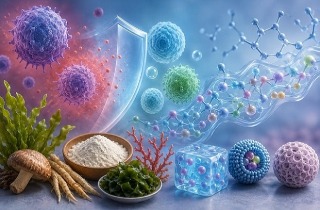
Scientists in China have uncovered promising evidence that natural flavonoids extracted from Carthamus tinctorius L., commonly known as safflower, may offer a new way to combat liver fibrosis, a condition that can eventually lead to cirrhosis and liver failure if left untreated.
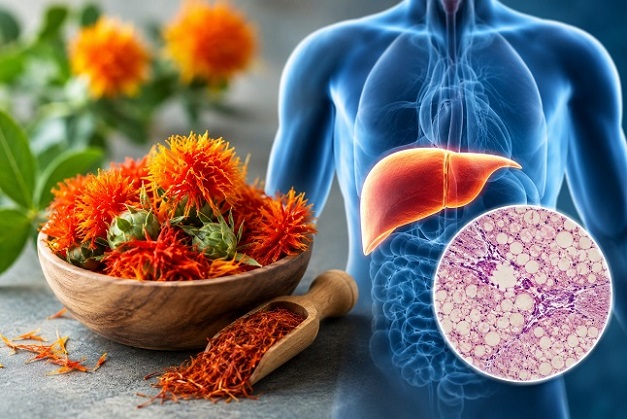 Natural flavonoids extracted from safflower significantly reduced liver scarring and restored healthy cellular processes
in experimental models
The research was conducted by scientists from the School of Basic Medicine, Inner Mongolia Medical University, the Key Laboratory of Molecular Pathology of Inner Mongolia Autonomous Region, Inner Mongolia Medical University, and the School of Pharmacy, Inner Mongolia Medical University, all in Hohhot, China.
Why liver fibrosis is a serious health concern
Liver fibrosis develops when repeated damage to the liver causes excessive scar tissue to build up. Over time, this scar tissue replaces healthy liver cells, making it increasingly difficult for the organ to function properly. Common causes include chronic hepatitis infections, excessive alcohol consumption, fatty liver disease, autoimmune disorders, and other long-term liver injuries.
Although early-stage fibrosis can often be reversed, advanced fibrosis may progress into irreversible cirrhosis or liver failure, making the search for effective treatments increasingly important.
Safflower extract dramatically reduced liver damage
The researchers focused on the total flavonoids naturally found in safflower flowers. In laboratory mice with chemically induced liver fibrosis, treatment with these flavonoids significantly reduced collagen accumulation, one of the defining features of liver scarring. The protective effect became stronger as the dose increased.
The flavonoids also lowered the production of two major fibrosis markers, alpha-smooth muscle actin (α-SMA) and collagen I, both of which are heavily involved in scar formation.
In this
Medical News report, one of the most notable findings is that the treatment appeared to directly target hepatic stellate cells. These normally inactive liver cells become highly active after liver injury and are responsible for producing much of the scar tissue seen in fibrosis.
Multiple protective actions discovered
Further laboratory experiments showed that the safflower flavonoids slowed the growth of activated hepatic stellate cells, reduced their ability to migrate to damaged areas, and increased their natural cell death. Together, these effects could limit the progression of fibrosis.
The researchers also discovered that the flavonoids switched off the Hedgehog signaling pathway, a biological communication system that becomes overactive during liver fibrosis and encourages scar formation. By suppressing this pathway, the flavonoids prevented the act
ivation of genes that promote liver scarring.
At the same time, the compounds restored autophagy, the body's natural cellular recycling process. Healthy autophagy allows damaged proteins and cellular waste to be removed efficiently, helping cells maintain normal function. In fibrotic liver tissue, this recycling process was greatly reduced, but treatment with safflower flavonoids successfully reactivated it.
Additional experiments confirmed the mechanism. When researchers blocked autophagy or artificially reactivated Hedgehog signaling, many of the protective effects of the flavonoids were lost, demonstrating that both pathways are closely linked in preventing fibrosis.
Promising but still early research
The findings suggest that safflower flavonoids work through several complementary mechanisms rather than targeting only a single process. By reducing scar-producing cell activity, limiting collagen production, restoring normal cellular recycling, and suppressing harmful signaling pathways, the natural compounds showed considerable therapeutic potential in experimental models.
However, the researchers caution that these findings are based on animal and laboratory cell studies. Clinical trials involving human patients will be necessary to determine whether these benefits can be safely and effectively reproduced in people with chronic liver disease.
The study findings were published in the peer reviewed International Journal of Molecular Sciences.
https://www.mdpi.com/1422-0067/27/13/5957
Conclusion
The study provides compelling evidence that total flavonoids extracted from safflower could become an important future strategy for treating liver fibrosis by attacking the disease through multiple biological pathways simultaneously. While additional human research is still required, these natural compounds represent a promising candidate for the development of safer and more effective therapies against progressive liver scarring.
For the latest on herbs and phytochemicals, keep on logging to Thailand
Medical News.
Read Also:
https://www.thailandmedical.news/articles/herbs-and-phytochemicals




 Share
Share
 Tweet
Tweet
 Share
Share