Phytochemical from Chilean Maqui Berries Helps Weaken Drug Resistance in Glioblastoma
Nikhil Prasad Fact checked by:Thailand Medical News Team Aug 16, 2026 1 month, 2 weeks, 5 days, 1 hour, 48 minutes ago
A natural pigment found in dark berries may help make glioblastoma cells more vulnerable to chemotherapy by weakening one of the cancer’s drug-defense systems, according to new laboratory research.
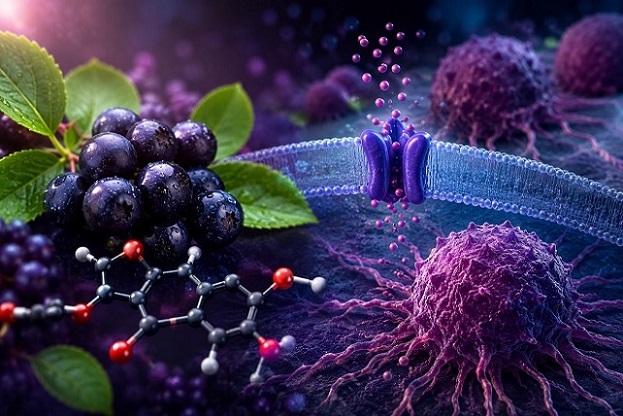 A berry-derived antioxidant reduced a major drug-resistance mechanism and strengthened chemotherapy
effects in laboratory glioblastoma cells.
Why Glioblastoma Is So Difficult to Treat
Glioblastoma is an aggressive brain cancer that frequently resists treatment. One reason is MDR1, also called P-glycoprotein, a cellular pump that can push anticancer drugs out of cells before they cause enough damage. Researchers investigated delphinidin-3-glucoside, or DEL-3, a glycosylated delphinidin phytochemical found in anthocyanin-rich berries, including Chilean maqui.
The researchers were from the Molecular Oncovirology Laboratory and Tumor Biology Laboratory at Universidad Austral de Chile; Millennium Institute on Immunology and Immunotherapy at Universidad Austral de Chile; Disciplinary Program of Immunology, Institute of Biomedical Sciences, Faculty of Medicine, Universidad de Chile; Biochemistry Laboratory, Universidad de Tarapacá; Faculty of Experimental Sciences, Universidad Francisco de Vitoria; Brain Tumour Laboratory, Fundación Vithas; Preclinical Models of Brain Tumors Laboratory, Instituto de Salud Carlos III; and Molecular Pathology Laboratory, Universidad Austral de Chile.
Berry Compound Targets a Cancer Defense System
Experiments used U87-MG glioblastoma cells, patient-derived GBM38 cells and a mouse xenograft model. DEL-3 reduced production of prostaglandin E2, or PGE2, an inflammatory signaling molecule linked to the COX-2 pathway and treatment resistance. Importantly, PGE2 fell even when total COX-2 protein did not significantly decline, suggesting DEL-3 may alter how this pathway functions rather than simply reducing the amount of COX-2.
DEL-3 also lowered ABCB1/MDR1 gene activity. After 24 hours, significant reductions in ABCB1 transcripts appeared at 60 and 120 micromolar. After 48 hours, reductions occurred at all tested concentrations. MDR1 protein was significantly reduced after 48 hours at 120 micromolar, while MDR1 promoter activity was also suppressed.
For this Thailand
Medical News report, the most striking finding was what happened when DEL-3 was paired with chemotherapy drugs transported by MDR1.
Chemotherapy Combinations Became More Potent
DEL-3 increased the cancer-killing effects of vincristine, doxorubicin, etoposide and paclitaxel in U87-MG cells. At 24 hours, all four combinations produced Bliss synergy scores above 10, the study’s threshold for synergy. Etoposide and doxorubicin combinations scored 34.93 and 30.55 respectively. By 48 hours, the DEL-3-etoposide combination reached a Bliss score of 44.16 and a Combination Sensitivity Score of 40.88.
In mice, however, DEL-3 alone did not significantly slow tumor growth. It did reduce MDR1 expression inside tumors, showing that the molecular target was affected in living animals. The study did not test
DEL-3 together with chemotherapy in mice, so improved treatment response in animals remains unproven.
Conclusion
The findings suggest DEL-3 could eventually be explored as a chemotherapy-supporting compound rather than a stand-alone cancer treatment. However, researchers still need to establish its brain penetration, dosing, safety, drug interactions and effectiveness with chemotherapy in more realistic animal and patient-derived models before any clinical role can be considered.
The study findings were published in the peer reviewed journal: Antioxidants.
https://www.mdpi.com/2076-3921/15/8/1005
Read Also:
https://www.thailandmedical.news/articles/herbs-and-phytochemicals
https://www.thailandmedical.news/articles/cancer




 Share
Share
 Tweet
Tweet
 Share
Share

































