Nikhil Prasad Fact checked by:Thailand Medical News Team May 17, 2026 3 months, 2 weeks, 2 days, 16 hours, 1 minute ago
Medical News: Peripheral nerve injuries caused by surgery, trauma, or accidents can leave patients struggling with numbness, chronic pain, tingling sensations, or even loss of movement. Now, scientists from the Faculty of Dentistry at The University of Hong Kong in Hong Kong, China, have discovered that a modified form of erythropoietin called carbamylated erythropoietin, or CEPO, may significantly improve nerve healing without the dangerous side effects linked to the original drug.
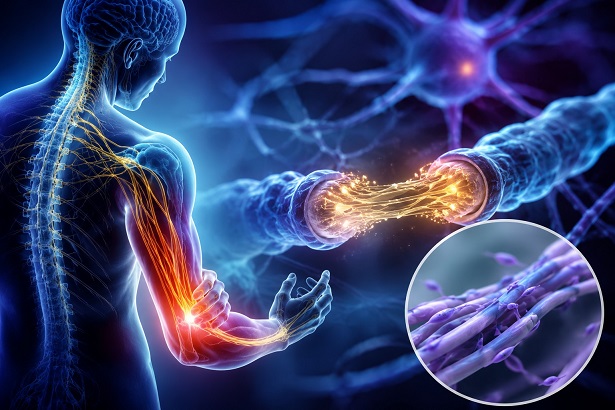 Scientists discover modified EPO drug CEPO dramatically boosts nerve repair and regeneration without dangerous
blood clot risks
The research focused on how CEPO affects Schwann cells, which are specialized cells that play a major role in repairing damaged peripheral nerves. These cells help clean up injured tissue, guide new nerve fibers to regrow, and release growth signals needed for recovery.
A Safer Version of an Existing Drug
Erythropoietin, commonly known as EPO, is already used to treat anemia in patients with kidney disease and cancer. Scientists have long known that EPO also has protective effects on nerves and brain tissue. However, its medical use for nerve repair has remained limited because it can increase the risk of dangerous blood clots, including deep vein thrombosis and coronary thrombosis.
To overcome this problem, researchers developed CEPO, a modified form of EPO that keeps its nerve-protective benefits while removing its blood-forming activity. This means CEPO could potentially help heal nerves without triggering serious cardiovascular complications.
Schwann Cells Became More Active
The researchers conducted a series of laboratory experiments using Schwann cells exposed to different concentrations of CEPO. The findings were striking.
At an optimal concentration of 25 micrograms per milliliter, CEPO dramatically increased Schwann cell survival, growth, and movement. After three days of treatment, cell viability reached an impressive 177 percent compared to untreated cells. The treated cells also multiplied faster and migrated more efficiently into damaged areas, both of which are essential for nerve regeneration.
Scientists also observed that the Schwann cells changed shape in a beneficial way. They became more elongated and aligned, forming structures similar to natural repair pathways used by nerves during healing. The treated cells even developed more neurite-like extensions, suggesting stronger support for growing nerve fibers.
Powerful Boost in Nerve Growth Factor
One of the most important discoveries involved nerve growth factor, or NGF. This protein is critical for keeping nerve cells alive and stimulating the regrowth of damaged nerves.
CEPO treatment significantly boosted NGF production in Schwann cells. The strongest effect again appeared at the 25 microgram concentration, where NGF levels increased by roughly 30 percent compared to untreated cells. Researchers believe this increase may help accelerate nerve regeneration after injury.
This
ot;>Medical News report highlights how CEPO appears to activate multiple biological pathways involved in healing, making it far more than a simple protective drug.
Rats Showed Better Recovery After Nerve Injury
The team then moved to animal testing using rats with sciatic nerve crush injuries. The sciatic nerve is one of the largest nerves in the body and is commonly used in nerve regeneration research.
Researchers delivered CEPO directly to the injury site using fibrin glue. After 21 days, rats treated with CEPO showed much better walking ability compared to untreated animals. Their paw movements, toe spread, and walking patterns were noticeably improved.
The sciatic functional index, a standard measurement used to assess nerve recovery, also showed significant improvement in the CEPO-treated group. Microscopic analysis further revealed more active Schwann cells and visible regrowth of nerve fibers crossing the damaged area.
Potential Future Use in Surgery
The findings may have major implications for oral and maxillofacial surgery, particularly procedures involving wisdom tooth removal, jaw surgery, or facial trauma where nerve injuries are relatively common.
Researchers noted that CEPO could someday be incorporated into localized drug delivery systems placed directly at surgical sites to support healing over extended periods. Such treatments may help patients recover faster while reducing long-term nerve complications.
Still, the scientists cautioned that larger and longer-term studies are needed before CEPO can be used clinically. Safety testing, toxicity studies, and deeper investigation into the molecular mechanisms involved are still required.
Conclusion
The study provides compelling evidence that CEPO could become a promising new therapy for peripheral nerve injuries. By enhancing Schwann cell growth, migration, and nerve-supporting activity while avoiding the dangerous blood-related side effects of traditional EPO, CEPO may represent a major breakthrough in regenerative medicine. Although more research is still necessary before human use becomes possible, the results strongly suggest that targeted CEPO treatment could improve nerve healing after surgery, trauma, or accidental injury and potentially reduce long-term disability and chronic pain in affected patients.
The study findings were published in the peer reviewed International Journal of Molecular Sciences.
https://www.mdpi.com/1422-0067/27/10/4434
For the latest on nerve regeneration, keep on logging to Thailand
Medical News.
Read Also:
https://www.thailandmedical.news/news/swiss-researchers-discover-antibody-that-helps-restore-nerve-connections-after-spinal-injury
https://www.thailandmedical.news/news/natural-flavonoid-boosts-nerve-repair-in-major-breakthrough
https://www.thailandmedical.news/news/new-hope-for-nerve-repair-breakthrough-in-axon-regeneration
https://www.thailandmedical.news/news/the-phytochemical-genipin-from-gardenia-plants-can-help-regenerate-damaged-or-diseased-human-nerves




 Share
Share
 Tweet
Tweet
 Share
Share