WHO Reports First Chikungunya Outbreak in Switzerland Sparking New Health Concerns
Nikhil Prasad Fact checked by:Thailand Medical News Team Nov 18, 2026 29 minutes ago
The World Health Organization (WHO) has confirmed Switzerland’s first documented cases of locally acquired chikungunya virus infections, raising concerns about the growing ability of mosquito-borne diseases to spread across Europe. The outbreak, reported in the southern canton of Ticino, involved four individuals with no recent travel history to countries where chikungunya is circulating.
 WHO confirms Switzerland's first locally acquired chikungunya infections, highlighting emerging mosquito-borne
disease risks across Europe.
According to WHO's November 17, 2026, report, the infections demonstrate that chikungunya transmission can occur even in temperate European countries where suitable mosquito populations have become established.
Four Cases Reveal Unexpected Local Transmission
Swiss health authorities officially reported the four infections on November 4, 2026. The earliest patient developed symptoms on August 10, although the infection was identified retrospectively.
The first laboratory-confirmed infection was detected on October 9 through chikungunya-specific immunoglobulin M (IgM) testing. Three additional cases were confirmed on October 13th, 22nd, and 23
rd.
Three patients tested positive for IgM antibodies, including one who also tested positive through polymerase chain reaction testing. The fourth showed chikungunya-specific immunoglobulin G (IgG) antibodies.
All four patients lived within the same geographical area. Although investigators could not establish a common infection source, their proximity and lack of travel strongly suggested local mosquito-borne transmission.
Asian Tiger Mosquito Raises European Health Risks
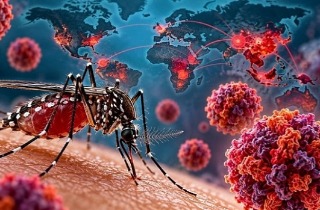
The Asian tiger mosquito, Aedes albopictus, is already established in Ticino and several other Swiss cantons.
This
Thailand Medical News report highlights how favorable summer temperatures and established mosquito populations can create opportunities for tropical viruses to spread in previously unaffected regions.
WHO noted that conditions during August 2026 were particularly favorable for mosquito development and viral transmission.
Investigators collected mosquitoes from the affected area but detected no chikungunya viral RNA. However, these negative findings do not exclude local transmission.
Severe Joint Pain Remains a Major Concern
Chikungunya typically causes sudden fever and debilitating joint pain, with symptoms developing approximately four to eight days after an infectious mosquito bite.
Additional symptoms include headaches, fatigue, rashes, arthritis, and joint stiffness. Although most patients recover, joint pain can persist for months or even years.
All four Swiss patients experienced favorable clinical outcomes, although some continued experiencing joint symptoms.
There is currently no specific antiviral treatment, making supportive care an
d symptom management essential.
European Cases Highlight Wider Transmission Threat
Switzerland's outbreak occurred alongside other European infections. By November 4, France had reported 207 locally acquired cases, while Italy documented one case in Rome.
Globally, WHO recorded 327,086 chikungunya cases, including 83,660 confirmed infections and 98 deaths, between January and September 2026.
Swiss authorities responded with intensified surveillance, physician alerts, mosquito-control interventions, and public awareness campaigns. No additional suspected infections were identified.
Future Outbreaks Remain Possible
WHO currently considers further local transmission unlikely because declining autumn temperatures reduce mosquito activity. Nevertheless, Switzerland's first locally acquired infections provide important evidence that chikungunya can establish temporary transmission chains outside traditionally endemic regions.
Continued mosquito surveillance, rapid diagnosis, vector control, and public education remain essential, particularly as changing climatic conditions could extend mosquito breeding seasons. Although this outbreak appears contained, future introductions involving infected travelers could trigger additional localized infections during warmer months.
Reference:
https://www.who.int/emergencies/disease-outbreak-news/item/2026-DON627




 Share
 Tweet
 Share