Nikhil Prasad Fact checked by:Thailand Medical News Team Apr 16, 2026 4 months, 2 weeks, 2 days, 19 hours, 15 minutes ago
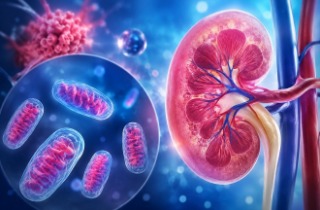
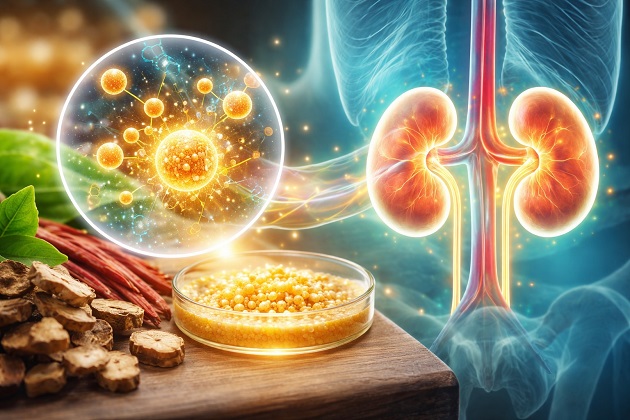
Medical News: A new breakthrough in natural medicine has revealed that tiny, self-assembled particles derived from two traditional herbs may offer powerful protection against acute kidney injury, a condition that can rapidly become life-threatening if left untreated. Scientists have discovered that when compounds from rhubarb and Salvia miltiorrhiza combine, they naturally form nanoparticles that significantly boost healing effects in the kidneys.
 Natural herbal nanoparticles may protect kidneys by reducing inflammation and oxidative damage while improving
cellular survival
What Makes These Herbal Nanoparticles Special
Researchers found that extracts from Rheum palmatum (rhubarb) and Salvia miltiorrhiza (Danshen) can spontaneously organize into nanosized particles without needing artificial carriers. These structures, called RSNPs, are formed through natural chemical interactions such as hydrogen bonding and molecular stacking.
What makes this discovery particularly exciting is that these nanoparticles are not just carriers - they are active therapeutic agents themselves. They bundle together multiple beneficial plant compounds, allowing them to work in a coordinated and more effective way inside the body.
Study Details and Research Institutions
The study was conducted by scientists from the College of Veterinary Medicine at Sichuan Agricultural University, the Chongqing Academy of Animal Sciences, and the State Key Laboratory of Swine and Poultry Breeding Industry at Sichuan Agricultural University in China.
Using advanced laboratory techniques, the team identified over 100 bioactive compounds within these nanoparticles, including well-known antioxidants like rhein and cryptotanshinone.
Strong Protection Against Kidney Damage
In experiments using mice with drug-induced kidney injury, the nanoparticles showed remarkable protective effects. Animals treated with RSNPs had significantly better kidney function compared to untreated groups.
Markers of kidney damage such as blood urea nitrogen and creatinine levels were reduced. Tissue analysis also showed less structural damage in the kidneys, indicating that the nanoparticles helped preserve normal organ function.
Fighting Inflammation and Oxidative Stress
One of the most important findings was how these nanoparticles tackle two major causes of kidney injury: inflammation and oxidative stress.
The treatment reduced harmful inflammatory molecules like TNF-alpha and IL-6, while boosting protective antioxidant enzymes such as superoxide dismutase. At the same time, levels of damaging oxidative compounds were significantly lowered.
This dual action is critical because kidney injury often worsens through a vicious cycle of inflammation and oxidative damage.
Enhanced Cellular Protection
The researchers also tested the nanoparticles on human kidney cells in the lab. The results showed that RSNPs were easily absorbed by the cells and provided strong protec
tion against toxic injury.
Cells treated with the nanoparticles had lower rates of apoptosis, or programmed cell death, which is a major contributor to kidney failure. This suggests that the nanoparticles not only protect organs but also work at the cellular level to prevent damage.
Better Absorption and Stability
Another key advantage of these nanoparticles is their improved absorption. Traditional herbal extracts often struggle with poor bioavailability, meaning the body cannot efficiently use them.
However, the nano-sized structure of RSNPs allows for better uptake in the digestive system. The study showed that important compounds were absorbed more quickly and effectively compared to standard extracts.
Additionally, the nanoparticles remained stable under different pH conditions, meaning they can survive the harsh environment of the stomach and still function properly.
Importantly, this
Medical News report highlights that the nanoparticles demonstrated stronger antioxidant activity than the original herbal extract, suggesting that the nano-structure itself enhances therapeutic performance beyond simple herbal use.
Conclusion
The findings from this study suggest that self-assembled herbal nanoparticles could represent a new frontier in treating acute kidney injury. By combining multiple bioactive compounds into a stable, highly absorbable structure, these nanoparticles deliver stronger anti-inflammatory, antioxidant, and cell-protective effects than traditional herbal formulations. Their ability to naturally form without synthetic carriers also makes them a safer and more sustainable option for future therapies. While more human studies are needed, this research opens the door to innovative treatments that merge traditional medicine with modern nanotechnology, offering hope for more effective kidney disease management.
The study findings were published in the peer reviewed journal: Antioxidants.
https://www.mdpi.com/2076-3921/15/4/491
For the latest on herbs and phytochemicals, keep on logging to Thailand
Medical News
Read Also:
https://www.thailandmedical.news/articles/nephrology-(kidneys)
https://www.thailandmedical.news/articles/herbs-and-phytochemicals




 Share
Share
 Tweet
Tweet
 Share
Share