Researchers Warn That Lowered Immune Signals After COVID-19 May Raise Tuberculosis Risks
Nikhil Prasad Fact checked by:Thailand Medical News Team Dec 03, 2025 10 months, 22 hours, 58 minutes ago
Medical News: Growing Concern Over Post COVID-19 Immune Weakening
A new study by researchers from Aga Khan University in Karachi-Pakistan, the Dow University of Health Sciences in Karachi and the Karolinska Institute in Sweden is raising fresh concern about how COVID-19 may quietly weaken the body’s long term immune defenses. According to this
Medical News report, the scientists discovered that people who previously recovered from COVID-19 showed much weaker inflammatory responses when their immune cells were exposed to both SARS-CoV-2 spike protein again or to tuberculosis-related antigens.
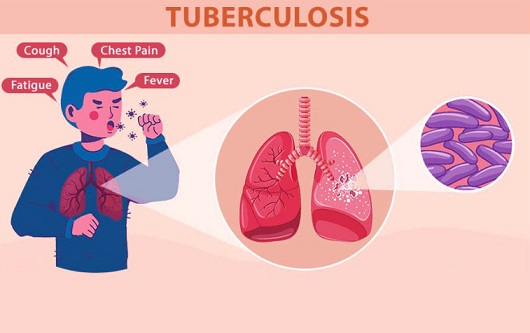 New research shows COVID-19 may reduce key immune responses and increase long-term vulnerability to TB
Their findings suggest that even months after recovery the immune system may not return to full strength potentially making individuals more vulnerable to infections common in many Asian regions such as latent tuberculosis.
Key Immune Molecules Significantly Suppressed
The research team examined two groups healthy individuals with no known history of COVID-19 and people who had recovered from COVID-19 several months earlier. They tested how their immune cells reacted when stimulated with SARS-CoV-2 spike proteins and Mycobacterium tuberculosis components. The most important discovery was that COVID-19 survivors produced much lower levels of crucial immune molecules including IFN gamma, IL6, IL2, TNF alpha and IL10. These molecules normally help activate early immune responses, stop virus spread and control TB bacteria. The reduced activation seen in the recovered group showed that COVID-19 may leave behind a long-lasting imbalance in both pro-inflammatory and anti-inflammatory pathways. This effect was even more obvious in individuals who had latent TB infection as their immune responses dropped sharply compared to TB positive individuals who never had COVID-19.
Potential Impact on Tuberculosis Progression
Tuberculosis remains a serious threat in Pakistan and many other countries and latent TB can stay dormant for years until the immune system weakens. In this study COVID-19 survivors especially those who were IGRA positive showed lower MTB induced IFN gamma, IL6, IL2 and TNF alpha levels along with higher IL6 to IL10 and TNF alpha to IL10 ratios. These altered ratios indicate unstable immune control which may increase the possibility of latent TB reactivation. The study further highlights that the weakened immune responses were not linked to how severe the earlier COVID-19 infection was or the original viral load indicating that even mild cases may leave long term effects.
Final Note
The findings from this study demonstrate important long-term changes in the immune system of people who previously had COVID-19. The lowered responses to SARSCoV2 and tuberculosis antigens suggest that recovered individuals living in TB endemic countries may face increased health risks in the future. These insights underline the importance of continued monitoring and further research to understand how post COVID immune changes may influenc
e other chronic infections over time. Strengthening diagnostic surveillance and TB preventive care may become increasingly important in regions where TB remains widespread.
The study findings were published in the peer reviewed journal: Tuberculosis
https://www.sciencedirect.com/science/article/pii/S1472979225001131
For the latest COVID-19 News, keep on logging to Thailand
Medical News.
Read Also:
https://www.thailandmedical.news/articles/coronavirus
https://www.thailandmedical.news/articles/long-covid




 Share
Share
 Tweet
Tweet
 Share
Share

































