Nikhil Prasad Fact checked by:Thailand Medical News Team Mar 09, 2026 6 months, 3 weeks, 4 days, 21 hours, 43 minutes ago
Medical News: A new experimental study has revealed that a drug designed to remove damaged aging cells may significantly protect the brain after a stroke. Scientists discovered that the senolytic drug navitoclax reduced brain injury and improved neurological recovery in laboratory stroke models, highlighting a promising new direction for stroke therapy.
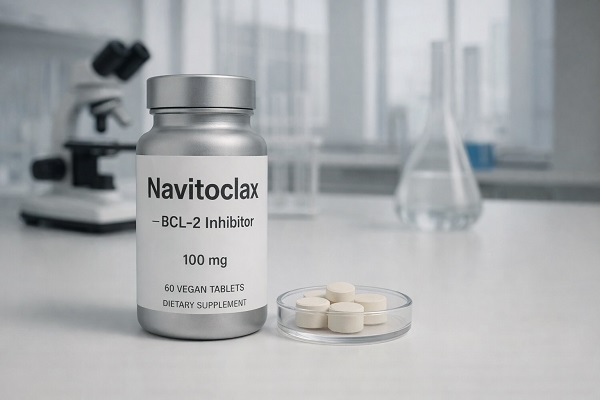 A senolytic drug that removes harmful aging cells significantly reduced brain damage and improved recovery
after experimental stroke
The research was carried out by scientists from the Instituto de Investigación Sanitaria La Fe in Valencia, Spain; the Universidad Politécnica de Valencia in Spain; the Universidad de Valencia in Spain; and the Hospital Universitario Santa Cristina–Instituto de Investigación Sanitaria Princesa in Madrid, Spain.
Understanding Brain Damage After Stroke
Ischemic stroke occurs when blood flow to part of the brain becomes blocked, depriving brain cells of oxygen and nutrients. This lack of oxygen triggers severe stress in brain cells, leading to widespread damage and long-term neurological problems.
Scientists have recently discovered that many brain cells affected by stroke enter a state known as cellular senescence. These cells essentially become dysfunctional “aging” cells. Although they remain alive, they stop dividing and begin releasing harmful inflammatory molecules that worsen brain injury and slow down recovery.
This
Medical News report highlights how targeting these senescent cells has emerged as a new scientific strategy. Drugs that selectively eliminate such damaged cells are called senolytics, and researchers believe they could potentially reduce the biological damage that occurs after a stroke.
Testing Navitoclax as a Senolytic Therapy
Navitoclax is a senolytic drug that works by blocking proteins that help damaged cells survive. When these survival signals are blocked, dysfunctional cells undergo programmed cell death and are removed from the tissue.
To investigate its effects, researchers induced ischemic stroke in laboratory rats using a well-established technique that temporarily blocks a major brain artery. The animals were then treated with navitoclax over several days to observe whether the drug could influence recovery.
Neurological testing revealed significant improvements in animals receiving navitoclax compared with untreated animals. One important behavioral experiment involved attaching a small piece of tape to the animal’s paw and measuring how quickly the animal detected and removed it. Stroke normally causes severe delays due to impaired movement and sensory function.
Rats treated with navitoclax showed a major improvement, with the total time needed to remove the tape decreasing by approximately sixty-six percent.
Significant Reduction in Brain Tissue Damage
The treatment also dramatically reduced the size of
the brain infarct, the region of tissue that dies after a stroke due to lack of blood supply. Fourteen days after the stroke event, animals treated with navitoclax had infarct areas that were about fifty-two percent smaller compared with untreated animals.
These protective effects were observed in important brain regions including the cortex and the caudate putamen, both of which play essential roles in movement control and sensory processing.
Clearing Senescent Cells in the Brain
Further examination of the brain tissue revealed that navitoclax significantly reduced several biological markers associated with cellular aging and damage.
Levels of senescence-associated beta-galactosidase, a key marker of senescent cells, dropped by approximately eighty percent. Lipofuscin deposits, which accumulate in aging or stressed cells, were reduced by about ninety-one percent.
The drug also lowered levels of checkpoint kinase 2, a molecular signal linked to DNA damage and cellular aging. By removing these senescent cells, navitoclax appears to prevent harmful signals from spreading to neighboring cells and worsening brain injury.
Implications for Future Stroke Treatments
These findings suggest that eliminating senescent cells could become an important strategy for protecting the brain after stroke. By targeting damaged aging cells that accumulate following ischemic injury, senolytic drugs like navitoclax may help reduce tissue destruction and improve neurological recovery. Although further research and human clinical trials are necessary before this therapy can be used in patients, the results provide strong scientific evidence that senescence-targeting treatments may open a new frontier in stroke therapy and neuroprotection.
The study findings were published in the peer reviewed journal: Pharmaceuticals.
https://www.mdpi.com/1424-8247/19/3/431
For the latest on preventing and treating stroke, keep on logging to Thailand
Medical News.
Read Also:
https://www.thailandmedical.news/articles/med-news
Medical Disclaimer: All content published by Thailand Medical News is based on scientific research and is intended for informational and educational purposes only. It is not medical advice, diagnosis, or treatment. Readers must not attempt to use, apply, or experiment with any protocols, compounds, or therapies mentioned without first consulting a qualified and licensed medical doctor. Many findings discussed are experimental or preliminary, and only a licensed healthcare professional can determine what is safe and appropriate for an individual’s specific medical condition.




 Share
Share
 Tweet
Tweet
 Share
Share

































