Nikhil Prasad Fact checked by:Thailand Medical News Team Jul 16, 2026 1 month, 2 weeks, 3 days, 15 hours, 1 minute ago
Medical News: New Review Reveals Hidden Drivers of “Chemo Brain”
Many cancer survivors say they struggle with memory, concentration, and mental sharpness during or after chemotherapy. Often called “chemo brain,” these problems can make everyday activities, work, and family life much harder. A major new review by researchers from the Department of Physiology, Department of Immunology, Department of Pathological Physiology, Department of Pathology, and Department of Infectious Diseases and Epidemiology at the Medical Faculty, University of Niš, Serbia, together with the University Clinical Center Niš, has brought together years of research showing how chemotherapy damages the brain and why these effects may last long after cancer treatment ends.
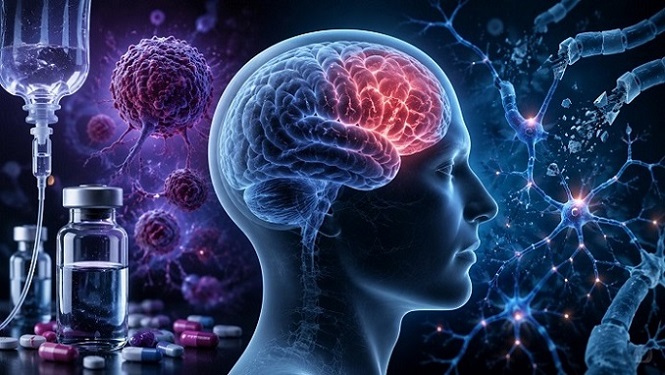 A major scientific review reveals that several chemotherapy drugs can damage memory and thinking by triggering inflammation, oxidative stress, and loss of healthy brain cells
Animal Studies Reveal Widespread Brain Damage
A major scientific review reveals that several chemotherapy drugs can damage memory and thinking by triggering inflammation, oxidative stress, and loss of healthy brain cells
Animal Studies Reveal Widespread Brain Damage
The researchers reviewed more than 100 scientific studies involving mice and rats treated with widely used chemotherapy drugs including doxorubicin, cisplatin, cyclophosphamide, methotrexate, 5-fluorouracil, paclitaxel, and docetaxel. Although the studies involved animals rather than people, they consistently showed that chemotherapy can impair short-term memory, working memory, learning ability, attention, and decision-making. Remarkably, many of these changes appeared even when the drug doses were not high enough to cause obvious illness elsewhere in the body.
The review also found that repeated chemotherapy treatments caused much greater brain damage than single doses, while younger, older, and female animals often experienced more severe cognitive problems.
Multiple Biological Changes Damage the Brain
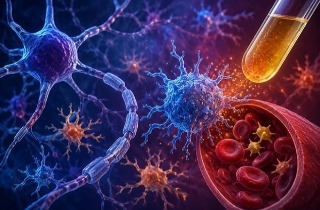
Researchers found that chemotherapy harms the brain through several interconnected mechanisms rather than a single cause. Many drugs triggered chronic inflammation by activating immune cells inside the brain. They also generated excessive oxidative stress, producing unstable molecules that damage brain cells and overwhelm the body's natural antioxidant defenses.
This
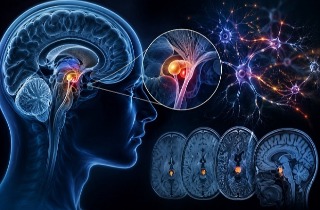
Medical News report highlights that chemotherapy also reduced the formation of new brain cells, especially in the hippocampus, a region essential for learning and memory. The drugs damaged nerve cell branches, reduced protective myelin surrounding nerve fibers, disrupted communication between brain cells, and lowered levels of brain-derived neurotrophic factor (BDNF), a protein needed to keep neurons healthy. Several drugs also interfered with important neurotransmitters and disrupted the blood-brain barrier, allowing harmful inflammatory signals to reach the brain more easily.
Different Drugs Share Similar Harmful Effects
Although each chemotherapy drug attacks cancer differently, the review found that they eventually produce many of the same harmful effects inside the brain. Cisplatin and 5-fluorouracil can
directly enter the brain, while drugs such as doxorubicin mainly trigger indirect damage through widespread inflammation. Paclitaxel and docetaxel also damaged tiny brain blood vessels, reducing blood flow and increasing the brain's vulnerability.
Behavioral testing repeatedly showed poorer performance in memory tasks, object recognition, spatial navigation, attention, and learning. Laboratory analysis revealed loss of nerve cell connections, increased cell death, reduced neurogenesis, persistent inflammation, and widespread biochemical abnormalities that help explain why many cancer patients report ongoing mental fog after treatment.
Hope for Better Prevention
The researchers believe these findings provide valuable clues for developing treatments that protect the brain during chemotherapy. Experimental evidence suggests physical exercise, cognitive stimulation, and therapies that reduce inflammation, oxidative stress, and nerve cell damage may eventually help lessen cognitive side effects. They also stressed that future research should better reflect real cancer patients by including tumor-bearing animal models, both sexes, and different age groups.
The conclusions emphasize that chemotherapy-induced cognitive impairment is a complex biological condition driven by multiple overlapping mechanisms rather than a temporary side effect. Understanding exactly how inflammation, oxidative stress, disrupted brain signaling, reduced neurogenesis, and blood-brain barrier damage interact could lead to personalized strategies that preserve brain function while allowing patients to continue receiving life-saving cancer treatments.
The study findings were published in the peer reviewed journal: Brain Sciences.
https://www.mdpi.com/2076-3425/16/7/750
For the latest on chemotherapy and brain damage, keep on logging to Thailand
Medical News.
Read Also:
https://www.thailandmedical.news/news/new-york-study-finds-that-chemotherapy-can-backfire-by-making-cancer-more-aggressive
https://www.thailandmedical.news/news/recent-rituximab-or-cancer-chemotherapy-drugs-use-linked-to-increased-risk-of-post-covid-19-pulmonary-fibrosis
https://www.thailandmedical.news/news/research-uncovers-the-hidden-dangers-of-the-chemotherapy-drug-ifosfamide-generations-of-cancer-survivors-offspring-plagued-by-toxic-inheritance
https://www.thailandmedical.news/news/harvard-study-finds-that-drug-commonly-used-to-treat-breast-cancer-actually-causes-uterine-tumors




 Share
Share
 Tweet
Tweet
 Share
Share