Nikhil Prasad Fact checked by:Thailand Medical News Team Feb 10, 2026 6 months, 2 weeks, 6 days, 9 hours, 59 minutes ago
Medical News: Breast cancer remains one of the most common cancers affecting women worldwide, and among its many forms, HER2-positive breast cancer is known to be particularly aggressive. New scientific insights are now shedding light on why these tumors are so difficult to control, especially when they learn how to hide from the body’s immune defenses.
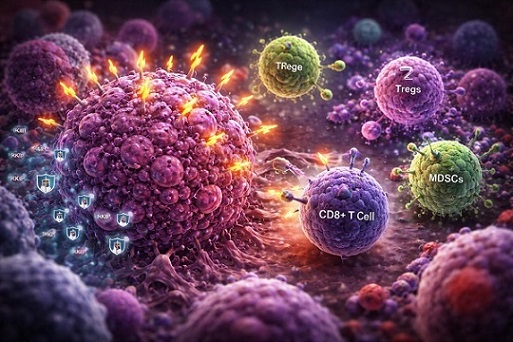 Cancer cells evade immune attack when HER2 overwhelms a key protective protein,
allowing tumors to survive and spread
Understanding HER2-Positive Breast Cancer
HER2-positive breast cancer accounts for about 15 to 20 percent of all breast cancer cases. These tumors produce excessive amounts of a protein called HER2, which acts like a stuck accelerator pedal, driving cancer cell growth and spread. While targeted drugs such as trastuzumab have dramatically improved survival for many patients, a large number eventually stop responding to treatment.
The Missing Protector Called RKIP
Researchers have now focused attention on a natural protective protein known as Raf Kinase Inhibitor Protein, or RKIP. RKIP normally acts as a brake on cancer-promoting signals and also helps the immune system recognize and attack tumor cells. In HER2-positive breast cancer, however, RKIP levels are often abnormally low.
Scientists from the Department of Microbiology, Immunology and Molecular Genetics and the Jonsson Comprehensive Cancer Center at the David Geffen School of Medicine, University of California Los Angeles, carefully analyzed how RKIP and HER2 interact. Their work shows that when HER2 levels rise, RKIP levels fall, creating an unhealthy imbalance that favors cancer survival.
How Tumors Evade the Immune System
The study explains that high HER2 activity switches on multiple signaling pathways that help tumors escape immune attack. These include increasing PD-L1, a molecule that effectively puts immune T cells to sleep, recruiting immune-suppressing cells such as regulatory T cells and myeloid-derived suppressor cells, and reducing the activity of cancer-killing CD8 T cells. This
Medical News report highlights that without RKIP to restrain these signals, tumors can remodel their surroundings into an immune-silent zone.
Restoring Balance in the Tumor Environment
RKIP normally blocks several key pathways activated by HER2, including MAPK, NF-kB, and PI3K-Akt signaling. When RKIP is present, immune cells are better able to infiltrate tumors and attack cancer cells. The researchers also found that RKIP helps prevent the transformation of cancer cells into more mobile, invasive forms, a process known as epithelial-to-mesenchymal transition.
Why This Discovery Matters
These findings suggest that resistance to current HER2-targeted therapies is not just about cancer cells mutating, but also about how they manipulate the immune system. Targeting the RKIP-HER2 axis could offer new treatment strategies that restore immune activity while weakening cancer gro
wth signals.
Conclusions
The study provides strong evidence that loss of RKIP plays a central role in immune evasion and treatment resistance in HER2-positive breast cancer. By uncovering how RKIP and HER2 signaling oppose each other, researchers have identified a promising therapeutic target. Strategies that restore RKIP function or disrupt HER2-driven immune suppression may significantly improve patient outcomes in the future.
The study findings were published in the peer reviewed journal: Cells.
https://www.mdpi.com/2073-4409/15/4/319
For the latest on Breast Cancer, keep on logging to Thailand
Medical News.
Read Also:
https://www.thailandmedical.news/articles/cancer




 Share
Share
 Tweet
Tweet
 Share
Share