Nikhil Prasad Fact checked by:Thailand Medical News Team Apr 22, 2026 5 months, 1 week, 4 days, 23 hours, 48 minutes ago
Medical News: Colorectal cancer is one of the most common and deadly cancers worldwide, with the majority of cases classified as microsatellite-stable (MSS). These tumors are typically considered “immune cold,” meaning they generate weak immune responses and often do not respond well to immunotherapy. However, new research is challenging this assumption and revealing that important biological differences exist within this group.
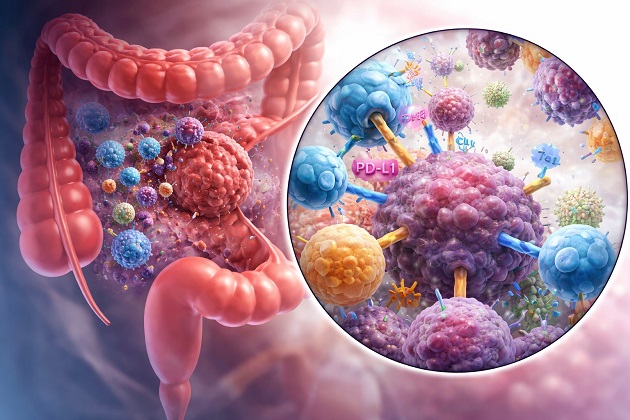 PD-L1 expression on immune cells signals stronger immune activity and improved outcomes in colorectal cancer
In a study involving 254 patients, researchers closely examined tumor samples to better understand how the tumor microenvironment influences disease progression and patient outcomes. The findings provide new insights into why some patients experience better survival than others.
PD-L1 Expression and Patient Outcomes
A central focus of the study was PD-L1, a protein traditionally associated with helping tumors evade immune attack. Surprisingly, the results showed that PD-L1 expression on immune cells was linked to significantly improved outcomes.
Patients with PD-L1-positive immune cells had longer disease-free survival and a lower risk of recurrence. In contrast, PD-L1 expression on tumor cells was rare and showed no meaningful association with prognosis, highlighting the importance of the cellular source of this protein.
Evidence of an Active Immune Environment
This
Medical News report highlights that tumors with PD-L1-positive immune cells were associated with a more active immune environment. These tumors showed increased immune signaling, stronger cellular interactions, and features consistent with effective immune surveillance.
By comparison, tumors lacking PD-L1 expression displayed characteristics linked to aggressive disease. These included increased structural remodeling, greater tissue stiffness, and reduced immune activity, all of which are associated with poorer clinical outcomes.
The Role of the Tumor Microenvironment
The tumor microenvironment, which includes immune cells, stromal tissue, and signaling molecules, was found to play a crucial role in determining tumor behavior. Researchers identified macrophage-rich regions as particularly influential.
Advanced spatial analysis revealed that PD-L1-positive tumors contained localized areas where immune activation and controlled tissue remodeling coexisted. In contrast, PD-L1-negative tumors were dominated by disorganized structural changes and invasive biological patterns.
Link to Tumor Aggressiveness
The study also highlighted the importance of epithelial-to-mesenchymal transition (EMT), a biological process that enables cancer cells to become more mobile and invasive.
Approximately 69 percent of PD-L1-negative tumors exhibited strong mesenchymal features associated with EMT. These tumors showed elevated levels of structural proteins an
d enzymes involved in tissue remodeling, indicating a more aggressive phenotype.
Potential for New Treatment Strategies
The findings suggest that tumor-associated macrophages may play a key role in shaping whether a tumor develops an immune-active or aggressive profile. These immune cells appear to influence both immune signaling and structural changes within the tumor.
Targeting macrophages could represent a promising therapeutic strategy. By modifying their activity, it may be possible to shift tumors toward a more immune-responsive state and improve the effectiveness of current treatments, including immunotherapy.
Conclusion
This study provides compelling evidence that MSS colorectal cancers are not biologically uniform. The presence of PD-L1 on immune cells serves as a strong indicator of an active immune environment and is associated with better patient outcomes.
These findings challenge traditional assumptions about PD-L1 and highlight the importance of understanding the tumor microenvironment in greater detail. With further research and clinical validation, these insights could lead to more personalized treatment approaches and improved survival rates for patients with colorectal cancer.
Importantly, recognizing the differences between immune-active and mesenchymal tumor states may help guide future therapeutic strategies and identify patients who are more likely to benefit from emerging treatments.
The study findings were published in the peer reviewed journal: Cancers.
https://www.mdpi.com/2072-6694/18/8/1288
For the latest cancer research, keep on logging to Thailand
Medical News.
Read Also:
https://www.thailandmedical.news/articles/cancer




 Share
Share
 Tweet
Tweet
 Share
Share

































