Nikhil Prasad Fact checked by:Thailand Medical News Team Feb 19, 2026 6 months, 1 week, 4 days, 22 hours, 10 minutes ago
Medical News: Scientists Identify Hidden Viral Reservoir in the Intestines
A new scientific review has revealed that SARS-CoV-2, the virus responsible for COVID-19, may continue to persist in the human gut long after respiratory symptoms disappear, potentially contributing to Long COVID and chronic health complications. The research was conducted by scientists from the University of Rome Tor Vergata and the National Institute for Infectious Diseases Lazzaro Spallanzani IRCCS, two leading Italian institutions specializing in infectious diseases, molecular biology, and epidemiology.
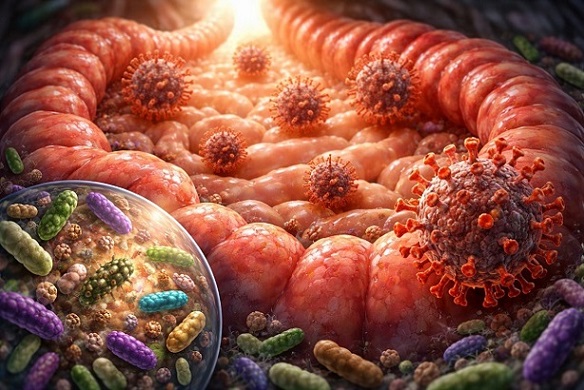 Persistent coronavirus in the gut may explain chronic inflammation and many Long COVID symptoms
This
Medical News report explains how the virus can survive inside intestinal tissues, disrupt beneficial bacteria, and trigger prolonged inflammation that may explain many lingering symptoms experienced by Long COVID patients.
The Gut as a Long-Term Viral Reservoir
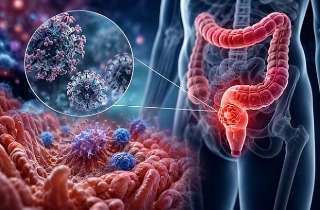
Although COVID-19 is commonly associated with lung infection, scientists now understand that SARS-CoV-2 can also infect the gastrointestinal tract. The virus enters human cells by attaching to ACE2 receptors, which are highly abundant in intestinal lining cells.
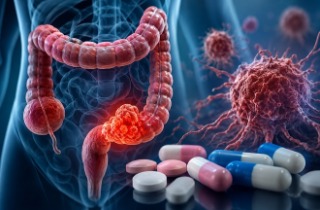
Researchers have found viral RNA, viral proteins, and viral antigens in intestinal samples even months after patients recovered from the initial illness. This suggests that the gut may act as a reservoir where the virus can persist silently. This persistent viral presence can continuously stimulate the immune system, causing chronic inflammation that may contribute to Long COVID symptoms.
Long COVID affects approximately one out of every eight infected individuals. Symptoms often include fatigue, brain fog, digestive problems, and immune abnormalities lasting months or longer.
Severe Disruption of Healthy Gut Bacteria
One of the most important discoveries highlighted in the study is the disruption of the gut microbiota, the trillions of microorganisms that maintain digestive and immune health.
Normally, beneficial bacteria such as Faecalibacterium prausnitzii, Eubacterium rectale, and Bifidobacteria help control inflammation and maintain intestinal barrier integrity. However, COVID-19 infection significantly reduces these protective bacteria.
At the same time, harmful or opportunistic bacteria, including Coprobacillus, Clostridium ramosum, and Clostridium hathewayi, increase. These harmful microbes are associated with inflammation and disease severity.
The loss of beneficial bacteria also reduces production of protective compounds such as short-chain fatty acids, especially butyrate. These compounds normally strengthen gut barriers, reduce inflammation, and help regulate immune responses. Without these protective mechanisms, the intestinal lining becomes weaker and more vulnerable to chronic inflammation.
Increased Risk of Digestive Disorders and Immune Dysfunction
The study exp
lains that persistent gut inflammation may contribute to the development of gastrointestinal disorders such as irritable bowel syndrome and inflammatory bowel diseases including Crohn’s disease and ulcerative colitis.
A meta-analysis cited in the review found that COVID-19 patients had a six-fold higher risk of developing irritable bowel syndrome and an eight-fold higher risk of developing digestive discomfort compared to uninfected individuals.
The disruption of gut bacteria also affects the immune system beyond the digestive tract. The gut microbiota plays a key role in regulating immune responses throughout the body, including communication with the brain through the gut-brain axis. This may help explain neurological symptoms such as brain fog and cognitive impairment seen in Long COVID patients.
Chronic Inflammation May Drive Long-Term Health Risks
The researchers emphasize that persistent gut infection may lead to long-lasting immune activation and inflammation. This chronic inflammatory state may increase susceptibility to other inflammatory diseases over time.
Although there is currently no direct evidence linking Long COVID to colorectal cancer, scientists warn that prolonged intestinal inflammation is a known risk factor for serious gastrointestinal disease. Further research is needed to fully understand these potential long-term consequences.
Conclusions
The study provides strong evidence that SARS-CoV-2 can persist in the gastrointestinal tract long after acute infection, disrupting gut microbiota and triggering prolonged inflammation. This persistent viral presence may play a central role in the development of Long COVID symptoms affecting multiple organs, including the digestive and nervous systems. Understanding this gut-virus interaction is essential for developing targeted treatments, restoring microbiota balance, and preventing long-term complications. Future research may also help identify biomarkers for early detection and improve management of Long COVID patients.
The study findings were published in the peer reviewed journal: Viruses.
https://www.mdpi.com/1999-4915/18/2/247
For the latest COVID-19 News, keep on logging to Thailand
Medical News.
Read Also:
https://www.thailandmedical.news/articles/coronavirus
https://www.thailandmedical.news/articles/long-covid




 Share
Share
 Tweet
Tweet
 Share
Share