Nikhil Prasad Fact checked by:Thailand Medical New Team Jun 05, 2026 3 months, 4 weeks, 21 hours, 29 minutes ago
Medical News: Parkinson’s disease affects millions of people worldwide and remains one of the most challenging neurological disorders to treat. While current medications can help control symptoms such as tremors, stiffness, and slow movement, they cannot stop the disease from progressing. Now, researchers are exploring a unique type of stem cell known as Muse cells that could potentially offer a new path toward repairing damaged brain tissue and restoring lost function.
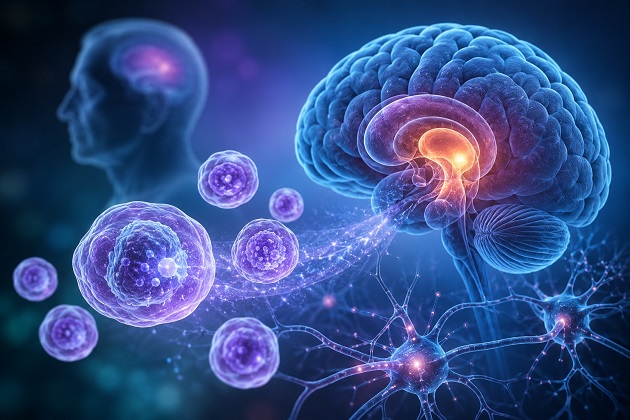 Researchers are exploring Muse cells as a potentially safer and more versatile stem cell therapy for repairing brain
damage in Parkinson’s disease
Why Parkinson’s Disease Remains Difficult to Treat
Parkinson’s disease develops when dopamine-producing nerve cells in a region of the brain called the substantia nigra gradually die. Dopamine is a crucial chemical messenger that helps control movement. As these cells disappear, patients experience worsening motor symptoms, including shaking, balance problems, rigidity, and slowed movements. Many also develop depression, sleep disorders, memory problems, and other non-motor complications.
For decades, treatments such as levodopa have helped patients manage symptoms. However, these therapies do not replace the neurons that have already been lost. This limitation has fueled intense research into stem cell therapies that could potentially rebuild damaged brain circuits.
Researchers Review a Promising New Cell Type
A new review examined the potential role of Muse cells, short for Multilineage-Differentiating Stress-Enduring cells, as a novel treatment strategy for Parkinson’s disease. The research was conducted by scientists from the University of Colorado Anschutz Medical Campus, the Knoebel Institute for Healthy Aging at the University of Denver, Johns Hopkins School of Medicine, SciTechEdit International LLC, and the Tohoku University Graduate School of Medicine in Japan.
Unlike many other stem cell types currently under investigation, Muse cells possess several unique characteristics that may help overcome some of the major obstacles that have limited previous stem cell therapies.
Challenges Facing Existing Stem Cell Therapies
Scientists have spent years testing embryonic stem cells, induced pluripotent stem cells (iPSCs), and mesenchymal stem cells for Parkinson’s disease. While some approaches have produced encouraging results, significant concerns remain.
One major issue is that many stem cell therapies require invasive brain surgery to implant cells directly into the brain. Another concern is immune rejection, which often requires patients to take long-term immunosuppressive medications. There is also the risk that transplanted cells may develop into unwanted cell types or even form tumors.
Even when transplanted cells survive, researchers must ensure they integrate properly into existing brain circuits and continue producing dopamine for years.
What Makes Muse Cells Different?
Muse cells naturally exist within the body and can be found in bon
e marrow, blood, and connective tissues. Unlike embryonic stem cells or genetically reprogrammed stem cells, Muse cells do not appear to form tumors in preclinical studies.
Perhaps their most remarkable feature is their ability to travel directly to sites of injury. Instead of requiring surgical implantation into the brain, Muse cells can potentially be administered through less invasive routes and then migrate toward damaged tissues.
Researchers found that Muse cells respond to chemical signals released by injured cells. Once they arrive at damaged areas, they can absorb cellular debris and use molecular information from those damaged cells to guide their own transformation into the specific cell types needed for repair.
Evidence from Parkinson’s Disease Models
Although research remains in its early stages, a recent animal study produced encouraging findings. Human Muse cells administered to a mouse model of Parkinson’s disease successfully reached damaged brain regions, including areas affected by neurodegeneration.
The treated mice showed increased numbers of dopamine-related neurons, reduced signs of neuronal damage, and lower levels of inflammatory molecules. Researchers also observed higher levels of protective growth factors such as brain-derived neurotrophic factor (BDNF) and glial cell line-derived neurotrophic factor (GDNF), both of which help support neuron survival.
Importantly, the animals demonstrated improvements in movement-related tests compared to untreated mice.
More Than Just Cell Replacement
One of the most intriguing findings is that Muse cells may provide benefits through multiple mechanisms simultaneously. In addition to potentially replacing damaged neurons, they appear capable of reducing inflammation, preventing cell death, improving tissue repair, and creating a healthier environment for surviving brain cells.
This
Medical News report notes that such combined effects could be especially valuable in Parkinson’s disease, where inflammation, oxidative stress, and widespread cellular dysfunction contribute to ongoing degeneration.
Studies in stroke, spinal cord injury, heart disease, and amyotrophic lateral sclerosis (ALS) models have also demonstrated the ability of Muse cells to home to damaged tissues and contribute to functional recovery.
Conclusion
While the findings are exciting, researchers emphasize that Muse cell therapy for Parkinson’s disease remains at an early stage of development. Most of the evidence currently comes from laboratory and animal studies, with only limited Parkinson’s-specific data available. Much larger and longer-term studies will be needed to determine whether these cells can safely rebuild dopamine-producing networks in the human brain and produce lasting clinical benefits.
Nevertheless, Muse cells offer several advantages that distinguish them from other stem cell approaches. Their apparent ability to locate damaged tissue naturally, avoid tumor formation, potentially function without extensive immune suppression, and support tissue repair through multiple biological pathways makes them one of the most intriguing emerging candidates in regenerative medicine. If future studies confirm these early findings, Muse cells could eventually represent a significant breakthrough in the quest to develop disease-modifying therapies for Parkinson’s disease and potentially other neurodegenerative disorders as well.
The study findings were published in the peer reviewed Journal of Clinical Medicine.
https://www.mdpi.com/2077-0383/15/11/4370
For the latest on Parkinson’s Disease, keep on logging to Thailand
Medical News.
Read Also:
https://www.thailandmedical.news/articles/stem-cell-therapies
https://www.thailandmedical.news/articles/alzheimer,-dementia-




 Share
Share
 Tweet
Tweet
 Share
Share

































