Nikhil Prasad Fact checked by:Thailand Medical News Team Jul 28, 2026 2 months, 6 days, 23 hours, 31 minutes ago
Medical News: A new study has revealed a worrying connection between vitamin deficiencies and memory problems in older adults living with type 2 diabetes, shedding light on a potentially preventable cause of cognitive decline.
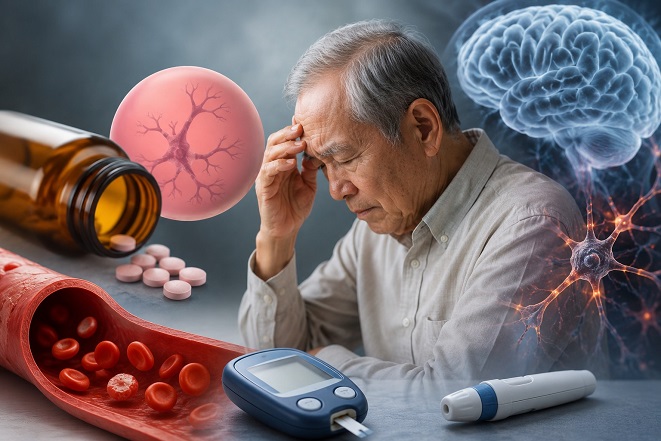
Low vitamin B12 and high homocysteine may quietly drive memory decline in elderly diabetics
Study Focuses on Aging Diabetics
Researchers Malgorzata Gorska-Ciebiada and Maciej Ciebiada from the Medical University of Lodz, Poland—specifically the Department of Propaedeutics of Lifestyle Diseases and the Department of General and Oncological Pulmonology—examined how vitamin B12 and homocysteine levels affect brain function in elderly diabetic patients.
The study involved 385 individuals aged 65 and above who had been living with type 2 diabetes for at least one year. Among them, 126 were diagnosed with mild cognitive impairment (MCI), a condition often seen as a warning stage before dementia.
Clear Differences in Blood Markers
The findings were striking. Patients with memory problems had significantly lower vitamin B12 levels and higher levels of homocysteine, a harmful amino acid linked to inflammation and nerve damage.
On average, vitamin B12 levels in cognitively impaired patients were about 251 pg/ml, compared to nearly 340 pg/ml in those without impairment. Meanwhile, homocysteine levels were much higher in the affected group—around 15.9 ng/ml versus 11.4 ng/ml.
Importantly, the study showed a strong relationship between these markers and brain performance. Higher vitamin B12 levels were linked to better scores on memory tests, while higher homocysteine levels were associated with worse cognitive performance.
Multiple Risk Factors Identified
Beyond vitamin levels, the researchers found several additional factors that increased the risk of memory decline. These included older age, longer duration of diabetes, poor blood sugar control, higher triglyceride levels, and the presence of other health conditions such as heart disease, hypertension, and kidney problems.
Lower education levels also played a role, suggesting that lifelong cognitive engagement may offer some protection against decline.
After adjusting for multiple variables, four key independent risk factors stood out: low vitamin B12, high triglycerides, multiple co-existing illnesses, and fewer years of education.
Why These Findings Matter
Vitamin B12 is essential for nerve health, DNA production, and brain function. When levels drop, toxic substances like homocysteine can build up in the body. This can lead to inflammation, damage to blood vessels in the brain, and even direct injury to brain cells.
This
Medical News report highlights that elevated homocysteine may also promote harmful processes such as oxidative stress and the accumulation of abnormal proteins in the brain, which are linked to neurodegenerative diseases.
The study also found that poor blood sugar control—ref
lected in higher HbA1c levels—was associated with both lower B12 and higher homocysteine levels, suggesting that diabetes management plays a crucial role in brain health.
A Preventable Path?
Although the study was observational and cannot prove direct cause and effect, the findings strongly suggest that routine screening for vitamin B12 deficiency could be a simple and effective way to identify at-risk individuals.
Regular cognitive testing in older diabetics may also help detect early changes before they progress to more serious conditions like dementia.
Conclusion
The study provides compelling evidence that vitamin B12 deficiency and elevated homocysteine levels are closely linked to cognitive decline in elderly individuals with type 2 diabetes, highlighting a potentially modifiable pathway that could help delay or reduce the progression of memory impairment if addressed early through screening, monitoring, and targeted interventions.
The study findings were published on a preprint server:
https://www.preprints.org/manuscript/202607.0609
For the latest on diabetes and memory loss, keep on logging to Thailand
Medical News.
Read Also:
https://www.thailandmedical.news/articles/diabetes
https://www.thailandmedical.news/articles/supplements




 Share
Share
 Tweet
Tweet
 Share
Share

































