Nikhil Prasad Fact checked by:Thailand Medical News Team Feb 20, 2026 7 months, 1 week, 5 days, 23 minutes ago
Medical News: A growing body of medical research is revealing that people with type 2 diabetes may face a hidden and under-recognized heart threat known as coronary artery spasm. Unlike traditional heart disease caused by clogged arteries, this condition involves sudden narrowing of the coronary arteries, which can restrict blood flow and trigger chest pain, heart attacks, or even sudden death. The new review study highlights how diabetes can silently damage blood vessels in ways that increase the risk of these dangerous spasms.
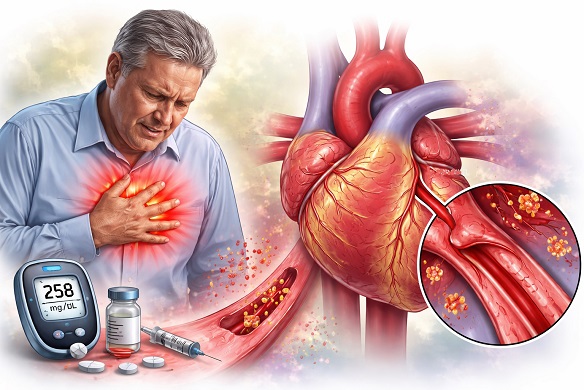 New research reveals diabetes may trigger dangerous hidden spasms in heart arteries even without visible blockages
Researchers from the “Grigore T. Popa” University of Medicine and Pharmacy in Iași, Romania; the Cardiology Clinic and III Internal Medicine Clinic at “St. Spiridon” County Emergency Clinical Hospital in Iași, Romania; the Clinical Rehabilitation Hospital in Iași, Romania; and the Faculty of Medicine at “Lucian Blaga” University in Sibiu, Romania conducted an extensive analysis of studies published over the past 25 years. Their goal was to better understand why many diabetic patients continue to experience heart symptoms even when their arteries appear relatively normal during medical imaging. This
Medical News report highlights their findings, which reveal that coronary artery spasms may be a major missing link explaining these unexplained symptoms.
What Is Coronary Artery Spasm and Why It Matters
Coronary artery spasm occurs when the muscles in the walls of heart arteries suddenly tighten, temporarily narrowing the vessel and reducing blood flow to the heart muscle. This can happen even in arteries that are not blocked by fatty plaque. These spasms can cause chest pain, abnormal heart rhythms, and in severe cases, heart attacks or sudden cardiac death.
Researchers explained that diabetes patients are especially vulnerable because long-term high blood sugar damages blood vessels in multiple ways. This damage affects both large coronary arteries and the smaller microvascular vessels that regulate blood flow deep within the heart tissue.
How Diabetes Damages Blood Vessel Function
One of the most important discoveries from the study is how diabetes interferes with the normal function of the endothelium, the inner lining of blood vessels. Normally, this lining produces nitric oxide, a substance that relaxes blood vessels and promotes healthy blood flow. However, in people with diabetes, nitric oxide production is reduced while harmful vasoconstrictor substances increase. This imbalance makes arteries more likely to tighten suddenly and excessively.The study also identified oxidative stress as a major contributor. High blood sugar increases the production of harmful molecules called reactive oxygen species, which damage cells and reduce the body’s ability to relax blood vessels. These molecules also increase inflammation, another major trigger for artery spasms.
Dangerous Changes in Vascular Muscle Cells
Researchers fou
nd that diabetes also affects the muscle cells that control artery contraction. Elevated blood sugar alters the way calcium and potassium channels work inside these cells. These changes make the muscle cells more sensitive and prone to excessive contraction. As a result, coronary arteries in diabetic patients may constrict more strongly and remain narrowed longer than normal.
In addition, diabetes activates specific biological pathways, such as the Rho-kinase signaling pathway, which plays a critical role in vascular contraction. Increased activity in this pathway has been directly linked to coronary artery spasms and reduced blood supply to the heart.
The Role of Inflammation and Nerve Dysfunction
Chronic inflammation is another key factor. Diabetes causes ongoing low-grade inflammation throughout the body, including in blood vessel walls. Inflammatory chemicals weaken normal vessel function and increase the likelihood of spasms.
The study also revealed that diabetes damages the autonomic nervous system, which controls involuntary body functions such as heart rate and blood vessel tone. This nerve damage can disrupt the balance between signals that relax and constrict blood vessels, increasing the risk of sudden artery narrowing.
Many Diabetic Patients May Be Misdiagnosed
One important finding is that many diabetic patients experience chest pain or heart symptoms even when traditional scans do not show major blockages. Researchers believe coronary artery spasms may explain many of these cases. These spasms can occur in both large coronary arteries and smaller microvascular vessels, making them difficult to detect using standard imaging methods.
This means some patients may not receive proper diagnosis or treatment, even though they remain at risk of serious cardiovascular events.
Conclusion
The findings clearly demonstrate that coronary artery spasms represent a serious and often overlooked cardiovascular risk in people with type 2 diabetes. Multiple mechanisms—including endothelial dysfunction, oxidative stress, inflammation, vascular muscle hyperreactivity, and nerve damage—work together to increase vulnerability to sudden artery narrowing. Recognizing coronary spasms as a major complication of diabetes could lead to earlier diagnosis, improved treatments, and better prevention of life-threatening cardiac events. Greater awareness among doctors and patients is essential to reduce preventable heart complications in this growing global population.
The study findings were published in the peer reviewed journal: Life.
https://www.mdpi.com/2075-1729/16/2/354
For the latest on Diabetes, keep on logging to Thailand
Medical News.
Read Also:
https://www.thailandmedical.news/articles/diabetes




 Share
Share
 Tweet
Tweet
 Share
Share

































