Researchers Warn That COVID-19 Spike Protein Can Trigger Astrogliosis and Synapse Loss
Nikhil Prasad Fact checked by:Thailand Medical News Team May 15, 2026 3 months, 2 weeks, 4 days, 20 hours, 50 minutes ago
Medical News: A disturbing new study from scientists in Brazil and the United Kingdom is raising fresh concerns about how exposure to the SARS-CoV-2 spike protein during early brain development could affect long-term brain health. Researchers found that even without active viral infection, exposure to the spike protein alone caused brain inflammation, loss of critical neural connections, seizures, and later cognitive problems in mice.
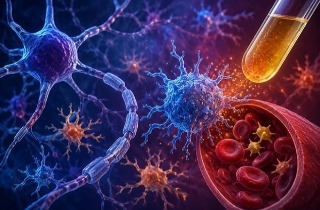
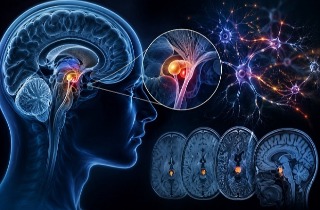
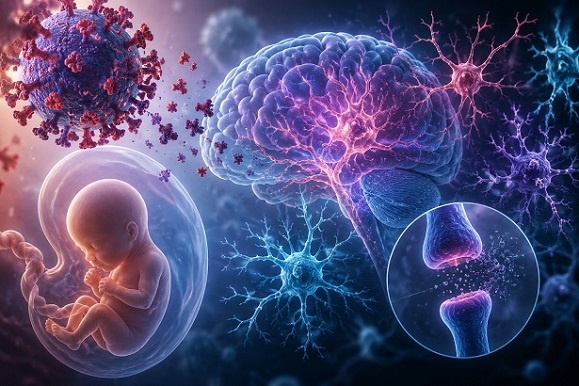 New research shows that exposure to the COVID-19 spike protein during brain development may trigger
inflammation, synapse loss, and lasting memory problems
The study was conducted by researchers from the Universidade Federal do Rio de Janeiro, Universidade Federal do Rio Grande do Sul, Instituto de Microbiologia Paulo de Góes, COPPE at the Federal University of Rio de Janeiro, Instituto de Biofísica Carlos Chagas Filho, and King’s College London’s Institute of Psychiatry, Psychology and Neuroscience.
What the Researchers Discovered
The scientists exposed newborn mice to the SARS-CoV-2 spike protein during a stage of development roughly similar to the late stages of human pregnancy. They discovered that within just 10 days, the animals developed increased seizure susceptibility, widespread brain inflammation, and major synapse loss in important brain regions linked to learning and memory.
Synapses are tiny communication points that allow brain cells to send signals to one another. Losing these synapses can severely affect memory, learning ability, emotional regulation, and behavior.
Even more concerning, male mice later developed persistent cognitive problems as adults. The researchers observed that these long-term memory deficits occurred even though there was no major viral replication inside the brain itself.
The findings suggest that viral proteins alone may be capable of disrupting the developing brain.
Understanding Astrogliosis
One of the most alarming findings involved a process called astrogliosis.
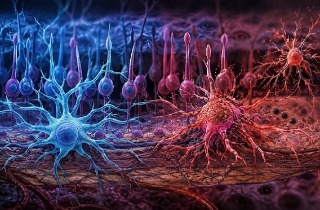
Astrogliosis, also known as reactive astrogliosis, is the abnormal increase in the number, size, and activity of astrocytes in the central nervous system in response to infections, injuries, or neurodegenerative diseases. Astrocytes are support cells in the brain that help nourish neurons, regulate chemicals, maintain the blood-brain barrier, and repair tissue after injury.
However, when astrocytes become excessively activated, they can create chronic inflammation and even damage surrounding brain tissue. The process is associated with increased production of GFAP protein and can eventually lead to glial scar formation that interferes with normal nerve repair and brain signaling.
The researchers found dramatic increases in GFAP activity in both the cortex and hippocampus of exposed mice, clear evidence that astrogliosis had occurred. They also detected elevated inflammatory molecules including TNF-alpha, IL-1β, COX-2, and iNOS, all markers linked to neuroinflammation and neurological injury.
Synapse Loss and Brain Development Concerns
t;
The developing brain is especially vulnerable because infancy and fetal development are periods when massive numbers of synapses are being formed. During these critical windows, the brain builds the networks needed for future learning, emotional control, and cognition.
Researchers observed significant reductions in important synaptic proteins including synaptophysin, Homer-1, and gephyrin. These proteins are essential for maintaining healthy communication between neurons.
The study showed that both excitatory and inhibitory neural signaling systems were disrupted. This imbalance can potentially increase seizure risk and alter how brain circuits mature over time.
Importantly, the researchers also found evidence that spike protein exposure interfered with neurotrophic support systems, particularly reducing levels of GDNF, a molecule vital for neuron survival and maintenance.
This
Medical News report highlights growing evidence that even indirect exposure to viral components during pregnancy or early infancy may carry neurological risks that scientists are only beginning to understand.
Long-Term Cognitive Effects
At 60 days after exposure, male mice showed clear memory problems during behavioral testing. In maze experiments and object recognition tests, the animals struggled to learn and remember tasks compared to control mice.
Female mice appeared less affected, suggesting possible sex-specific biological differences in how the developing brain responds to inflammatory stress.
Researchers also discovered that while some synaptic markers recovered over time, persistent inflammation remained in the male brains. Activated astrocytes and immune cells called microglia continued showing signs of abnormal reactivity long after the initial exposure.
The scientists warned that unresolved inflammation during brain development may leave lasting neurological scars.
Important Clarification About Vaccines
The researchers emphasized that their findings do not suggest COVID-19 vaccines are unsafe during pregnancy. They noted that the concentration of spike protein generated after vaccination is dramatically lower than the concentrations used in the experiments.
The study specifically examined prolonged exposure to spike protein in a controlled laboratory setting designed to mimic developmental exposure under experimental conditions.
Conclusion
The findings add to growing concerns that the SARS-CoV-2 spike protein may have biological effects beyond simple viral entry into cells. The study suggests that developing brains may be uniquely vulnerable to inflammatory damage caused by viral proteins, even when active infection is absent. Researchers believe this could help explain some neurological and developmental issues observed after maternal COVID-19 exposure. While more human studies are urgently needed, the work underscores the importance of long-term monitoring of children exposed to SARS-CoV-2 during pregnancy or early infancy, particularly as scientists continue uncovering how inflammation affects the rapidly developing brain.
The study findings were published in the peer reviewed journal: Brain, Behavior, and Immunity.
https://www.sciencedirect.com/science/article/pii/S0889159126005477
For the latest COVID-19 news, keep on logging to Thailand
Medical News.
Read Also:
https://www.thailandmedical.news/articles/coronavirus
https://www.thailandmedical.news/articles/long-covid




 Share
Share
 Tweet
Tweet
 Share
Share