Nikhil Prasad Fact checked by:Thailand Medical News Team May 10, 2026 4 months, 3 weeks, 4 days, 6 hours, 9 minutes ago
Medical News: COVID-19 Can Trigger Rare Nerve Disease That is Often Misdiagnosed as Guillain-Barre
Doctors in Iran have documented a rare and alarming medical case in which COVID-19 triggered a hidden genetic disorder that initially looked almost identical to Guillain-Barre syndrome, a serious neurological condition that attacks the nerves. The case involved a 16-year-old girl whose symptoms rapidly worsened after a COVID-19 infection, leaving doctors struggling to identify the true cause behind her mysterious illness.
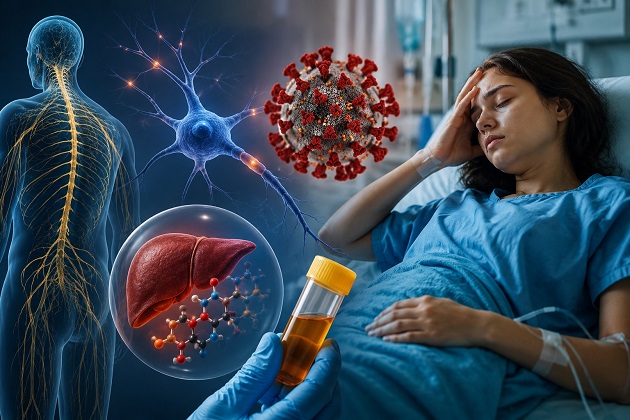 COVID-19 infection exposed a hidden genetic disorder in a teenage girl, causing severe nerve damage that initially
appeared to be Guillain-Barre syndrome
The researchers were from the Children's Medical Center, Tehran University of Medical Sciences, the Pediatric Rheumatology Research Center, the Department of Physical Medicine and Rehabilitation, the Division of Pediatric Intensive Care, and the Pediatric Rheumatology Society of Iran, all based in Tehran, Iran.
The condition eventually diagnosed was Acute Intermittent Porphyria (AIP), a rare inherited disorder that affects the body’s ability to produce heme, an important component needed for healthy blood and nerve function. The disease can silently remain hidden for years before being triggered by stress, infections, medications, fasting, or hormonal changes.
COVID-19 Triggered a Medical Nightmare
The teenage patient first developed cough and cold-like symptoms before scans confirmed COVID-19 infection. However, the real trouble started days later when she began suffering severe abdominal pain, seizures, dangerously high blood pressure, muscle weakness, tremors, anxiety, and episodes of numbness in her legs.
Doctors initially suspected Guillain-Barre syndrome because the girl developed progressive weakness and loss of reflexes in her lower limbs. Guillain-Barre syndrome is a condition in which the immune system attacks the nerves, often after an infection.
Her laboratory results were also extremely concerning. She showed electrolyte imbalances including low sodium, low potassium, and low magnesium levels. Liver enzymes were abnormally elevated, and inflammation markers were high. At one stage, doctors feared she might have multisystem inflammatory syndrome linked to COVID-19.
The patient was treated with intravenous immunoglobulin therapy and high-dose steroids commonly used for Guillain-Barre syndrome and inflammatory complications. However, her condition failed to improve significantly.
Strange Clues Pointed to a Different Disease
Doctors became suspicious after repeated nerve studies showed an unusual pattern of nerve damage more consistent with toxic nerve injury rather than classic Guillain-Barre syndrome. Another major clue appeared when a fresh urine sample darkened dramatically after exposure to sunlight, a classic sign of porphyria.
Further testing revealed elevated levels of porphobilinogen and aminolevulinic acid, toxic compounds that build up during acute porphyria attacks. Genetic testing later confirmed the girl carried a dangerous mutation in the HMBS gene, officiall
y diagnosing Acute Intermittent Porphyria.
Doctors immediately stopped medications that could worsen porphyria and began treatment with high glucose infusions and a carbohydrate-rich diet. Remarkably, the patient slowly improved, and many of her abnormal laboratory findings eventually normalized.
Why Acute Intermittent Porphyria Is So Dangerous
Acute Intermittent Porphyria is notoriously difficult to diagnose because its symptoms imitate many other illnesses. Patients can suffer severe stomach pain, psychiatric symptoms, seizures, nerve damage, muscle weakness, rapid heartbeat, high blood pressure, and even paralysis.
Researchers explained that COVID-19 may worsen the condition by increasing stress and inflammation inside the body, which pushes the liver into overproducing toxic substances involved in the heme production pathway. Those chemicals can then attack the nervous system.
This
Medical News report highlights how dangerous delayed diagnosis can become, especially when symptoms resemble more common neurological disorders.
The researchers also warned that some medications used during emergencies can unintentionally worsen porphyria attacks. In this case, phenytoin, a seizure medication given early in treatment, is known to potentially aggravate Acute Intermittent Porphyria.
Important Lessons for Doctors Worldwide
The case is especially important because COVID-19 continues to trigger unusual immune and neurological complications worldwide. The researchers emphasized that doctors should suspect Acute Intermittent Porphyria whenever COVID-19 patients develop unexplained abdominal pain, seizures, psychiatric symptoms, or sudden nerve weakness.
The study also showed how difficult diagnosis can be in countries where advanced testing and treatments such as intravenous hemin are not always easily available. Early recognition remains critical because untreated attacks can cause permanent nerve damage, kidney disease, chronic hypertension, and even death.
Conclusion
The findings from this rare case reveal how COVID-19 can unmask dangerous hidden genetic diseases that closely imitate other neurological disorders. The overlap between Acute Intermittent Porphyria and Guillain-Barre syndrome can easily mislead doctors, delaying proper treatment during a critical window when patients are rapidly deteriorating. Researchers stressed that simple urine testing combined with careful observation of unusual symptoms such as persistent abdominal pain, seizures, electrolyte disturbances, and psychiatric changes can help save lives. The case also reinforces the growing evidence that COVID-19 may trigger severe metabolic and neurological complications far beyond the lungs, especially in genetically vulnerable individuals.
The study findings were published in the peer reviewed journal: Clinical Case Reports.
https://onlinelibrary.wiley.com/doi/10.1002/ccr3.72417
For the latest COVID-19 News, keep on logging to Thailand
Medical News.
Read Also:
https://www.thailandmedical.news/articles/coronavirus
https://www.thailandmedical.news/articles/long-covid




 Share
Share
 Tweet
Tweet
 Share
Share

































