Nikhil Prasad Fact checked by:Thailand Medical News Team Jun 30, 2026 3 months, 6 days, 17 hours, 10 minutes ago
Medical News: Traditional Plant Use Sparks Scientific Interest
A new study conducted by researchers from the Universidade Federal do Rio de Janeiro (Brazil) and the Universidade Federal do Maranhão (Brazil) has found that a traditional medicinal plant, commonly known as cat’s claw (Uncaria tomentosa), may help block the COVID-19 virus from entering human cells.
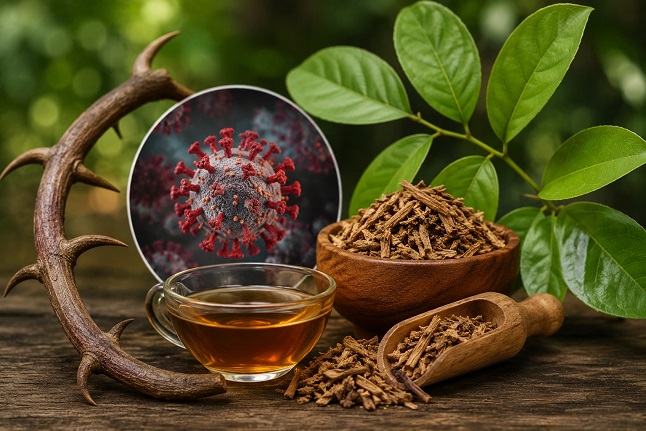 Cat’s claw plant shows strong lab evidence of blocking COVID-19 virus entry into human cells
During the pandemic, many communities relied on natural remedies due to limited access to healthcare, prompting scientists to investigate whether these practices have scientific merit.
Widespread Use of Medicinal Plants During COVID-19
Researchers surveyed 400 individuals in São Luís, Brazil, and found that 22.75% used medicinal plants to prevent or manage COVID-19 symptoms. Usage was higher among older adults and women.
Most participants depended on advice from family and friends rather than healthcare professionals. A significant number also used medicinal plants alongside prescription drugs without informing their doctors, raising safety concerns.
Cat’s Claw Identified as the Most Popular Remedy
Among 38 medicinal plants reported, cat’s claw emerged as the most frequently used. Traditionally known for its anti-inflammatory and immune-supporting properties, it was commonly consumed as a tea made from its leaves.
Despite its widespread use, scientific evidence supporting its effectiveness against COVID-19 has been limited until now.
Laboratory Tests Reveal Strong Virus Blocking Activity
Researchers tested extracts from both the leaves and the stem bark to evaluate their ability to block the interaction between the SARS-CoV-2 spike protein and the ACE2 receptor, a critical step for viral entry into human cells.
The findings showed that stem bark extracts were significantly more effective. Ethanolic extracts achieved up to 98.09% inhibition, while water-based extracts showed 73.40% inhibition. Leaf extracts showed much lower activity.
Key Compounds Behind the Effects
Chemical analysis identified important bioactive compounds in the plant, including oxindole alkaloids and flavonoids. These compounds are known for their antiviral, anti-inflammatory, and immune-modulating properties and likely contribute to the observed effects.
This
Medical News report highlights the importance of exploring traditional medicinal plants as potential sources of new antiviral agents.
Safety Concerns and Usage Gaps
The study also revealed that many individuals used medicinal plants without proper medical guidance, especially alongside conventional medications, increasing potential health risks.
Additionally, although the
bark showed stronger activity in laboratory tests, most people used the leaves due to availability, indicating a gap between traditional use and scientific findings.
Conclusion
The study provides strong preliminary evidence that Uncaria tomentosa contains compounds capable of interfering with the entry of the SARS-CoV-2 virus into human cells. However, these findings are based on laboratory experiments and do not confirm clinical effectiveness in humans. Further research, including controlled human trials, is necessary to determine safety, proper dosing, and therapeutic value. The results also emphasize the importance of aligning traditional medicinal practices with scientific validation while ensuring safe and informed use.
The study findings were published in the peer reviewed journal: Plants
https://www.mdpi.com/2223-7747/15/13/1998
For the latest COVID-19 news, keep on logging to Thailand
Medical News.
Read Also:
https://www.thailandmedical.news/articles/coronavirus
https://www.thailandmedical.news/articles/covid-19-herbs
https://www.thailandmedical.news/articles/herbs-and-phytochemicals
Medical Disclaimer: All content published by Thailand Medical News is based on scientific research and is intended for informational and educational purposes only. It is not medical advice, diagnosis, or treatment. Readers must not attempt to use, apply, or experiment with any protocols, compounds, or therapies mentioned without first consulting a qualified and licensed medical doctor. Many findings discussed are experimental or preliminary, and only a licensed healthcare professional can determine what is safe and appropriate for an individual’s specific medical condition.




 Share
Share
 Tweet
Tweet
 Share
Share