Nikhil Prasad Fact checked by:Thailand Medical News Team Jul 08, 2026 1 month, 3 weeks, 4 days, 11 hours, 42 minutes ago
Medical News: For decades, glaucoma treatment has focused primarily on lowering pressure inside the eye. While this approach remains the cornerstone of care, many patients continue to experience gradual vision loss despite achieving healthy eye pressure. A new scientific review is now highlighting why this happens and points to promising new therapeutic targets that may one day help preserve eyesight more effectively.
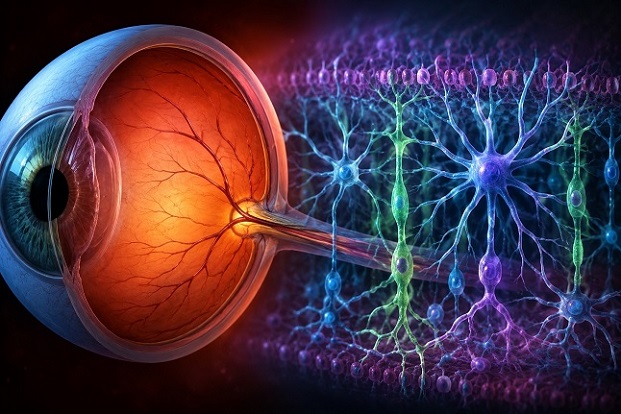 Scientists say future glaucoma treatments may need to target retinal support cells and inflammation instead of
focusing solely on lowering eye pressure
The review was conducted by researchers from the Laboratory of Retinal Neurobiology, Department of Neurobiology, Institute of Biology, Fluminense Federal University, the Graduate Program of Neurosciences, Institute of Biology, Fluminense Federal University, the Graduate Program of Biomedical Sciences, Biomedical Institute, Fluminense Federal University, and the Laboratory of Neuronal Physiology and Pathology, Department of Molecular and Cellular Biology, Institute of Biology, Fluminense Federal University, all in Niterói, Rio de Janeiro, Brazil. The scientists examined growing evidence that retinal support cells, rather than simply being passive bystanders, play a central role in determining whether nerve cells survive or die during glaucoma.
Glaucoma Is More Than a Disease of High Eye Pressure
Glaucoma is one of the leading causes of irreversible blindness worldwide. Elevated intraocular pressure remains the most important modifiable risk factor, but it is no longer considered the only driver of disease progression. The review explains that many patients continue to lose retinal ganglion cells—the nerve cells responsible for transmitting visual information from the eye to the brain—even after eye pressure has been successfully reduced.
According to the researchers, glaucoma develops through a complex combination of mechanical stress, impaired blood flow, oxidative stress, mitochondrial dysfunction, chronic inflammation, and immune activation. These processes interact within the retina and optic nerve, creating an environment that gradually damages vision.
Retinal Support Cells Can Become Part of the Problem
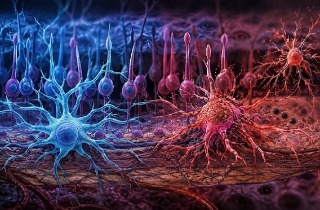
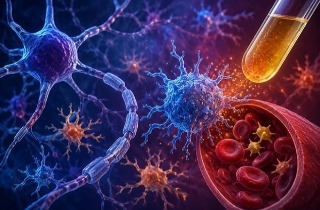
The review focuses on two important retinal support cells known as astrocytes and Müller cells, collectively called macroglia. Under healthy conditions, these cells perform numerous essential functions. They nourish retinal neurons, regulate potassium and glutamate levels, maintain the blood-retinal barrier, provide antioxidants, support energy metabolism, and help preserve the structural integrity of the retina.
However, when exposed to prolonged stress caused by glaucoma, these same cells undergo a process called reactive gliosis. Initially, this response is protective, helping limit injury and maintain retinal function. As the disease persists, the cells gradually adopt a harmful state characterized by chronic inflammation, oxidative damage, extracellular matrix remodeling, and the release of toxic inflammatory molecules that accelerate retinal ganglion cell death.
This
.thailandmedical.news/">Medical News report notes that the review emphasizes the importance of preserving the beneficial functions of these support cells while preventing their transition into destructive inflammatory cells.
New Molecular Targets Offer Fresh Treatment Possibilities
One of the review's most significant contributions is identifying several molecular pathways that could become future therapeutic targets.
Among the most promising are the mechanosensitive Piezo1 receptor and several members of the Transient Receptor Potential (TRP) channel family. These proteins act as biological sensors that detect increased mechanical stress within the eye.
Once activated, they trigger a cascade of calcium signaling, inflammation, oxidative stress, and cellular dysfunction that eventually transforms protective glial cells into contributors to neurodegeneration.
The review also highlights complement activation, NF-κB signaling, inflammasome activation, mitochondrial injury, excessive glutamate accumulation, impaired potassium regulation, and communication between astrocytes, Müller cells, and microglia as additional pathways that sustain retinal damage. These mechanisms help explain why glaucoma may continue progressing even after intraocular pressure has been normalized.
Future Treatments May Go Beyond Pressure Control
Rather than relying solely on lowering intraocular pressure, the researchers propose that future glaucoma therapies should directly target glial dysfunction. Potential approaches include reducing oxidative stress, blocking harmful inflammatory signaling, protecting mitochondria, modulating Piezo1 and TRP channels, preventing reactive gliosis, and restoring the normal supportive functions of astrocytes and Müller cells.
Such strategies could complement existing pressure-lowering treatments and potentially slow or even halt ongoing retinal degeneration.
Conclusion
This comprehensive review reinforces the growing understanding that glaucoma is a multifactorial neurodegenerative disease rather than simply a disorder of elevated eye pressure. By identifying how retinal support cells switch from protecting neurons to driving inflammation, oxidative stress, and nerve cell death, the researchers highlight several promising therapeutic targets that may reshape future glaucoma treatment. Combining traditional pressure-lowering therapies with treatments that directly address glial dysfunction and neuroinflammation could offer patients better long-term protection against irreversible vision loss.
The study findings were published on a preprint server and are currently being peer reviewed.
https://www.preprints.org/manuscript/202607.0218
For the latest on Glaucoma, keep on logging to Thailand
Medical News.
Read Also:
https://www.thailandmedical.news/articles/glaucoma-news




 Share
Share
 Tweet
Tweet
 Share
Share