Nikhil Prasad Fact checked by:Thailand Medical News Team Apr 18, 2026 5 months, 2 weeks, 2 days, 2 hours, 54 minutes ago
Medical News: A new scientific study is drawing attention to a little-known medicinal plant that could help in the fight against Alzheimer’s disease. Researchers have identified powerful phytochemical compounds from Astragalus zederbaueri that may block a key enzyme linked to memory loss, opening new doors for future treatments.
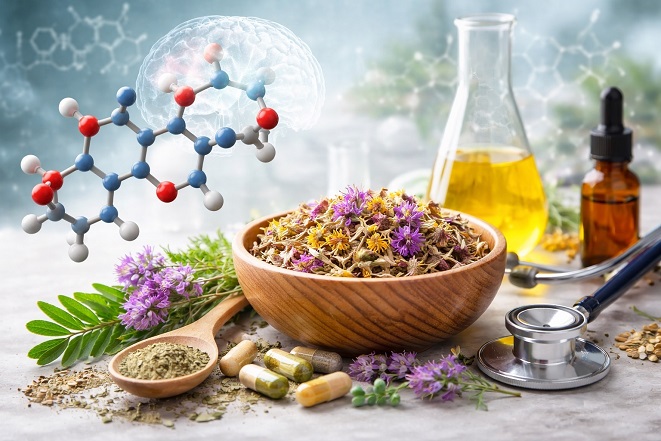 Natural plant compounds may help block memory loss enzyme in Alzheimer’s disease
Understanding the Alzheimer’s Target
Natural plant compounds may help block memory loss enzyme in Alzheimer’s disease
Understanding the Alzheimer’s Target
Alzheimer’s disease is the most common form of dementia, gradually damaging memory, thinking, and behavior. One major reason this happens is the breakdown of a brain chemical called acetylcholine, which helps nerve cells communicate. This breakdown is driven by an enzyme known as acetylcholinesterase (AChE).
Blocking this enzyme is already a known strategy in Alzheimer’s treatment. Existing drugs like donepezil work this way, but they come with limitations and side effects. Scientists are now searching for safer and more effective alternatives, especially from natural sources.
A Plant with Hidden Potential
The research focused on Astragalus zederbaueri, a plant known for its rich mix of bioactive compounds. Using advanced computer-based techniques, scientists screened 40 phytochemical compounds from this plant to see how well they could block the AChE enzyme.
Among them, three stood out: rutin, nicotiflorin, and isoquercitrin. Rutin emerged as the most promising candidate, showing extremely strong binding to the enzyme. Its binding strength was even comparable to, and in some ways better than, the reference drug used in the study.
How the Compounds Work
The study revealed that these plant compounds attach tightly to critical regions of the enzyme, preventing it from breaking down acetylcholine. According to detailed molecular analysis, rutin forms multiple stabilizing interactions with key amino acids in the enzyme, making it particularly effective.
The compounds also showed antioxidant properties, which are important because oxidative stress plays a major role in brain cell damage in Alzheimer’s disease. This dual action—enzyme inhibition and antioxidant protection—makes them especially attractive as potential therapies.
This
Medical News report highlights that computational simulations confirmed the stability of these compounds when bound to the enzyme, suggesting they could remain effective inside the human body.
Safety and Drug-Like Properties
Beyond effectiveness, safety is critical. The researchers evaluated how these compounds behave in the body, including absorption, distribution, metabolism, and toxicity.
Encouragingly, rutin and related compounds showed acceptable safety profiles. They were predicted to be non-toxic, with low risks of causing liver damage or genetic mutations. Some compounds also d
emonstrated favorable ability to cross the blood-brain barrier, a key requirement for Alzheimer’s drugs.
Stability and Real-World Potential
Further simulations showed that the compounds maintained stable interactions with the enzyme over time, without causing structural disruption. This suggests they could function reliably in real biological environments.
However, researchers also noted limitations. The study was conducted using computational models, meaning real-world laboratory and clinical testing is still needed before any treatment can be developed.
Institutions Behind the Research
The study was conducted by researchers from the Institute of Molecular Biology and Biotechnology at The University of Lahore, Pakistan; the Department of Pharmacology at Imam Mohammad Ibn Saud Islamic University, Saudi Arabia; the Centre of Excellence in Molecular Biology at the University of the Punjab, Pakistan; the Department of Pharmacology and Toxicology at Umm Al-Qura University, Saudi Arabia; the Health Research Centre and Faculty of Pharmacy at Jazan University, Saudi Arabia; and the Center for Health Research at Northern Border University, Saudi Arabia.
Conclusion
This study provides strong early evidence that natural compounds from Astragalus zederbaueri, especially rutin, could become valuable tools in Alzheimer’s treatment. By effectively blocking a key enzyme and offering additional antioxidant benefits, these compounds show a rare combination of potency and safety. While more research is needed to confirm these findings in real-world conditions, the results mark an exciting step forward in the search for better, plant-based therapies for one of the world’s most challenging neurological diseases.
The study findings were published in the peer reviewed journal: PLOS One.
https://journals.plos.org/plosone/article?id=10.1371/journal.pone.0346177
For the latest research on Alzheimer’s Disease, keep on logging to Thailand
Medical News.
Read Also:
https://www.thailandmedical.news/articles/alzheimer,-dementia-
https://www.thailandmedical.news/articles/herbs-and-phytochemicals




 Share
Share
 Tweet
Tweet
 Share
Share

































