Nikhil Prasad Fact checked by:Thailand Medical News Team Sep 20, 2026 47 minutes ago
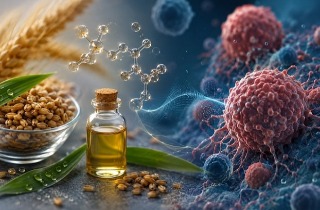
A phytochemical compound derived from licorice may help suppress bladder cancer while making tumors more responsive to cisplatin chemotherapy, according to new preclinical research examining its effects on two major cancer-promoting signaling pathways.
 Glycyrrhizic acid suppressed bladder cancer growth and strengthened cisplatin's anticancer effects in preclinical
experiments
Researchers from Tianjin First Central Hospital, Tianjin Medical University, and Nankai University investigated glycyrrhizic acid (GLA), a major bioactive component of Glycyrrhiza glabra. The team combined network pharmacology with laboratory cell experiments and an animal model.
Researchers Identify 55 Potential Targets
The computational analysis identified 55 molecular targets shared between GLA and bladder cancer. Eight emerged as central targets: TNF, PTGS2/COX-2, CASP3, BCL2, ESR1, STAT3, JUN, and GSK3B. Pathway analysis particularly highlighted NF-κB and TNF signaling, both relevant to cancer cell survival and treatment resistance.
Experiments then showed that GLA reduced the viability of MB49 bladder cancer cells in a concentration- and time-dependent manner. Its IC50—the concentration required to reduce cell viability by 50%—was 220.68 μM after 24 hours and 201.73 μM after 48 hours.
Cancer Cells Driven Toward Death
Importantly, GLA did more than slow cell growth. It increased apoptosis, or programmed cell death, while raising Bax and activating Caspase-3 and reducing the anti-apoptotic protein Bcl-2 and inflammatory protein COX-2. Migration also declined substantially, with approximately a 65%–70% reduction at 200 μM alongside lower MMP-2 and MMP-9 expression.
For this
Thailand Medical News report, one of the most notable findings was GLA's simultaneous inhibition of NF-κB and PI3K/AKT signaling. Researchers observed reduced phosphorylation of key proteins in both pathways without corresponding reductions in total protein levels.
Cisplatin Combination Shows Stronger Effects
GLA at 100 μM combined with cisplatin at 5 μM produced greater inhibition of cancer-cell proliferation than either treatment alone. Apoptosis was approximately 2.8 times higher with the combination than with cisplatin alone. In mice, combined treatment produced the greatest tumor suppression and reduced final tumor weight, while body weight remained stable.
Conclusions
The findings suggest GLA could eventually become a chemotherapy-sensitizing strategy for bladder cancer by simultaneously weakening survival signaling, promoting apoptosis, and restricting migration. However, the evidence remains preclinical, with further pharmacokinetic studies, human-cell validation, and clinical trials required before therapeutic use can be established.
The study findings were posted on a preprint server and have yet to be peer reviewed.
article/rs-10709832/v1">https://www.researchsquare.com/article/rs-10709832/v1
Read Also:
https://www.thailandmedical.news/articles/cancer
https://www.thailandmedical.news/articles/herbs-and-phytochemicals




 Share
Share
 Tweet
Tweet
 Share
Share