Nikhil Prasad Fact checked by:Thailand Medical News Team Oct 17, 2026 41 minutes ago
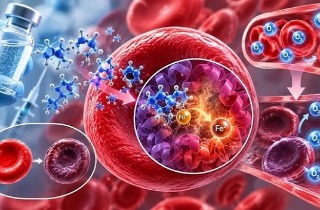
A new study from Poland has revealed striking disruptions in iron metabolism among hospitalized COVID-19 patients, with abnormal iron-related blood markers closely associated with severe illness, excessive inflammation, and death.
Researchers from the Medical University of Bialystok, University Children Clinical Hospital in Bialystok, and Voivodeship Hospital in Bialystok investigated whether these changes could help doctors assess disease severity.
 New research reveals major disruptions in blood iron regulation among hospitalized COVID-19 patients, with
abnormal ferritin and transferrin levels linked to severe illness and mortality
Study Examines Iron Changes in COVID-19 Patients
The investigation involved 87 hospitalized COVID-19 patients and 45 healthy participants. Patients were classified as having moderate, severe, or critical illness.
Blood tests measured iron, ferritin, transferrin, transferrin saturation, hepcidin, and soluble transferrin receptors. Follow-up samples were collected from 40 patients around their ninth hospitalization day.
Dramatic Differences in Iron Markers
Median blood iron levels were just 42.1 micrograms per deciliter in COVID-19 patients, compared with 128.8 in healthy participants.
Transferrin, the protein transporting iron through the bloodstream, declined from 2.72 to 1.66 grams per liter. Transferrin saturation also dropped from 35% to 19.8%.
Meanwhile, ferritin, an iron-storage protein that increases during inflammation, surged from 54.5 to 593 micrograms per liter.
Hepcidin, a hormone controlling iron availability, increased more than sixfold, potentially restricting iron circulation and contributing to inflammation-related anemia.
Severe Inflammation Linked to Dangerous Changes
Among the patients, 28 developed cytokine storms, potentially life-threatening inflammatory reactions.
Their median ferritin levels reached 1,367 micrograms per liter, compared with 391 among patients without cytokine storms. Transferrin concentrations were substantially lower, while transferrin saturation was higher.
This
Thailand Medical News report highlights another important finding: patients who died had higher ferritin and lower transferrin concentrations than survivors.
Seventeen patients died during hospitalization, representing 19.5% of the study population.
Follow-up testing also revealed increasing iron and ferritin concentrations, suggesting that iron regulation remained disturbed during hospitalization.
What These Findings Mean
The findings suggest that COVID-19-associated inflammation disrupts iron distribution, potentially reducing iron availability for hemoglobin production even when stored iron appears elevated.
However, the retrospective study involved relatively few patients, and its associations cannot e
stablish causation or confirm that these markers reliably predict outcomes.
Conclusion
Iron-related blood markers could eventually complement existing tests for assessing COVID-19 severity and inflammatory complications. Larger prospective studies are necessary to establish their predictive accuracy and determine whether monitoring these changes improves patient management.
The study findings were published in the peer reviewed journal: Current Issues in Molecular Biology.
https://www.mdpi.com/1467-3045/48/10/1062
Read Also:
https://www.thailandmedical.news/articles/coronavirus
https://www.thailandmedical.news/articles/long-covid




 Share
Share
 Tweet
Tweet
 Share
Share