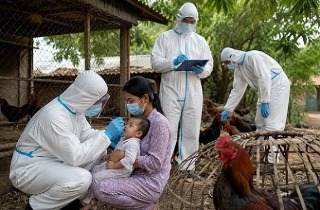
Latest Updates Show That Ebola Has Killed Over 1,000 Individuals and Infected More Than 2,536 in DRC
Nikhil Prasad Fact checked by:Thailand Medical News Team Jul 25, 2026 1 hour, 3 minutes ago
Medical News: Ebola Crisis Deepens as Bundibugyo Virus Continues to Spread Across Eastern Congo
The Ebola outbreak in the Democratic Republic of Congo (DRC) has reached a devastating milestone, with the country's public health institute confirming 2,536 laboratory-confirmed infections and 1,033 deaths. At least 738 patients remain hospitalized or in isolation, highlighting the enormous pressure on healthcare services as officials struggle to contain what has become the fastest-growing Ebola outbreak on record. This
Medical News report examines the latest developments and the mounting challenges confronting response teams.
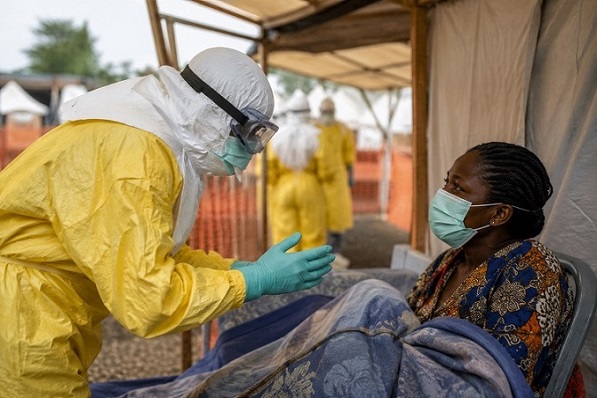 Congo's worsening Ebola outbreak has surpassed 1,000 deaths as health officials battle continued transmission
without approved vaccines or treatments.
A Dangerous Outbreak Unlike Previous Ebola Epidemics
Declared on May 15, the current epidemic is driven by the Bundibugyo strain of the Ebola virus, a variant for which there are no approved vaccines or treatments. Nearly 90% of infections have been reported in the remote Ituri province, although confirmed cases have also appeared in five provinces, including the major city of Kisangani, while cross-border transmission has resulted in infections in neighboring Uganda.
Although Congolese authorities report that the rapid rise in infections appears to be slowing, experts caution that the outbreak has not yet peaked. Transmission remains sustained, and fluctuations in reported cases may reflect delays in reporting rather than genuine improvement.
Contact Tracing Gaps and Security Challenges Fuel Continued Transmission
Health officials emphasize that effective contact tracing remains one of the greatest weaknesses in the response. Only about 77% of identified contacts are currently being monitored, far below the 95% threshold considered necessary to interrupt Ebola transmission.
Researchers from the U.S. Centers for Disease Control and Prevention have modeled several scenarios, warning that the outbreak could become one of the deadliest in history if containment efforts fail. Unlike the 2014-2016 West African epidemic, which required roughly eight months to surpass 1,000 deaths, the current outbreak has reached that grim milestone at a significantly faster pace.
The World Health Organization (WHO) also reports that most new infections originate from unknown chains of transmission, leaving investigators uncertain about the outbreak's true origin and full extent.
Global Risk Remains Low Despite Regional Spread
The WHO continues to classify the outbreak as very high risk within Congo and high risk for Uganda and neighboring countries because of frequent cross-border movement. Nevertheless, the organization maintains that the global risk remains low, as Ebola spreads only through direct contact with the bodily fluids of infected individuals rather than through airborne transmission.
Uganda has recorded 20 confirmed
cases and two deaths, all linked to imported infections from Congo. No new Ugandan cases have been reported since June 21, and authorities have begun the standard 42-day observation period after discharging the final patient. France also reported a single imported case involving a physician returning from Congo, who has since recovered completely.
Community Distrust and Armed Conflict Continue to Hamper Response
Health workers face persistent resistance from affected communities, where misinformation, fear of treatment centers, reluctance to undergo testing, and opposition to safe burial practices continue to undermine containment efforts.
Ongoing violence involving armed groups, including the Rwanda-backed M23 rebels and the Allied Democratic Forces, has further disrupted surveillance, delayed contact tracing, and restricted access to vulnerable populations.
Scientists have now launched the first clinical trial evaluating two experimental therapies against the Bundibugyo virus, with researchers expecting to enroll up to 1,000 participants before determining whether either treatment is effective.
The outbreak demonstrates how delayed detection, limited surveillance, insecurity, community mistrust, and the absence of approved vaccines or therapies can rapidly transform a localized health emergency into a major regional crisis. Continued international cooperation, expanded testing, stronger contact tracing, improved community engagement, and successful clinical research will be essential to preventing even greater loss of life.
Reference:
https://www.cdc.gov/ebola/situation-summary/index.html
For the latest Ebola news, keep on logging to Thailand
Medical News.
Read Also:
https://www.thailandmedical.news/articles/ebola
Visit our sister website
Bangkok Gems News for any updates about the Gems and Jewelry Industry in Thailand.




 Share
Share
 Tweet
Tweet
 Share
Share