American and Thai Medical Breakthrough Turns Viruses into Deadly Bacteria Killers
Nikhil Prasad Fact checked by:Thailand Medical News Team Mar 21, 2026 5 months, 1 week, 5 days, 20 hours, 24 minutes ago
Thailand Medical: In a fascinating new scientific breakthrough, researchers have found a way to genetically reprogram viruses so they can more effectively destroy dangerous bacteria that cause a deadly disease known as melioidosis. This innovative work could open the door to new treatments at a time when antibiotic resistance is becoming a growing global concern.
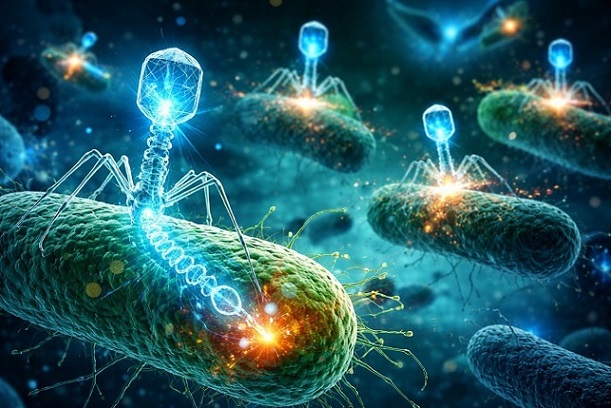 Scientists engineer viruses to aggressively destroy deadly bacteria linked to melioidosis
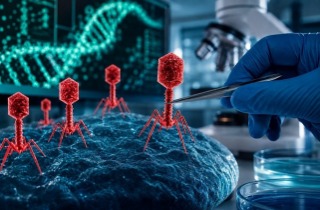
Melioidosis is caused by a bacterium called Burkholderia pseudomallei, commonly found in soil and water in tropical regions. The infection is notoriously difficult to treat, often requiring months of antibiotics, and even then, relapses can occur. Scientists have been searching for alternative approaches, and one promising option is the use of bacteriophages—viruses that specifically infect and kill bacteria.
Scientists Turn to Viruses as a New Weapon
This
Thailand Medical News report highlights how a team of researchers explored whether these viruses, known as phages, could be engineered to become more powerful bacteria killers. The study involved scientists from multiple institutions including the University of Florida (Department of Infectious Diseases and Immunology and Emerging Pathogens Institute), Prince of Songkhla University in Thailand (Faculty of Veterinary Science), Northern Arizona University (The Pathogen and Microbiome Institute), and the University of Florida’s Department of Microbiology and Cell Science.
Normally, many of these phages exist in a “dormant” state inside bacteria, meaning they do not immediately kill their host. Instead, they quietly integrate into the bacterial DNA and remain inactive. This limits their usefulness in treatments because they are not actively destroying harmful bacteria.
Key Discovery: Switching Viruses into Kill Mode
The researchers focused on understanding what controls whether a phage stays dormant or becomes active and kills bacteria. They discovered that certain genes inside the phage act like switches that control this behavior.
Interestingly, removing one gene known as the “integrase” did not improve the virus’s ability to kill bacteria. This gene helps the virus insert itself into bacterial DNA, but it does not control the actual killing process.
However, when scientists deleted a group of other genes—specifically those believed to regulate the virus’s dormant state—the results were dramatic. These modified viruses became far more aggressive, switching into “kill mode” and destroying bacteria much more effectively.
Stronger Bacterial Killing Observed
The engineered viruses showed a noticeable improvement in their ability to eliminate Burkholderia pseudomallei. In laboratory tests, these modified phages produced up to 100 times more viral particles and demonstrated significantly enhanced bacterial killing compared to th
eir unmodified versions.
The study also found that these regulatory genes act like brakes, preventing the virus from becoming active. Once those brakes were removed, the virus could freely attack and destroy bacterial cells.
However, even with these improvements, the engineered viruses were still not as powerful as some naturally occurring fully aggressive phages. This suggests that while the genetic modifications are promising, further refinement is needed to maximize their effectiveness.
Why This Matters for Public Health
Melioidosis remains a serious health threat in many parts of the world, particularly in Southeast Asia and northern Australia. The bacterium’s resistance to multiple antibiotics makes treatment difficult, expensive, and lengthy.
The ability to engineer phages that can specifically target and destroy this pathogen could revolutionize how such infections are treated. It also offers hope for tackling other antibiotic-resistant bacteria.
A Step Toward Future Therapies
The findings show that scientists can successfully reprogram viruses to become more lethal to harmful bacteria by targeting specific genetic switches. This represents an important step forward in the development of phage-based therapies.
Conclusion
The study demonstrates that while deleting certain regulatory genes can significantly boost the bacteria-killing ability of phages, the process is complex and requires further refinement. The research highlights that multiple genetic controls are involved in determining whether a virus remains dormant or becomes destructive. Although not yet perfect, these engineered phages represent a promising and innovative direction in the fight against antibiotic-resistant infections and could play a crucial role in future medical treatments.
The study findings were published in the peer reviewed International Journal of Molecular Sciences.
https://www.mdpi.com/1422-0067/27/6/2772
For the latest on phages, keep on logging to
Thailand Medical News.
Read Also:
https://www.thailandmedical.news/articles/thailand-medical




 Share
Share
 Tweet
Tweet
 Share
Share