Nikhil Prasad Fact checked by:Thailand Medical News Team Jun 22, 2026 3 months, 1 week, 5 days, 4 hours, 36 minutes ago
Medical News: A growing body of evidence is revealing that some of the world's most dangerous cancer-causing viruses may be using a largely overlooked biological trick to drive the development and progression of tumors. Scientists are now warning that viral manipulation of a process known as RNA splicing could represent one of the most important mechanisms behind virus-related cancers.
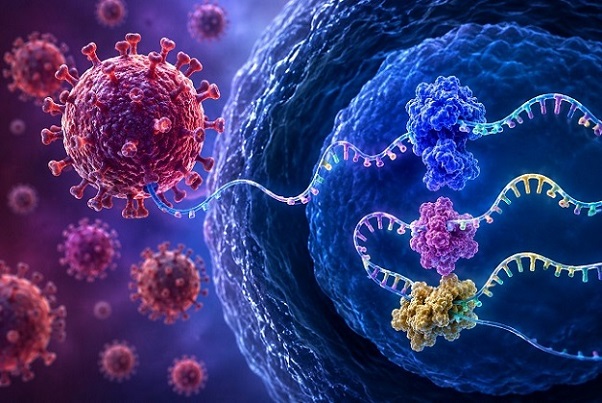 Scientists discover that cancer-causing viruses manipulate human RNA splicing machinery to promote tumor
growth, survival, and metastasis
Researchers from the Department of Biotechnological and Applied Clinical Sciences at the University of L’Aquila, L’Aquila, Italy, conducted a comprehensive review examining how cancer-causing viruses exploit the human cell’s RNA splicing machinery to promote cancer development, tumor growth, immune evasion, treatment resistance, and metastasis.
An Underappreciated Driver of Cancer
Cancer-causing viruses are estimated to account for between 12 and 20 percent of all cancers worldwide. These include human papillomavirus (HPV), Epstein-Barr virus (EBV), hepatitis B virus (HBV), hepatitis C virus (HCV), hepatitis D virus (HDV), Kaposi sarcoma-associated herpesvirus (KSHV), Merkel cell polyomavirus (MCPyV), human T-lymphotropic virus type-1 (HTLV-1), and HIV.
Traditionally, scientists have focused on viral DNA integration, chronic inflammation, immune suppression, and viral oncoproteins as the primary causes of virus-related cancers. However, the new review highlights an additional and often underestimated mechanism: the ability of these viruses to hijack alternative RNA splicing.
Alternative splicing is a natural cellular process that allows a single gene to generate multiple protein variants. Nearly 95 percent of human genes undergo some form of alternative splicing. Under normal conditions, this process helps cells create the diverse proteins needed for healthy biological functions. When disrupted, however, it can produce abnormal proteins that promote disease and cancer.
How Viruses Reprogram Human Cells
To survive and replicate, oncogenic viruses rely heavily on the host cell's molecular machinery. The review found that these viruses manipulate key components of the cellular splicing system, forcing infected cells to generate altered protein forms that favor viral persistence and tumor formation.
Many viral proteins directly interact with cellular splicing factors, while others alter their expression or activity. This results in widespread changes in how human genes are processed and expressed.
HPV, for example, increases the activity of several splicing factors that generate cancer-promoting protein variants linked to uncontrolled cell growth, immune evasion, resistance to cell death, inflammation, and metabolic reprogramming. HPV-driven splicing changes also contribute to the production of proteins that help infected cells avoid destruction by the immune system.
This
Medical News
> report notes that Epstein-Barr virus employs similar strategies, altering the splicing of dozens of cancer-associated genes involved in cell proliferation and survival. Hepatitis B and hepatitis C viruses were also found to induce extensive splicing abnormalities in liver cells, helping drive the development of hepatocellular carcinoma.
Affecting Every Hallmark of Cancer
Perhaps the most remarkable finding is that virus-induced splicing alterations appear capable of influencing nearly every hallmark of cancer.
The researchers found evidence that these changes promote sustained cellular proliferation, disable major tumor suppressor proteins such as p53 and pRb, increase resistance to programmed cell death, stimulate angiogenesis, support invasion and metastasis, promote chronic inflammation, and help tumors evade immune surveillance.
Some viruses were also found to manipulate splicing pathways that maintain cellular immortality by supporting telomerase activity, allowing cancer cells to continue dividing indefinitely.
In Merkel cell polyomavirus-associated cancers, researchers identified evidence that viral activity may promote the formation of highly oncogenic splice variants that enhance tumor aggressiveness and metastatic potential.
New Targets for Future Cancer Therapies
The review suggests that correcting abnormal splicing patterns could become an important therapeutic strategy in virus-related cancers. Because many different cancer-causing viruses appear to depend on similar splicing mechanisms, targeting these pathways could potentially disrupt multiple stages of tumor development.
Scientists believe that drugs designed to restore normal RNA processing may eventually complement existing antiviral and anticancer therapies, offering new hope for patients affected by virally induced malignancies.
Conclusion
The findings reveal that alternative RNA splicing is far more than a simple cellular housekeeping process. Cancer-causing viruses have evolved sophisticated ways to exploit this machinery, allowing them to reprogram infected cells and drive virtually every stage of cancer development. As researchers continue to unravel these mechanisms, targeting virus-induced splicing abnormalities may emerge as a powerful new frontier in cancer prevention and treatment, with implications for millions of patients worldwide.
The study findings were published in the peer reviewed journal: Cancers.
https://www.mdpi.com/2072-6694/18/12/2004
For the latest research on oncogenic viruses, keep on logging to Thailand
Medical News.
Read Also:
https://www.thailandmedical.news/articles/cancer
https://www.thailandmedical.news/articles/stds
https://www.thailandmedical.news/articles/coronavirus




 Share
Share
 Tweet
Tweet
 Share
Share

































