Nikhil Prasad Fact checked by:Thailand Medical News Team Apr 27, 2026 5 months, 6 days, 23 hours, 23 minutes ago
Medical News: Understanding the Brain’s Hidden Immune Battle
In a major step forward for modern neuroscience, researchers are reshaping how we understand the brain’s immune system and its role in disease.
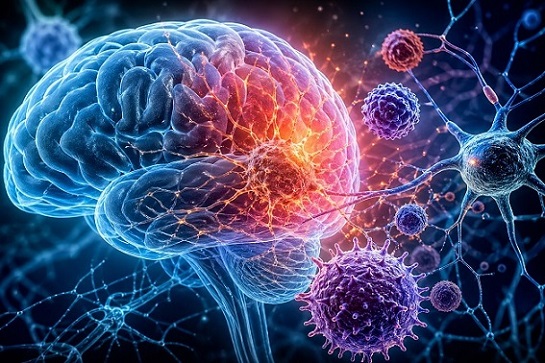 New research reveals how immune activity in the brain could unlock future treatments for major
neurological disorders
Neuroinflammation, once dismissed as a secondary response to injury, is now recognized as a central force that can either protect the brain or accelerate damage. This shift in understanding is transforming how scientists approach conditions such as Alzheimer’s disease, Parkinson’s disease, depression, schizophrenia, and amyotrophic lateral sclerosis (ALS).
The research was led by Junhui Wang from the Thyropathy Hospital at Sun Simiao Hospital, Beijing University of Chinese Medicine in China, and the Lunenfeld-Tanenbaum Research Institute at Mount Sinai Hospital in Toronto, Canada. By compiling multiple studies across laboratory and clinical settings, the work highlights how deeply intertwined the immune system is with brain function.
A Double-Edged Sword Inside the Brain
One of the most important insights is that neuroinflammation behaves like a double-edged sword. In its controlled form, it helps repair damaged tissue, remove harmful debris, and defend against infections. However, when it becomes chronic or dysregulated, it can trigger a cascade of damage that leads to neuron loss and disease progression.
Microglia, the brain’s primary immune cells, are central to this process. These cells continuously scan the brain for signs of trouble. When activated appropriately, they promote healing. But when overstimulated, they release inflammatory chemicals that can harm neurons and disrupt normal brain signaling.
Key Discoveries That Could Change Treatment Approaches
Researchers have identified several critical biological mechanisms that could redefine how neurological diseases are treated, offering precise targets for future therapies.
One of the most significant findings involves interleukin-6 (IL-6) trans-signaling, a pathway strongly linked to the progression of ALS. Scientists found that a large proportion of ALS patients carry a genetic variation that increases levels of soluble IL-6 receptors. This amplifies inflammatory signaling in the nervous system. In experimental mouse models, this heightened activity led to faster disease progression, more severe nerve damage, and earlier onset of symptoms. These findings suggest that selectively blocking IL-6 trans-signaling—without shutting down the entire immune response—could slow disease progression and improve patient outcomes.
Another major breakthrough centers on TREM2, a protein that acts as a key regulator of microglial activation. TREM2 essentially determines how microglia respond to injury or disease. When functioning properly, it helps microglia transition into a protective state that clears toxic proteins and supports neuron survival. However, when TREM2 signaling is impaired, microglia fail to control inflammation effectively. This leads to excessive immune responses and
increased neuron loss, particularly in Parkinson’s disease and Alzheimer’s disease.
Researchers also discovered that microglia undergo a staged transformation into what are known as disease-associated microglia (DAM). In the early stage, this transformation is independent of TREM2 and is generally protective, aimed at limiting damage and initiating repair. In the later stage, however, TREM2-dependent processes take over, activating genes involved in inflammation, fat metabolism, and debris clearance. While this later stage can help remove harmful substances, it may also intensify inflammation if not properly regulated. This dual-phase behavior makes microglia both a promising therapeutic target and a challenging one.
In Alzheimer’s disease, these mechanisms become even more intricate. The accumulation of amyloid-beta proteins triggers microglial activation, pushing them into a disease-associated state. At the same time, the blood–brain barrier—which normally protects the brain from harmful substances—becomes compromised. This allows immune molecules from outside the brain to enter, further amplifying inflammation. The result is a self-reinforcing cycle where inflammation accelerates neuronal damage and cognitive decline.
Another important pathway involves the activation of the NLRP3 inflammasome, a molecular complex within microglia that drives the production of powerful inflammatory signals. Once activated, this system can sustain chronic inflammation, creating a long-term damaging environment in the brain. Scientists believe that targeting this inflammasome could help break the cycle of ongoing inflammation seen in neurodegenerative diseases.
This
Medical News report highlights a growing realization among scientists: the brain and immune system operate as a unified network, rather than as separate systems, constantly influencing each other in both health and disease.
The Gut-Brain Connection Adds Another Layer
Adding further complexity is the emerging role of the gut–brain axis. Researchers now understand that microbes in the digestive system can influence brain inflammation by sending chemical signals that affect microglial behavior.
Depending on the composition of gut bacteria, this interaction can either reduce inflammation and support brain health or worsen disease processes.This discovery opens up new possibilities for treatment, including therapies that modify gut bacteria through diet, probiotics, or targeted interventions.
Why This Matters for Future Treatments
The implications of these discoveries are profound. Instead of treating neurological diseases solely based on symptoms, future approaches may focus on correcting underlying immune dysfunctions. Scientists are exploring therapies that can fine-tune microglial activity, block harmful signaling pathways like IL-6, regulate TREM2 function, and restore the integrity of the blood–brain barrier. Importantly, researchers stress that treatments must strike a delicate balance—reducing harmful inflammation while preserving the immune system’s essential protective roles.
Conclusion
The expanding field of neuroimmunology is redefining how we understand brain diseases. These findings reveal that inflammation is not merely a side effect but a driving force behind many neurological conditions. By identifying key molecular pathways such as IL-6 signaling, TREM2 regulation, and inflammasome activation, scientists are paving the way for more targeted and effective therapies. However, the complexity of these systems means that careful research is still needed to avoid unintended consequences. If successful, these advances could usher in a new era of precision medicine, offering hope to millions affected by neurodegenerative and psychiatric disorders worldwide.
The study findings were published in the peer reviewed journal: Brain Sciences.
https://www.mdpi.com/2076-3425/16/5/464
For the latest research on Neuroinflammation, keep on logging to Thailand
Medical News.
Read Also:
https://www.thailandmedical.news/articles/alzheimer,-dementia-




 Share
Share
 Tweet
Tweet
 Share
Share

































