Long COVID Study Finds Tiny Blood Particles May Hold Key to Ongoing Inflammation
Nikhil Prasad Fact checked by:Thailand Medical News Team Jul 21, 2026 1 month, 2 weeks, 11 hours, 52 minutes ago
Medical News: Millions of people worldwide continue to struggle with Long COVID months or even years after recovering from their initial coronavirus infection. While symptoms such as fatigue, brain fog, breathlessness, and sleep problems are widely recognized, scientists have been trying to understand why these health issues persist. A new study has now uncovered compelling evidence that tiny particles circulating in the blood may continue to fuel inflammation and abnormal blood clotting long after the virus has disappeared.
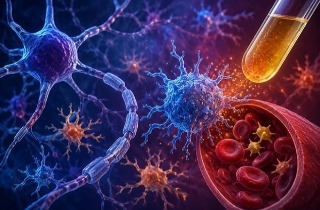
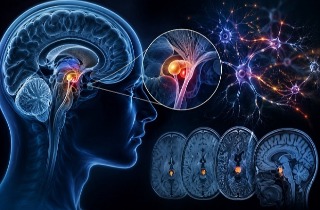
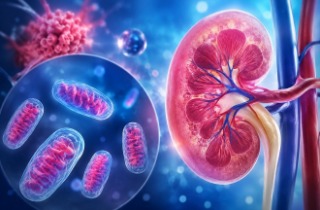
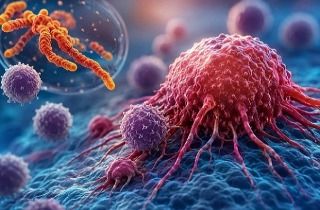
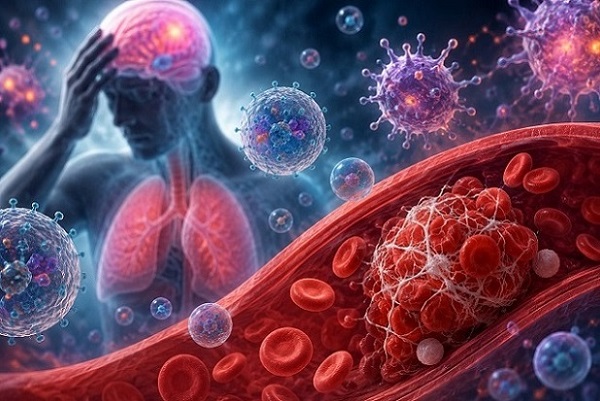 Scientists discover that tiny particles circulating in the blood may reveal why inflammation and clotting problems
continue in Long COVID patients.
Researchers from the Division of Pulmonary and Critical Care Medicine, Department of Internal Medicine, University of Kansas Medical Center, and the Department of Biostatistics & Data Science, University of Kansas Medical Center, United States, conducted the study by examining microscopic structures known as small extracellular vesicles (SEVs), which transport proteins and other biological materials between cells.
Tiny Messengers Carry Big Clues
SEVs act like tiny delivery packages released by cells throughout the body. They transport proteins, genetic material, and signaling molecules that influence inflammation, immune activity, tissue repair, and blood clotting. Because these vesicles protect their cargo from damage, researchers believe they can provide a clearer picture of disease processes than ordinary blood tests.
The team analyzed blood samples from 20 people with Long COVID and 11 people who had recovered from COVID-19 without lingering symptoms. More than 5,400 proteins contained within the SEVs were examined to identify biological differences between the two groups.
Hundreds of Proteins Were Abnormally Altered
The researchers discovered 269 proteins that were significantly altered in people with Long COVID. Among these, 210 proteins were present at higher levels while 59 were reduced.
Many of the elevated proteins were linked to inflammation, abnormal blood clotting, complement activation, fibrosis, tissue remodeling, cell death, and immune system activation. Several proteins involved in forming blood clots, including fibrin-related proteins and fibronectin (FN1), remained highly active long after infection. Other proteins such as HGF and IL-17RA also stayed elevated, suggesting that the body's inflammatory machinery may remain switched on for extended periods.
Interestingly, the number and size of the extracellular vesicles themselves were similar between Long COVID patients and recovered individuals. The major differences lay in the proteins they carried rather than the vesicles themselves.
Possible Explanation for Brain Fog and Sleep Problems
One of the most intriguing findings was the link between certain proteins and specific Long COVID symptoms.
Higher levels of proteins including NOL4L, STK24, PRTN3, and IL-17RA were associated with people experiencing brain fog, suggesting ongoing inflammation and possible effects on the blood-brain b
arrier. Sleep disturbances were linked with proteins involved in immune regulation, antiviral defense, RNA processing, blood clotting, and cell-cycle control.
This
Medical News report highlights how these protein signatures may eventually help doctors better understand why different Long COVID patients develop different symptoms instead of treating the condition as a single disease.
Better Than Standard Blood Tests
The researchers also compared these protein changes with ordinary plasma samples. While some proteins could be detected in regular blood plasma, several important markers—including HGF and IL-17RA—showed clear abnormalities only inside the extracellular vesicles.
This suggests that examining SEVs may provide a much more sensitive way to identify Long COVID than conventional blood testing. The findings also showed that some proteins previously elevated during severe acute COVID-19 remained persistently high months later, even in many individuals whose original infections had been relatively mild.
A Step Toward Better Diagnosis
The study suggests that Long COVID is associated with continuing immune activation, abnormal clotting activity, complement system activation, and damage-repair signaling rather than simply lingering symptoms without biological changes. The protein cargo carried inside extracellular vesicles appears to provide a detailed snapshot of these ongoing abnormalities and could eventually become an important source of diagnostic biomarkers.
Although the study involved a relatively small number of participants and relied partly on self-reported symptoms, the results provide strong evidence that extracellular vesicles continue carrying biological signals linked to persistent disease long after acute infection has resolved. Larger studies will be needed to confirm these findings, determine whether these protein patterns predict specific Long COVID complications, and explore whether therapies targeting these pathways can improve recovery.
The study findings were published in the peer reviewed journal: Frontiers in Immunology.
https://www.frontiersin.org/journals/immunology/articles/10.3389/fimmu.2026.1805159/full
For the latest on Long COVID, keep on logging to Thailand
Medical News.
Read Also:
https://www.thailandmedical.news/articles/long-covid




 Share
Share
 Tweet
Tweet
 Share
Share