Nikhil Prasad Fact checked by:Thailand Medical News Team Jan 18, 2026 8 months, 2 weeks, 2 days, 22 hours, 20 minutes ago
Medical News: Glioma is one of the most aggressive and difficult-to-treat forms of brain cancer, and new scientific insights are now revealing that the tumor does not act alone. Instead, it reshapes its surrounding environment in ways that quietly support its growth, spread, and resistance to treatment. A recent scientific review sheds light on how the brain’s extracellular matrix, often overlooked, plays a decisive role in how gliomas behave and why they are so hard to control.
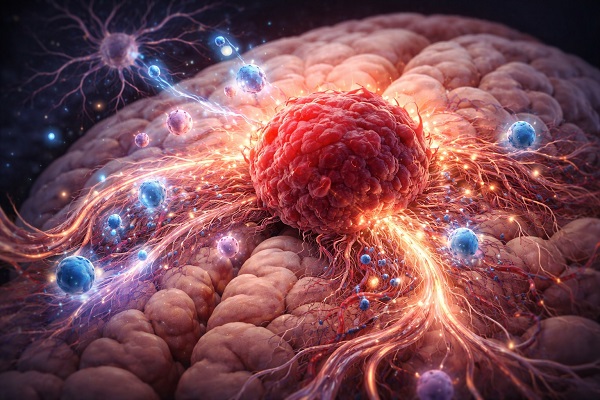 New research shows how the brain’s own support structure is altered to help glioma tumors spread and resist treatment
Understanding the Brain’s Hidden Support System
New research shows how the brain’s own support structure is altered to help glioma tumors spread and resist treatment
Understanding the Brain’s Hidden Support System
The extracellular matrix is a complex network of molecules that surrounds brain cells and gives the brain its structure and flexibility. In a healthy brain, this matrix helps nerve cells communicate and keeps the brain stable. However, researchers found that glioma tumors actively change this supportive framework. Instead of remaining soft and protective, the matrix becomes denser, stiffer, and more favorable to cancer spread.
How Tumors Remodel Their Surroundings
The study shows that glioma cells release large amounts of structural proteins such as collagens, fibronectin, and tenascin C. These substances thicken and harden the surrounding tissue, making it easier for cancer cells to move through the brain. At the same time, the tumor releases special enzymes that break down normal tissue barriers, clearing pathways for invasion. This
Medical News report highlights that the tumor and its environment work together in a dangerous feedback loop.
Mechanical Pressure That Drives Cancer Spread
Beyond chemical changes, the physical pressure created by a growing tumor also matters. Because the brain is confined within the skull, expanding tumors compress nearby tissue and blood vessels. This compression reduces oxygen delivery and forces cancer cells to adapt. Instead of slowing down, glioma cells become more aggressive, shifting from growth to invasion and spreading deeper into healthy brain areas.
Immune System Shut Out
The remodeled matrix does more than help tumors move. It also blocks immune cells from reaching the cancer. The stiffened environment discourages immune attack and attracts immune cells that actually support tumor growth. This explains why many immunotherapies struggle to work effectively in glioma patients.
Signals That Travel Far from the Tumor
The researchers also describe how glioma cells release tiny particles known as extracellular vesicles. These particles travel through the brain and instruct nearby healthy cells to produce more tumor-friendly matrix material. This means that even areas far from the original tumor site can be prepared in advance for future cancer spread or recurrence.
Researchers and Institutions
The study was conducted by scientists from the National Institute of Neur
ology and Neurosurgery in Mexico City, the Metropolitan Autonomous University in Mexico City, the National Institute of Public Health in Cuernavaca, and the National Institute of Cancer in Mexico City.
Why These Findings Matter
Understanding the role of the extracellular matrix opens new possibilities for treatment. Instead of targeting cancer cells alone, future therapies may aim to soften the tumor environment, reduce harmful pressure, and allow drugs and immune cells to reach their targets more effectively.
Conclusion
These findings reveal that glioma is not just a disease of abnormal cells but also of a corrupted environment that actively supports cancer survival. By exposing how physical forces, chemical signals, and immune barriers work together, this research provides a clearer roadmap for developing smarter, more effective therapies that address both the tumor and its hidden support system.
The study findings were published in the peer reviewed journal: Biomedicines.
https://www.mdpi.com/2227-9059/14/1/205
For the latest cancer news, keep on logging to Thailand
Medical News.
Read Also:
https://www.thailandmedical.news/articles/cancer




 Share
Share
 Tweet
Tweet
 Share
Share

































