The Mammillary Body-Fornix Gate May Hold the Key to Long COVID Neurological Symptoms
Nikhil Prasad Fact checked by:Thailand Medical News Team Aug 04, 2026 1 hour, 4 minutes ago
Researchers Discover a Previously Overlooked Brain Region That Could Help Explain Tremors, Internal Vibrations and Neuromuscular Fatigue
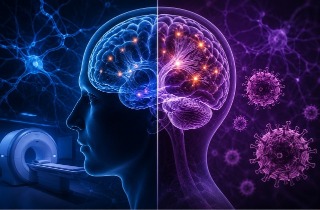
A new brain imaging study has uncovered compelling evidence that a tiny but strategically important region deep within the brain—known by the researchers as the mammillary body-fornix gate—may play a central role in the neurological symptoms experienced by many people living with severe Long COVID. Using advanced structural MRI and diffusion tensor imaging (DTI), scientists identified abnormalities in this region that were associated with internal vibrations, tremor-like symptoms, neuromuscular fatigue, autonomic dysfunction and cognitive impairment. While the findings remain exploratory, they offer an intriguing new framework for understanding why Long COVID can affect so many different neurological and bodily functions.
 MRI findings suggest that abnormalities at the mammillary body-fornix gate may disrupt multiple brain networks
involved in Long COVID neurological symptoms
The study was conducted by researchers from the Wrocław University of Health and Sport Sciences in Poland, the University Medical Center Hamburg-Eppendorf in Germany, the Prof. Stark Institute of Stress and Fatigue – Research and Clinic Interventions in Germany, Imperial College London in the United Kingdom, and the MRC Laboratory of Medical Sciences in the United Kingdom.
What Is the Mammillary Body-Fornix Gate?
The mammillary body-fornix gate is not an officially recognized anatomical structure, but rather a new operational model proposed by the research team to describe a very small interface where the fornix, a major white matter nerve pathway, approaches and connects with the mammillary bodies within the posterior hypothalamus.
The fornix functions like a neurological highway, carrying signals from the hippocampus and subiculum—brain regions that are essential for memory formation, spatial orientation and learning—to the mammillary bodies. These mammillary bodies are themselves embedded within the hypothalamus, one of the brain's most important control centers. The hypothalamus regulates numerous automatic body functions including autonomic nervous system activity, endocrine hormone release, metabolism, body temperature, sleep-wake cycles, immune signaling, appetite and stress responses.
Because this narrow anatomical junction sits at the crossroads between the limbic system, hypothalamus and broader brainstem networks, even subtle structural changes could potentially disrupt communication across several critical neurological systems simultaneously. The researchers therefore describe this interface as a "gate" through which information passes between memory circuits and the brain's autonomic and neuroendocrine control centers.
MRI Reveals Structural Changes at the Brain's Critical Gateway
The investigators analyzed MRI scans from 88 patients with clinician-diagnosed Long COVID and 34 healthy individuals. Thirty-three of the patients were bedridden because of severe disease.
One of the most remarkable discoveries was the identification of three distinct mammillary body
volume phenotypes. Some Long COVID patients showed reduced mammillary body volume, others showed enlarged mammillary bodies, while a third subgroup had volumes similar to healthy controls. In addition, MRI segmentation frequently revealed narrowing—or complete loss—of a normally visible internal passage at the superior tuberal-mammillary interface.
The study also found abnormalities within the fornix itself. Diffusion tensor imaging demonstrated altered fractional anisotropy and reduced tract coherence as the fornix approached the proposed gate region, suggesting disruption of white matter organization. Importantly, the researchers caution that these findings do not prove nerve fiber destruction, inflammation, mechanical compression or direct SARS-CoV-2 invasion, but instead represent imaging abnormalities that require confirmation in future studies.
Why Could These Changes Produce So Many Symptoms?
This
Medical News report highlights that the proposed mammillary body-fornix gate sits at the intersection of brain systems responsible for memory, autonomic regulation, arousal, endocrine function and motor control. If communication through this gateway becomes disturbed, the consequences could extend far beyond memory problems.
The researchers believe abnormalities at this interface may contribute to dysfunction across interconnected brainstem and cerebellar networks. Supporting this hypothesis, they also identified reduced volume of the superior cerebellar peduncle, reduced fractional anisotropy in the middle cerebellar peduncle, and lower volumes of the dorsal raphe and midbrain reticular formation.
These structures collectively help regulate posture, muscle coordination, balance, autonomic stability, sleep, pain processing, sensory integration and arousal. Disrupted communication between these systems could therefore help explain why many Long COVID patients simultaneously experience internal vibrations, tremor-like symptoms, post-exertional malaise,dysautonomia, impaired proprioception, severe fatigue and cognitive dysfunction rather than a single isolated neurological complaint. The investigators emphasize that the mammillary body-fornix gate should be viewed as a testable anatomical hypothesis rather than a newly established brain circuit.
Researchers Stress That the Findings Are Preliminary
Although the imaging abnormalities were statistically significant and biologically plausible, the authors repeatedly caution against overinterpreting the results. Their data do not establish a direct viral pathway into the brain, nor do they prove that the observed abnormalities are the primary cause of Long COVID. Instead, they provide a new anatomical framework that future research can investigate using larger patient cohorts, standardized MRI protocols, objective autonomic testing and long-term follow-up.
Conclusion
This study introduces the mammillary body-fornix gate as a potentially important anatomical hub that may help explain many of the complex neurological manifestations of Long COVID. By identifying structural and white matter abnormalities at the junction connecting memory circuits with hypothalamic and brainstem regulatory systems, the research provides a compelling new hypothesis for how a single vulnerable interface could contribute to widespread neurological dysfunction. Nevertheless, because this remains an exploratory MRI study and has not yet undergone peer review, independent validation will be essential before these findings can be incorporated into clinical practice or used to guide diagnosis and treatment.
The study findings were published on a preprint server and have not yet been peer reviewed yet.
https://www.medrxiv.org/content/10.64898/2026.07.31.26359395v1
For the latest on Long COVID, keep on logging to Thailand
Medical News.
Read Also:
https://www.thailandmedical.news/articles/long-covid




 Share
Share
 Tweet
Tweet
 Share
Share