Nikhil Prasad Fact checked by:Thailand Medical News Team Aug 11, 2026 1 month, 2 weeks, 3 hours, 47 minutes ago
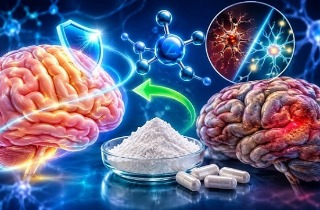
Statins are among the most widely prescribed medicines worldwide, helping millions of people lower cholesterol and reduce their risk of heart attacks and strokes. However, a new large-scale drug safety analysis has raised fresh concerns about possible links between certain statins and reports of amnesia, or significant memory loss.
 A major analysis of FDA adverse-event reports found significant amnesia reporting signals involving four commonly
used statins
The researchers stress that their findings do not prove that statins cause amnesia. Instead, the study detected unusually strong reporting patterns involving several commonly prescribed statins, suggesting that the issue deserves closer investigation.
Researchers Analyzed Two Decades of Safety Reports
The study was conducted by researchers from the Shanxi Provincial Mental Health Center, Taiyuan Psychiatric Hospital, and Shanxi Bethune Hospital, Shanxi Academy of Medical Sciences, Tongji Shanxi Hospital, Third Hospital of Shanxi Medical University, in Taiyuan, China.
Researchers analyzed information from the US Food and Drug Administration Adverse Event Reporting System, known as FAERS, covering the first quarter of 2005 through the first quarter of 2025.
The analysis included 56,401 statin-related adverse-event reports, of which 1,108 valid cases involved amnesia. Seven statins were examined: atorvastatin, simvastatin, pravastatin, lovastatin, fluvastatin, pitavastatin and rosuvastatin.
Four Statins Showed Significant Amnesia Signals
The most important finding was that atorvastatin, simvastatin, pravastatin and lovastatin all produced significant positive pharmacovigilance signals for amnesia.
Atorvastatin was associated with 326 amnesia reports and a reporting odds ratio, or ROR, of 2.82. Simvastatin accounted for 600 reports, the largest number among the drugs studied, and had an ROR of 4.94.
Pravastatin had 68 reports and an ROR of 4.77, while lovastatin had only 26 reports but generated the strongest overall signal, with an ROR of 6.96.
These numbers should not be interpreted as a patient’s actual probability of developing amnesia. A reporting odds ratio identifies whether a particular problem is reported disproportionately often with a medicine compared with other drugs in the database.
Fluvastatin and pitavastatin did not meet the criteria for significant signals. Rosuvastatin generated a positive result with one statistical method but failed to meet the researchers’ stricter overall criteria across all four methods used.
Women and Older Adults Showed Interesting Patterns
This Thailand
Medical News report also highlights notable differences according to sex and age.
For atorvastatin, the signal was considerably stronger among women. There were 187 female cases with an ROR of 3.50, compared with 119 male cases and an ROR of 2.19. Pravastatin and lovastatin also showed numerically stronger signals among women.
t;
Age produced another important pattern. Positive signals were predominantly detected among people aged 45 years and older. Among adults aged 18 to 45, however, simvastatin stood out as the only statin meeting the study’s criteria for a positive amnesia signal, with 24 cases and an ROR of 3.12.
Researchers discussed several possible explanations, including differences in drug metabolism, underlying illnesses and the ability of some statins to enter the central nervous system. These explanations remain hypotheses rather than proven mechanisms.
When Memory Problems Appeared Also Varied
The researchers additionally investigated when reported memory problems developed.
Atorvastatin and lovastatin displayed an early-onset pattern. Estimated typical onset times were approximately 5.6 months for atorvastatin and 10 months for lovastatin, with reported events becoming less concentrated as treatment duration increased.
Simvastatin and pravastatin showed a different pattern, with reports occurring across a broader period. Typical onset estimates were approximately 2.1 years for simvastatin and 2.0 years for pravastatin. However, the researchers acknowledged that some of these timing calculations were based on relatively small samples and therefore had limited statistical precision.
Conclusions
The findings warrant attention but should not cause patients to abruptly stop taking statins. FAERS is a spontaneous reporting database, meaning the analysis can identify statistical safety signals but cannot establish that a medicine actually caused amnesia. Age, existing illnesses, other medications and reporting behavior can influence the results. Statins also provide well-established protection against cardiovascular disease. The researchers therefore recommend further carefully designed studies to determine whether these reporting signals translate into measurable clinical risks and which patients, if any, may be particularly susceptible.
The study findings were published in the peer reviewed journal: Frontiers in Pharmacology.
https://www.frontiersin.org/journals/pharmacology/articles/10.3389/fphar.2026.1858243/full
Read Also:
https://www.thailandmedical.news/articles/med-news




 Share
Share
 Tweet
Tweet
 Share
Share