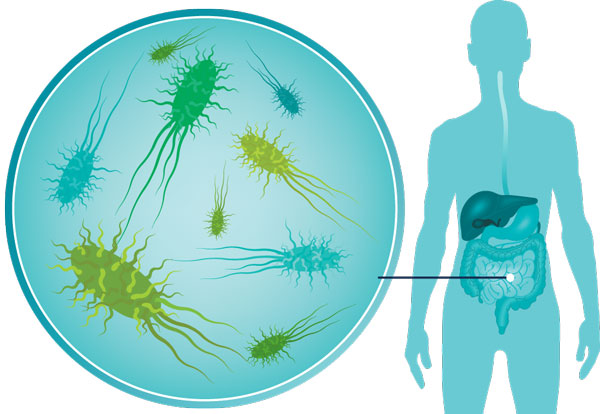
Balancing of “Good” Gut Bacteria by the Immune System helps prevent and treat Inflammatory Bowel Disease (IBD).
Source: Walter and Eliza Hall Institute Nov 06, 2018 7 years, 10 months, 1 day, 8 hours, 2 minutes ago
Australian researchers have uncovered clues in the immune system that reveal how the balance of 'good' gut bacteria is maintained. This information could help in the prevention and treatment of inflammatory bowel disease (IBD). The study, published in the journal Nature Communications, showed that the increased presence of a protein responsible for sensing infection -- called NLRP1 -- meant there were fewer good bacteria and anti-inflammatory molecules in the gut, leading to higher levels of inflammation and an increased risk of IBD.
The research was led by Associate Professor Seth Masters, Dr Alan Yu and Dr Tracy Putoczki from the Walter and Eliza Hall Institute, in collaboration with researchers at University of Melbourne's Bio21 Institute in Melbourne and a team led by Dr Graham Radford-Smith from QIMR Berghofer Medical Research Institute in Queensland.
At a glance
- New research shows the immune system helps maintain 'good' bacteria in the gut in addition to defending against 'bad' bacteria.
- Good bacteria produce a molecule called butyrate which is important for keeping levels of inflammation down.
- The finding could help to inform preventions and treatments for inflammatory diseases such as inflammatory bowel disease.
Getting to the bottom of IBD
The cause of IBD, which includes Crohn's disease and ulcerative colitis, is not well understood. A better understanding could improve treatment options and the quality of life for patients, who often experience chronic and debilitating symptoms.
Associate Professor Masters said while it was known that the immune system could defend the gut from bad bacteria, its role in maintaining 'good' bacteria wasn't appreciated until now.
"We have uncovered the immune system's ability to regulate good gut bacteria through the immune sensor NLRP1. Good bacteria are important because they help to produce butyrate -- a molecule that dampens inflammation in the body. So understanding how the balance of good bacteria is maintained could one day help to inform preventions and treatments for inflammatory diseases like IBD," he said.
Clues to a cause
Associate Professor Masters said the researchers had discovered the significance of NLRP1 by analysing donated bowel biopsies from patients with IBD, as well as in preclinical models in the laboratory.
"We consistently observed that higher levels of NLRP1 in inflamed areas of the bowel correlated with lower levels of good bacteria and increased inflammation," he said. "And in cases where we genetically deleted NLRP1, levels of inflammation went down.
"Too much NLRP1 leads to an overproduction of a signalling molecule called IL-18 that tells the body to mount a protective response against the threat of colonisation by bad bacteria -- but as a consequence the good bacteria and their anti-inflammatory products are also lost. Inflammation occurs as part of this process so when too much IL-18 is produced, inflammation can continue unchecked and cause significant damage to the gastrointestinal tract," he said.
Keeping a healthy balance
The exact triggers for the increase in NLRP1 were unclear but Associate Professor Ma
sters said the new findings enabled researchers to continue along a promising track towards resolving such questions.
"While we don't know exactly what the genetic, microbial or environmental triggers for NLRP1 are, it is clear that faulty regulation of NLRP1 is an underlying cause of IBD.
"Following on from the clues in our study, it may be possible to develop a drug that inhibits IL-18 or targets NLRP1 to block any unchecked inflammation. It's all about helping the immune system keep up the balancing act between all the factors that are constantly interacting to fight disease and promote wellbeing.
"By stopping overproduction of NLRP1 or IL-18 in patients with IBD we may be able boost the number of good bacteria and anti-inflammatory properties in the gut and help to prevent or fight the damaging effects of too much inflammation," he said.
Reference:Hazel Tye, Chien-Hsiung Yu, Lisa A. Simms, Marcel R. de Zoete, Man Lyang Kim, Martha Zakrzewski, Jocelyn S. Penington, Cassandra R. Harapas, Fernando Souza-Fonseca-Guimaraes, Leesa F. Wockner, Adele Preaudet, Lisa A. Mielke, Stephen A. Wilcox, Yasunori Ogura, Sinead C. Corr, Komal Kanojia, Konstantinos A. Kouremenos, David P. De Souza, Malcolm J. McConville, Richard A. Flavell, Motti Gerlic, Benjamin T. Kile, Anthony T. Papenfuss, Tracy L. Putoczki, Graham L. Radford-Smith, Seth L. Masters. NLRP1 restricts butyrate producing commensals to exacerbate inflammatory bowel disease. Nature Communications, 2018; 9 (1) DOI: 10.1038/s41467-018-06125-0