Nikhil Prasad Fact checked by:Thailand Medical News Team Oct 28, 2026 55 minutes ago
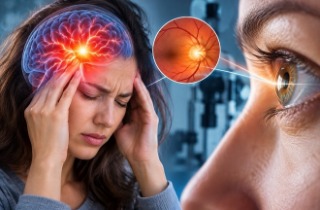
A major international study has uncovered a concerning connection between shingles following COVID-19 and potentially sight-threatening eye complications. Researchers found that patients experiencing shingles after coronavirus infection faced substantially higher risks of eye inflammation and optic nerve damage, with elevated risks persisting for three years.
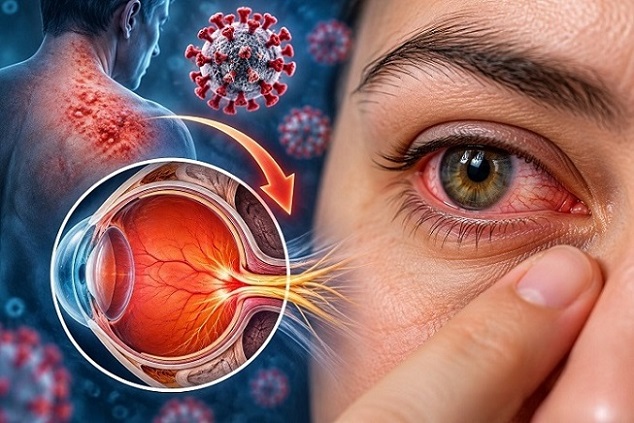 New research links shingles reactivation after COVID-19 to substantially increased risks of eye inflammation and optic
nerve damage lasting up to three years
The researchers came from Fu Jen Catholic University, Fu Jen Catholic University Hospital, National Taiwan University Hospital, Taipei Buddhist Tzu Chi Hospital, and the Buddhist Tzu Chi Medical Foundation in Taiwan.
Study Examines Thousands of COVID-19 Survivors
Using electronic medical records from the TriNetX global research network, spanning 144 healthcare organizations, researchers investigated whether shingles, medically called herpes zoster, increased the likelihood of serious eye disorders.
This
Thailand Medical News report highlights findings from a matched analysis involving 22,345 COVID-19 survivors, including 11,172 who developed shingles and 11,173 who did not.
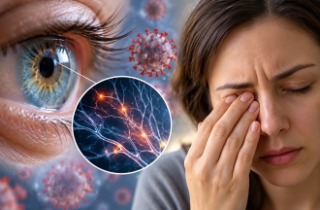
Researchers monitored two complications: uveitis, inflammation inside the eye, and optic neuritis, inflammation of the nerve transmitting visual information to the brain.
Threefold Increase in Eye Inflammation Risk
Patients developing shingles after COVID-19 experienced approximately 3.06 times the hazard of uveitis compared with those without shingles.
The hazard of optic neuritis was approximately 2.10 times higher. Both associations were statistically significant.
Additional analyses identified diabetes, hypertension, and smoking as factors associated with greater uveitis risk. Hypertension and alcohol consumption were associated with increased optic neuritis risk.
Importantly, these elevated hazards remained evident throughout the three-year observation period.
Vaccination Did Not Eliminate Elevated Risks
COVID-19 vaccination was associated with lower eye complication risks among patients without shingles. However, researchers found no statistically significant protective association within the shingles group.
Among vaccinated individuals, shingles remained associated with 2.67 times the hazard of uveitis and 2.91 times the hazard of optic neuritis.
The findings also persisted after excluding patients with HIV or previous immunosuppression, suggesting vulnerability extends beyond immunocompromised individuals.
Researchers suspect COVID-19-related immune disruption may facilitate reactivation of the dormant shingles virus, potentially triggering inflammation affecting ocular tissues and nerves.
Conclusions
The findings suggest shingles following COVID-19 m
ay identify patients requiring closer attention to eye symptoms, including blurred vision, eye pain, and visual disturbances. Prompt ophthalmological assessment could help prevent lasting damage.
However, this observational research cannot establish causation. Further prospective investigations are necessary to clarify biological mechanisms and determine optimal preventive strategies.
The study findings were published in the peer reviewed journal: QJM: An International Journal of Medicine.
https://academic.oup.com/qjmed/article/119/6/481/8414224
Read Also:
https://www.thailandmedical.news/articles/coronavirus
https://www.thailandmedical.news/articles/long-covid
https://www.thailandmedical.news/articles/ophthalmology-(eye-diseases) 



 Share
 Tweet
 Share